


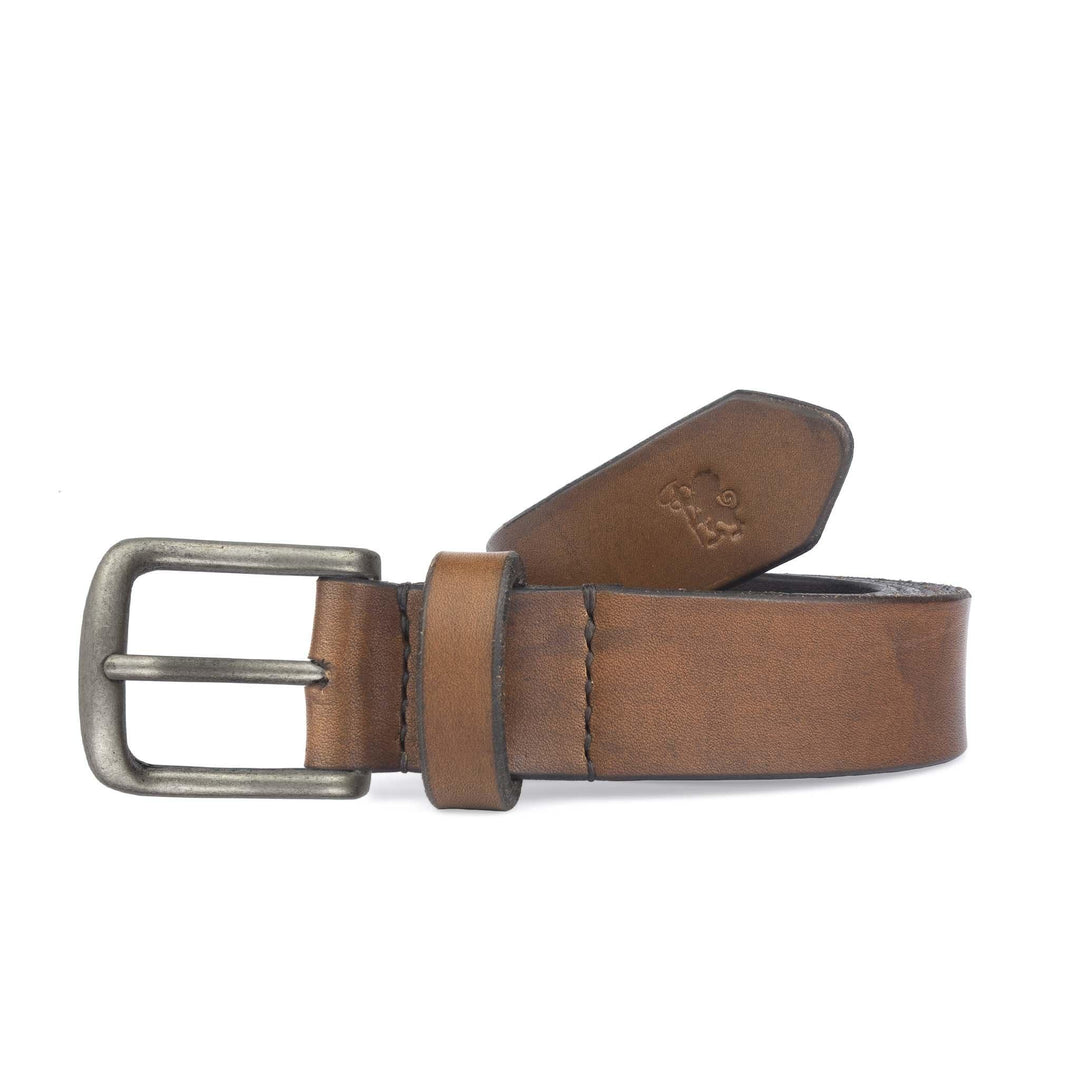
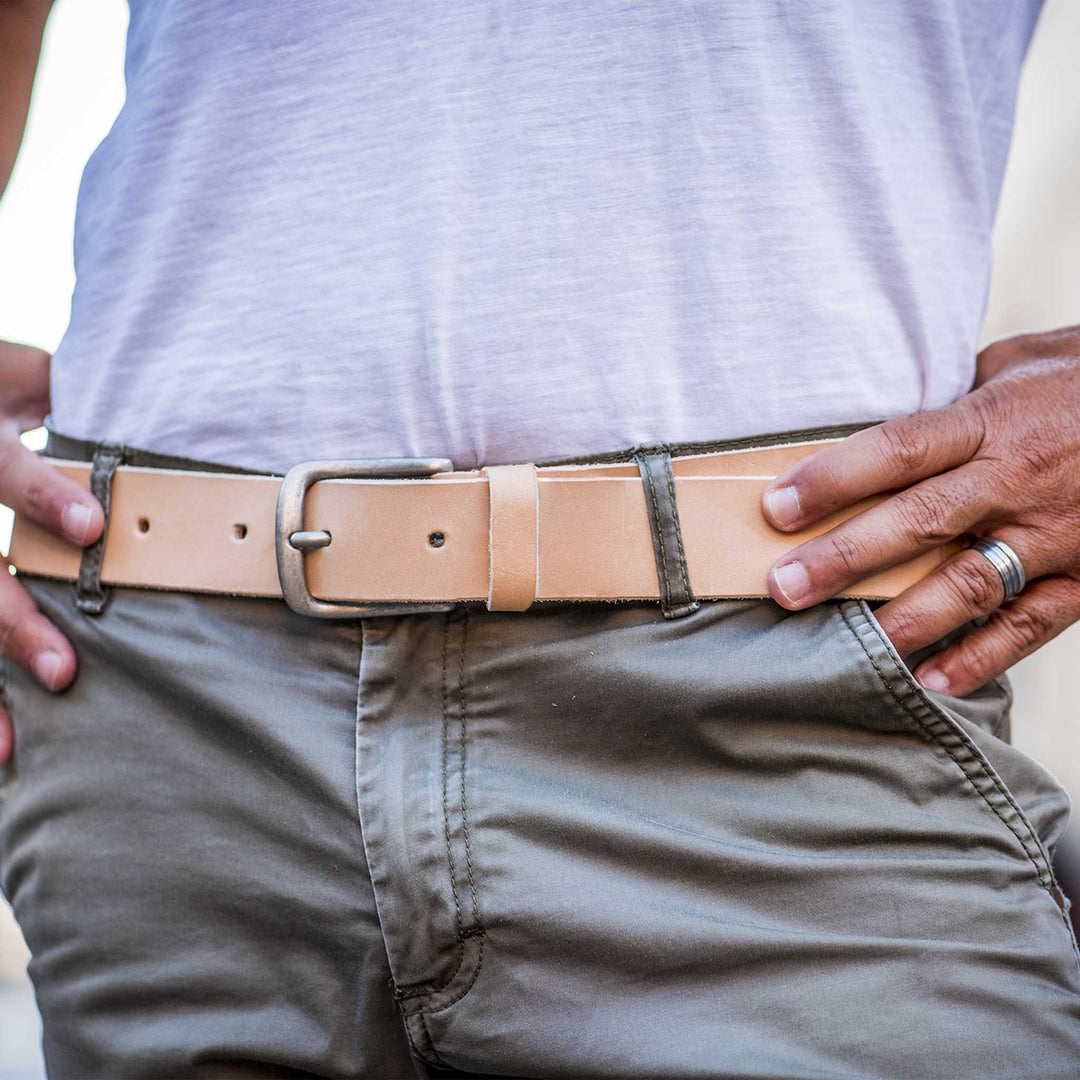
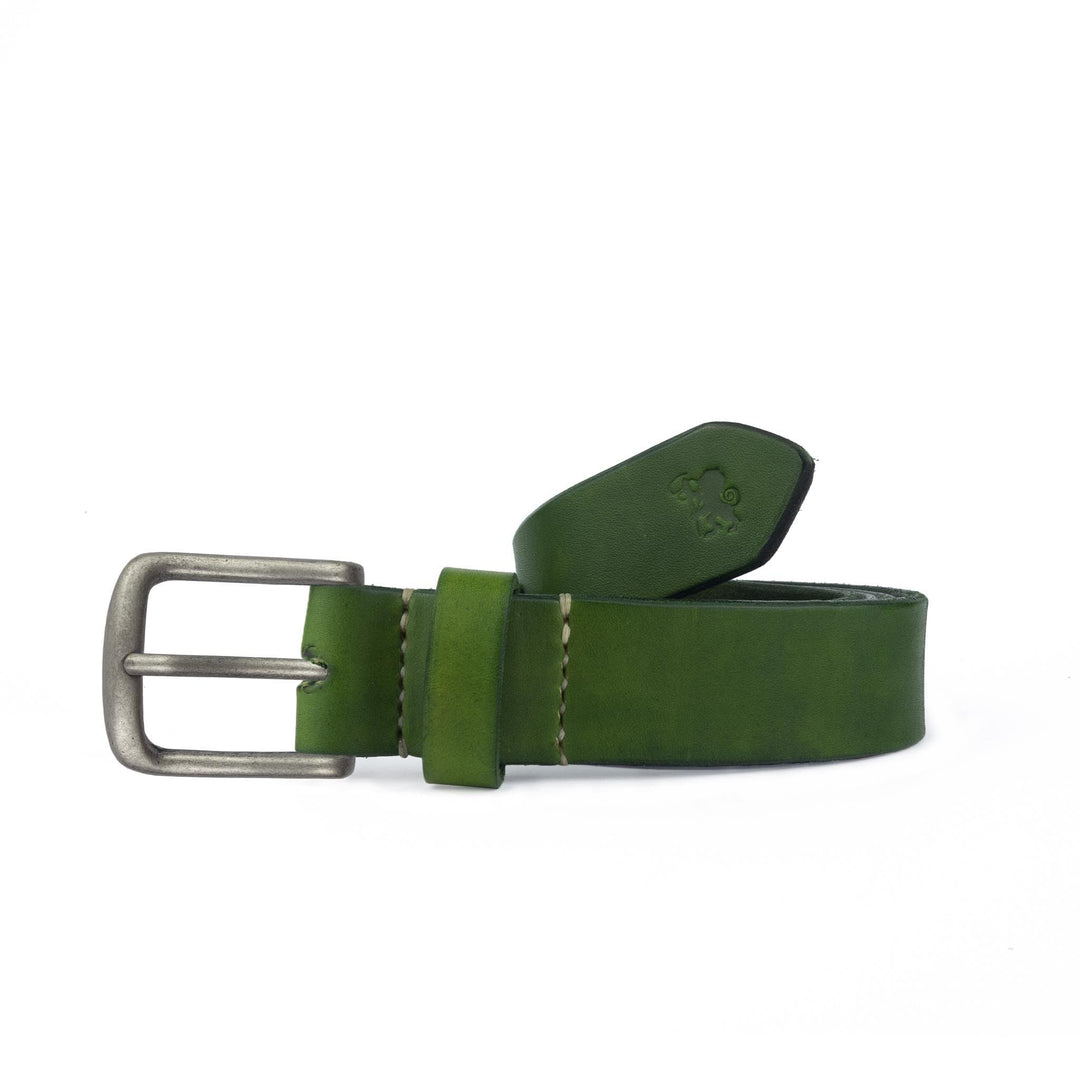
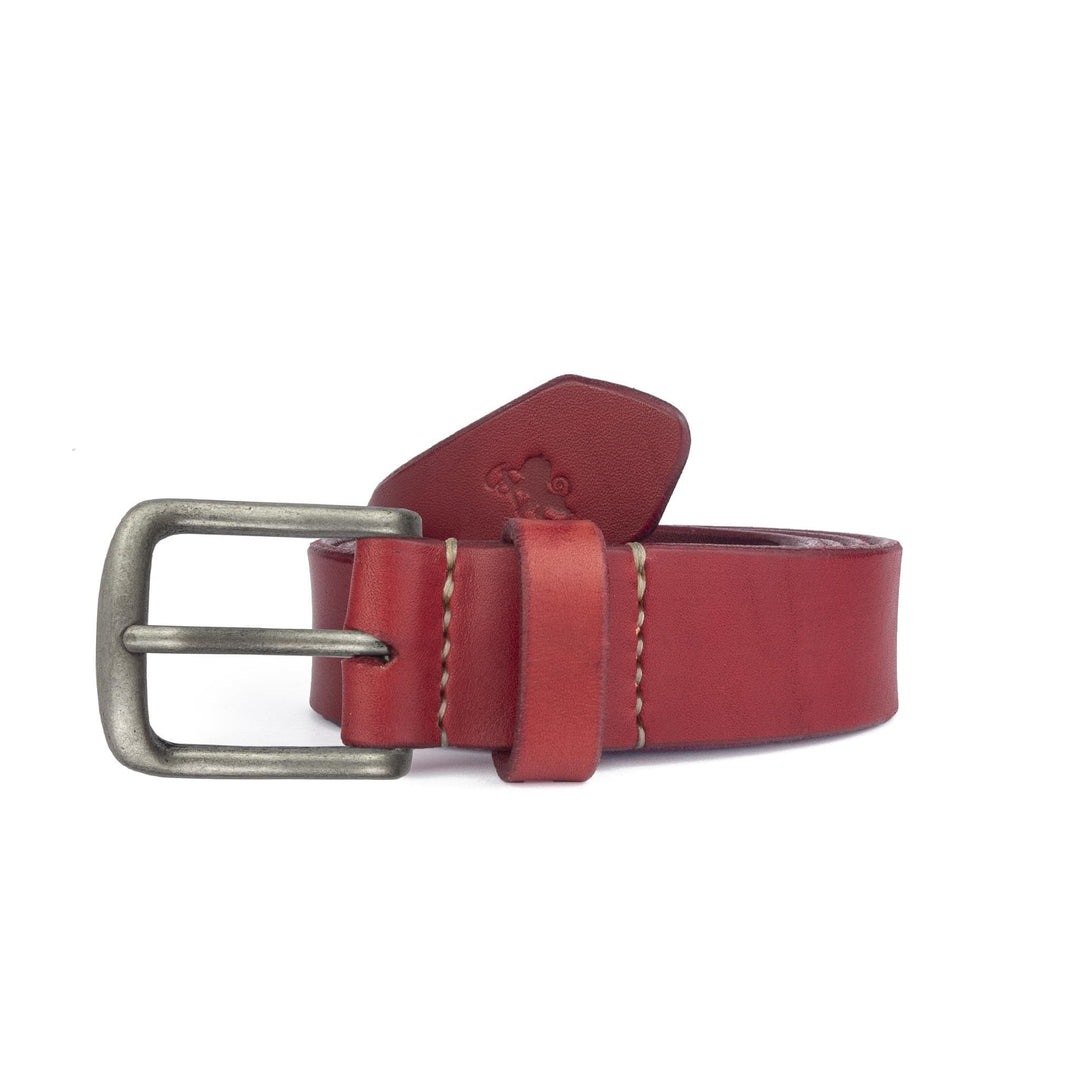
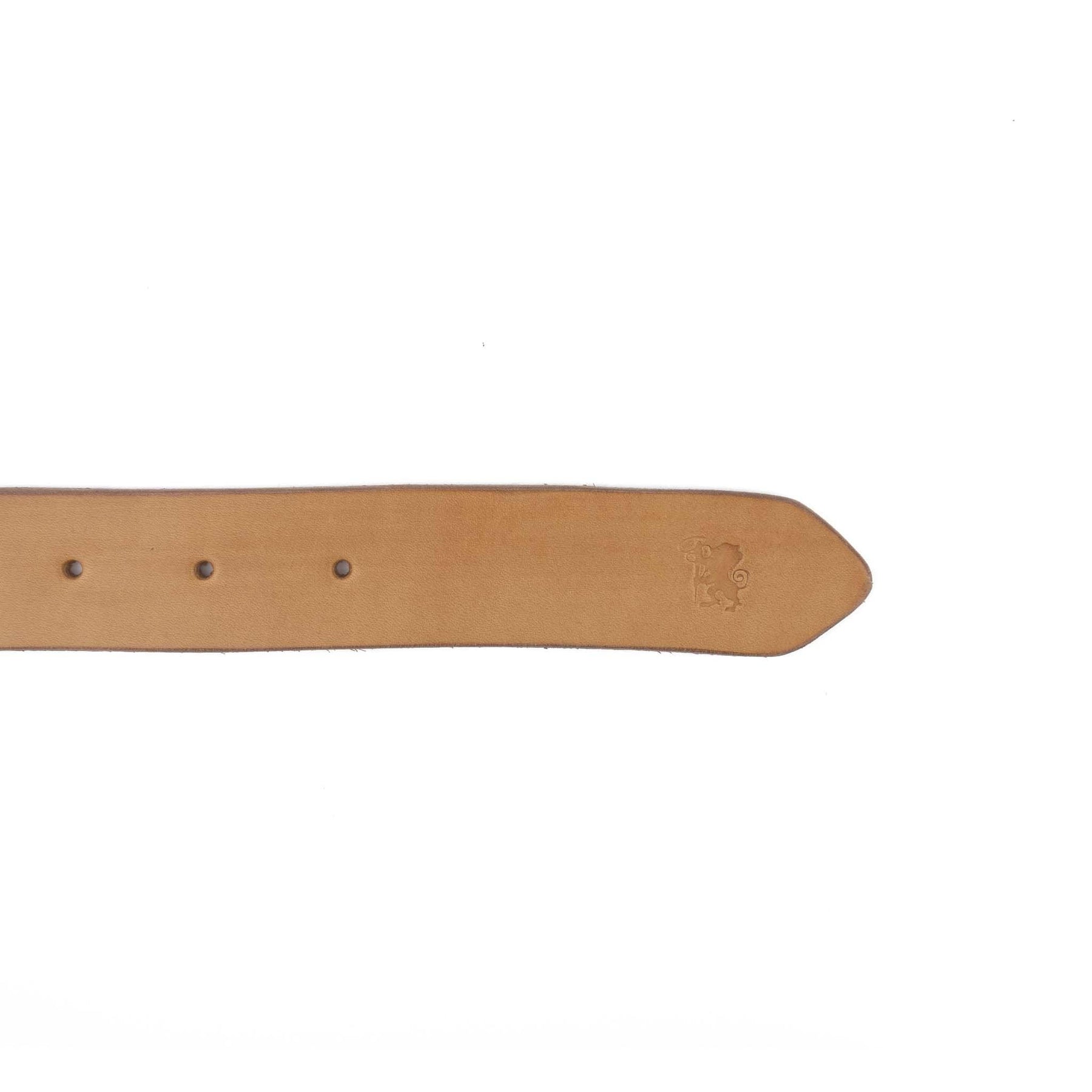
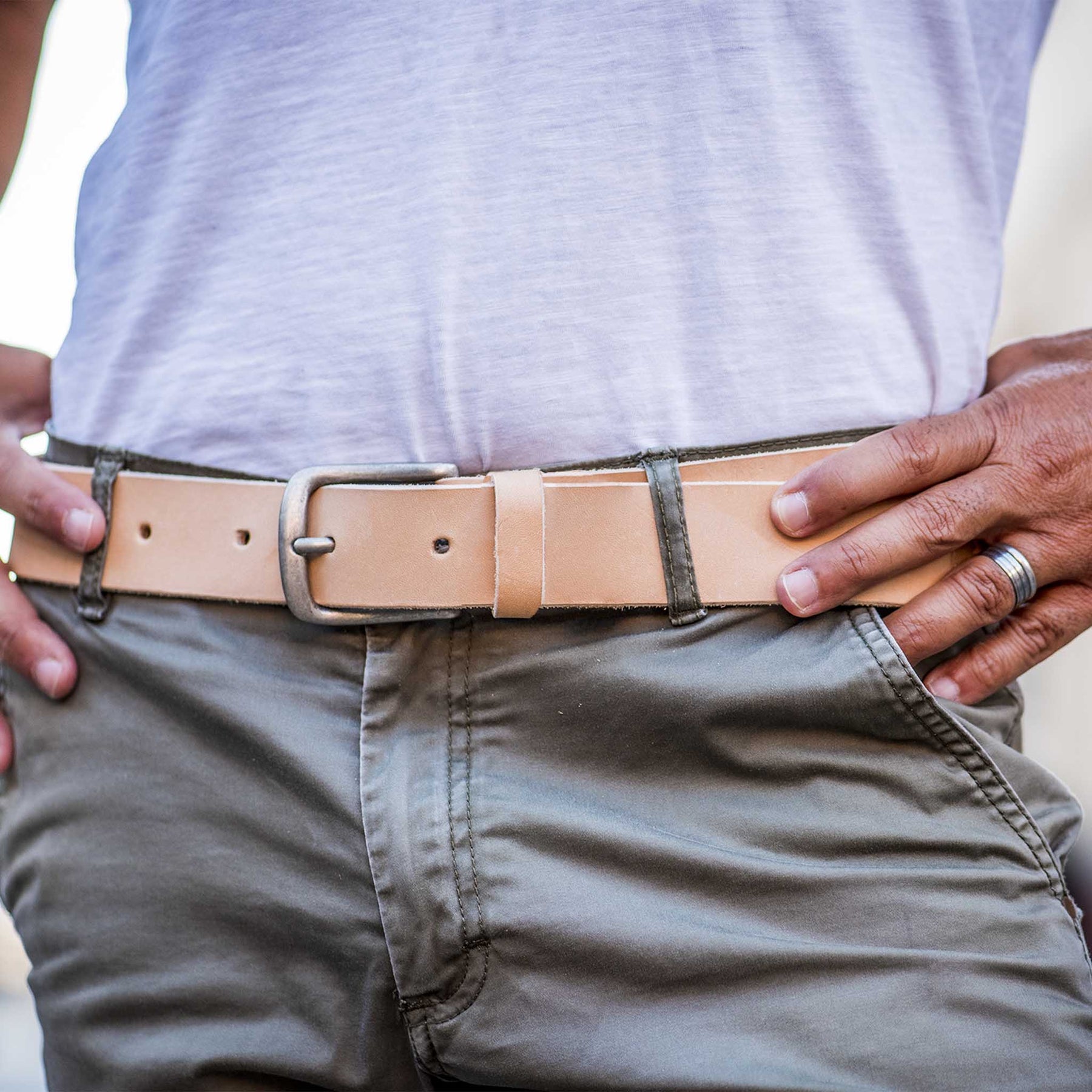
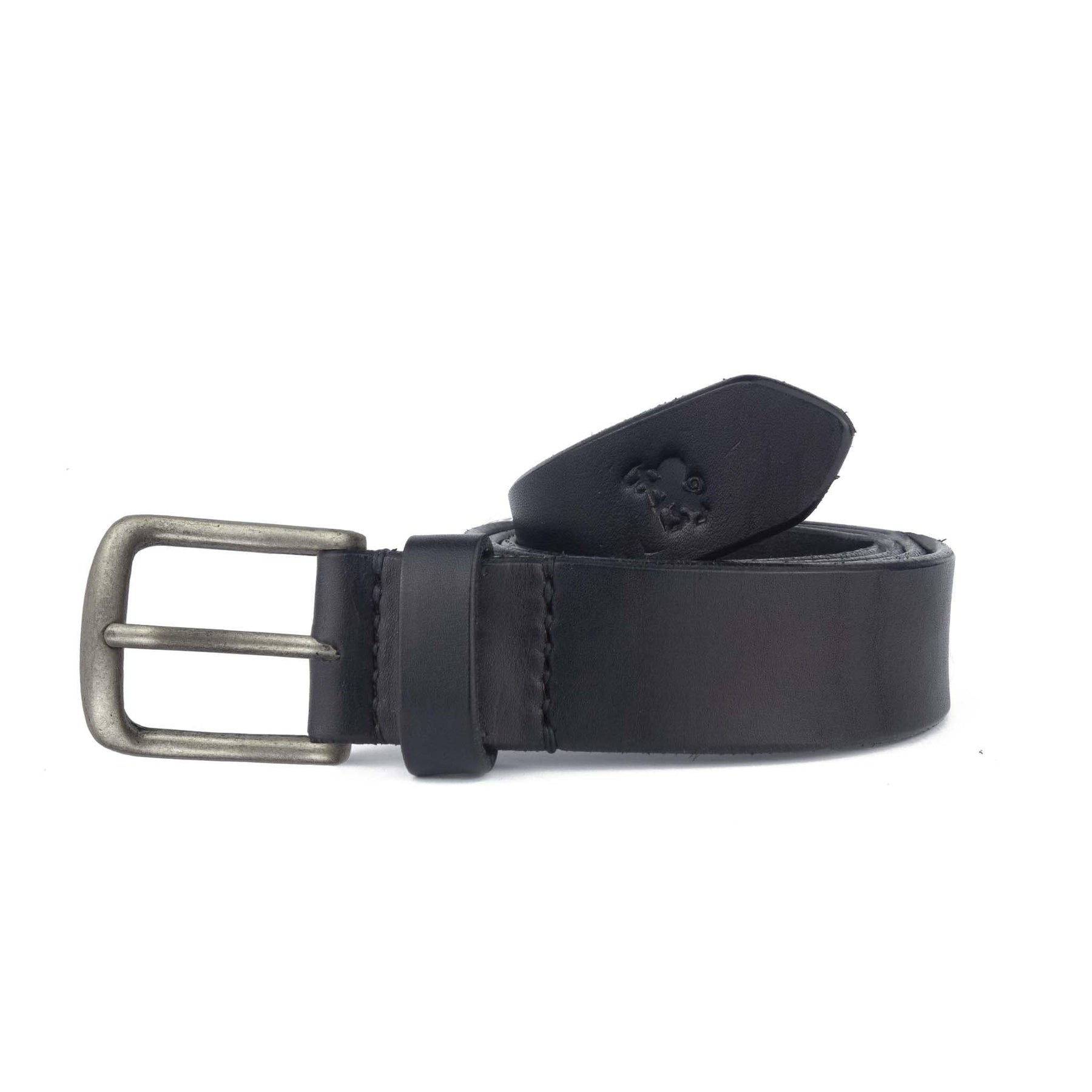
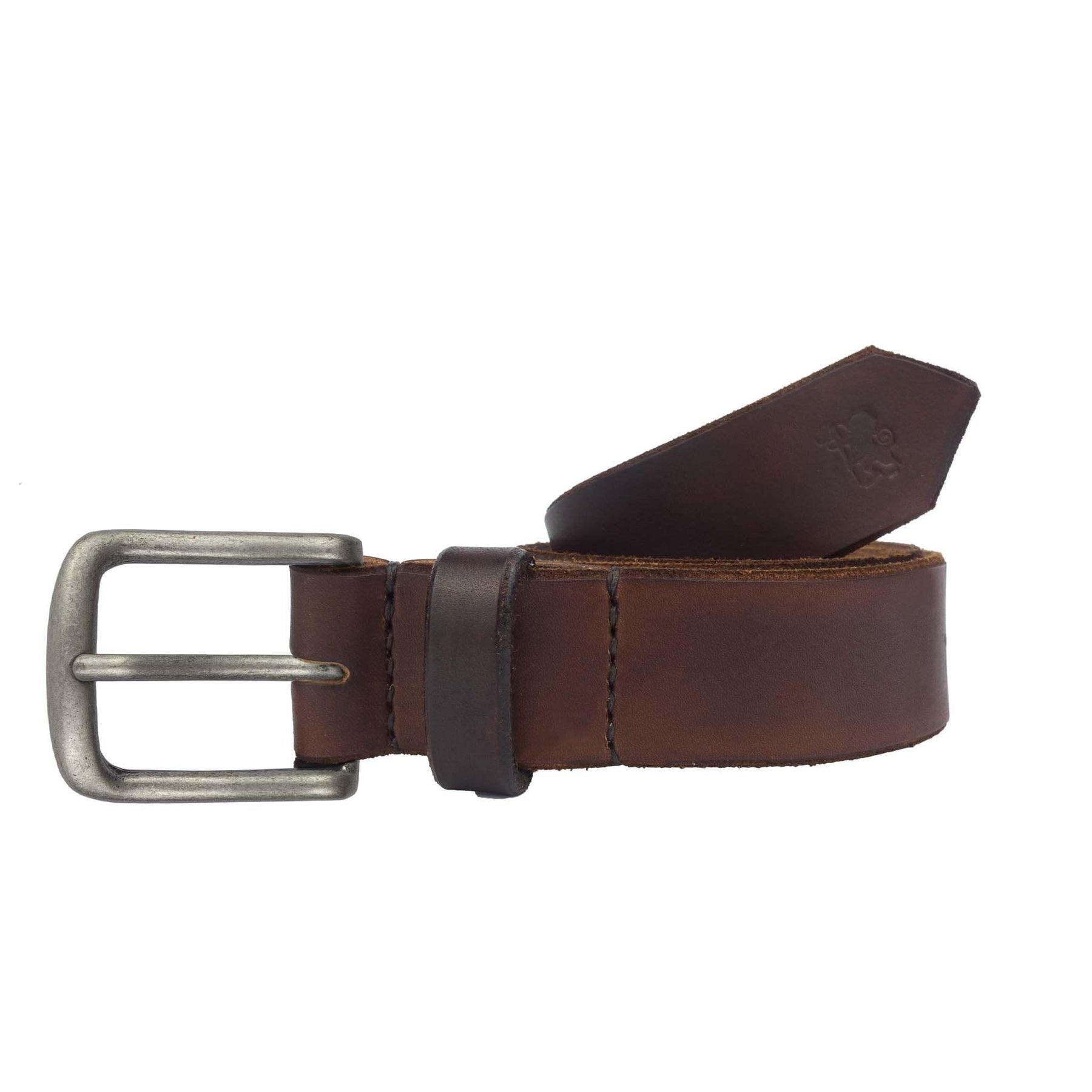
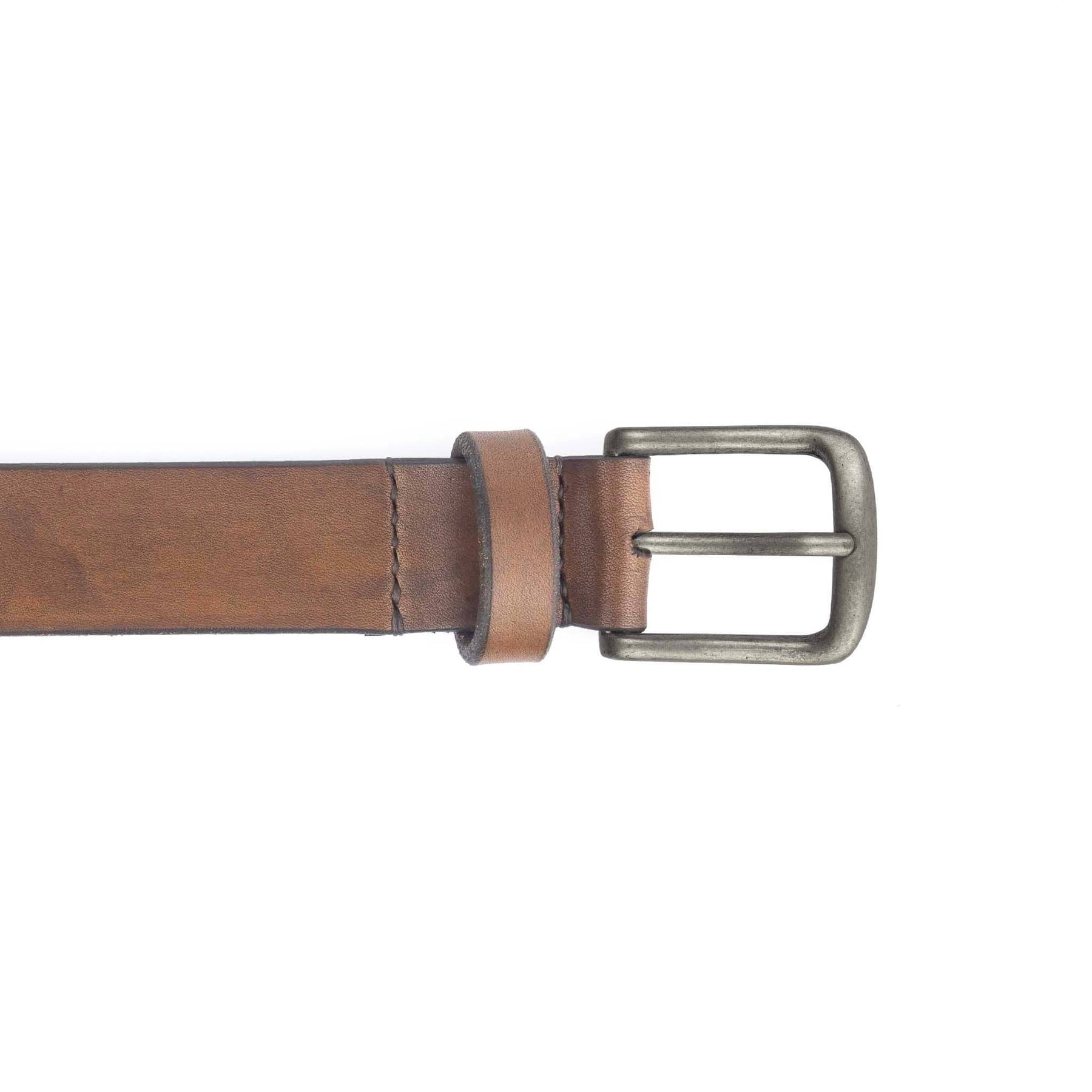
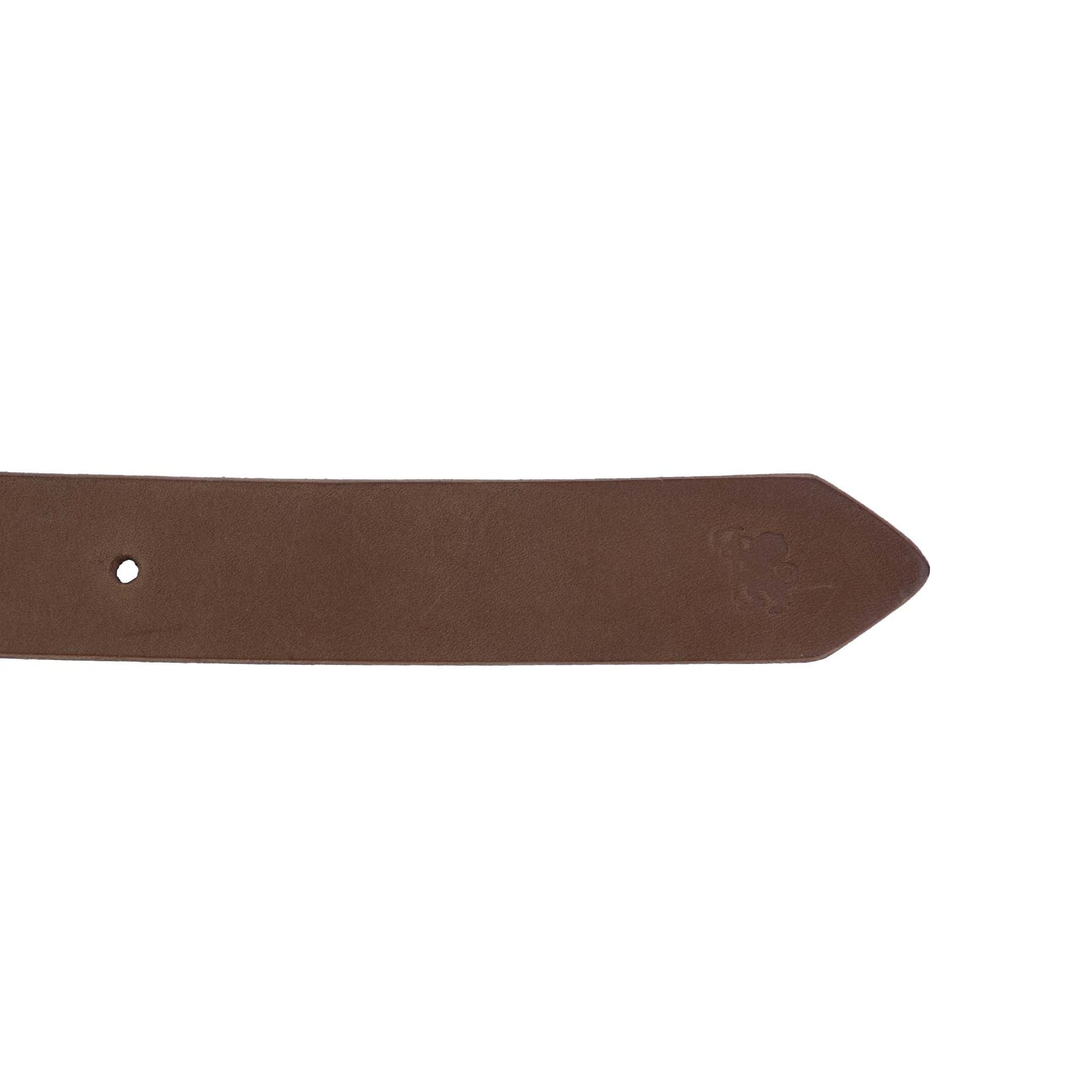
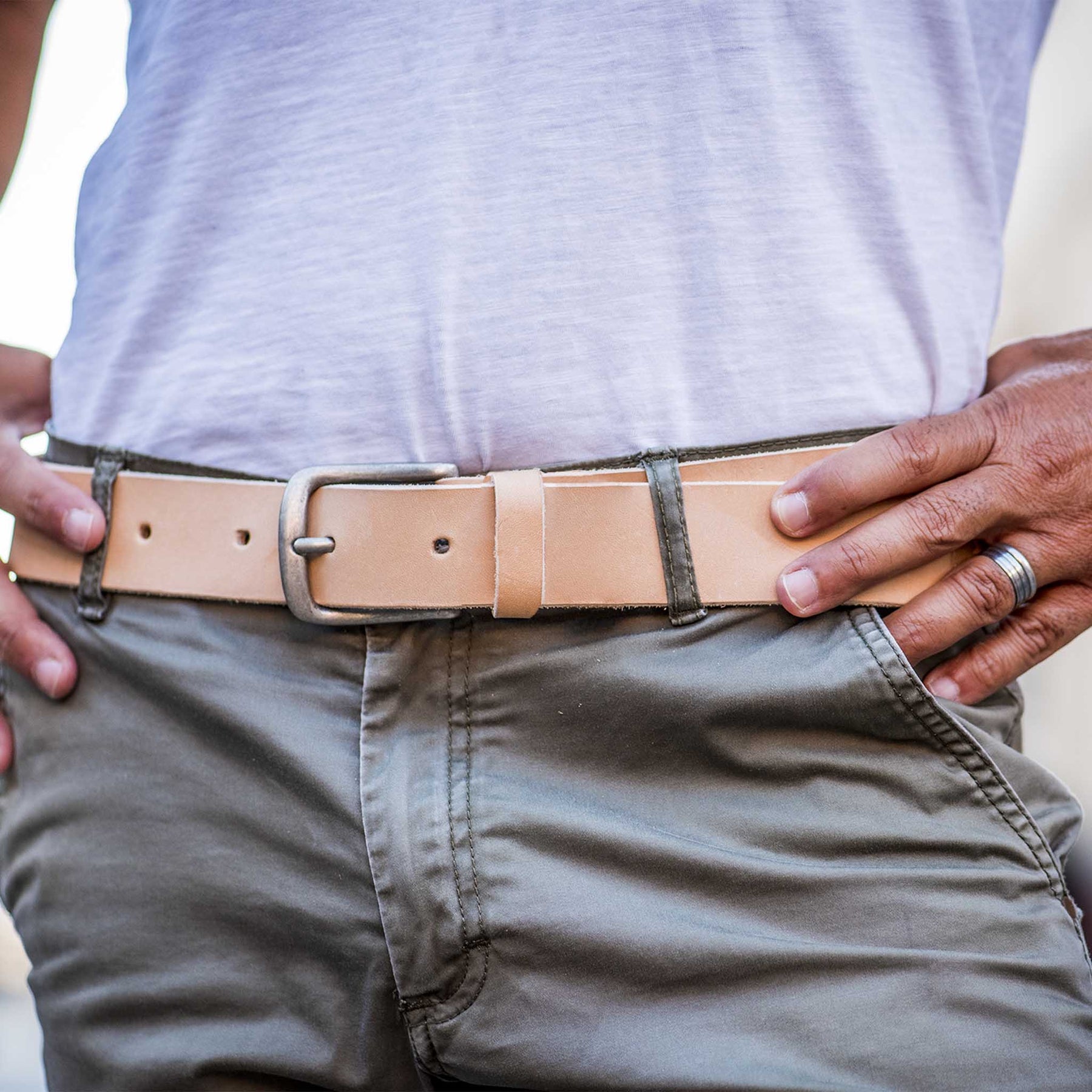
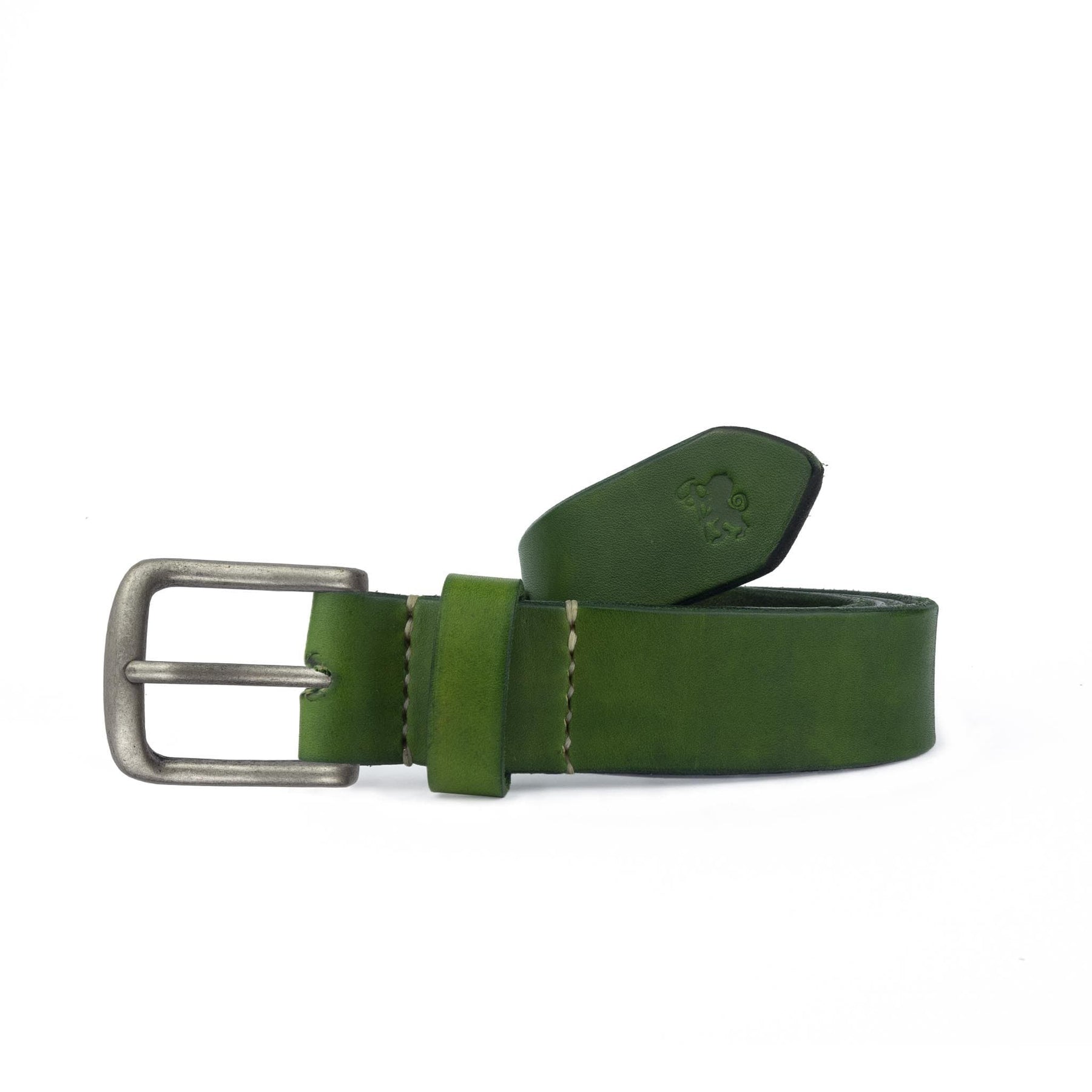
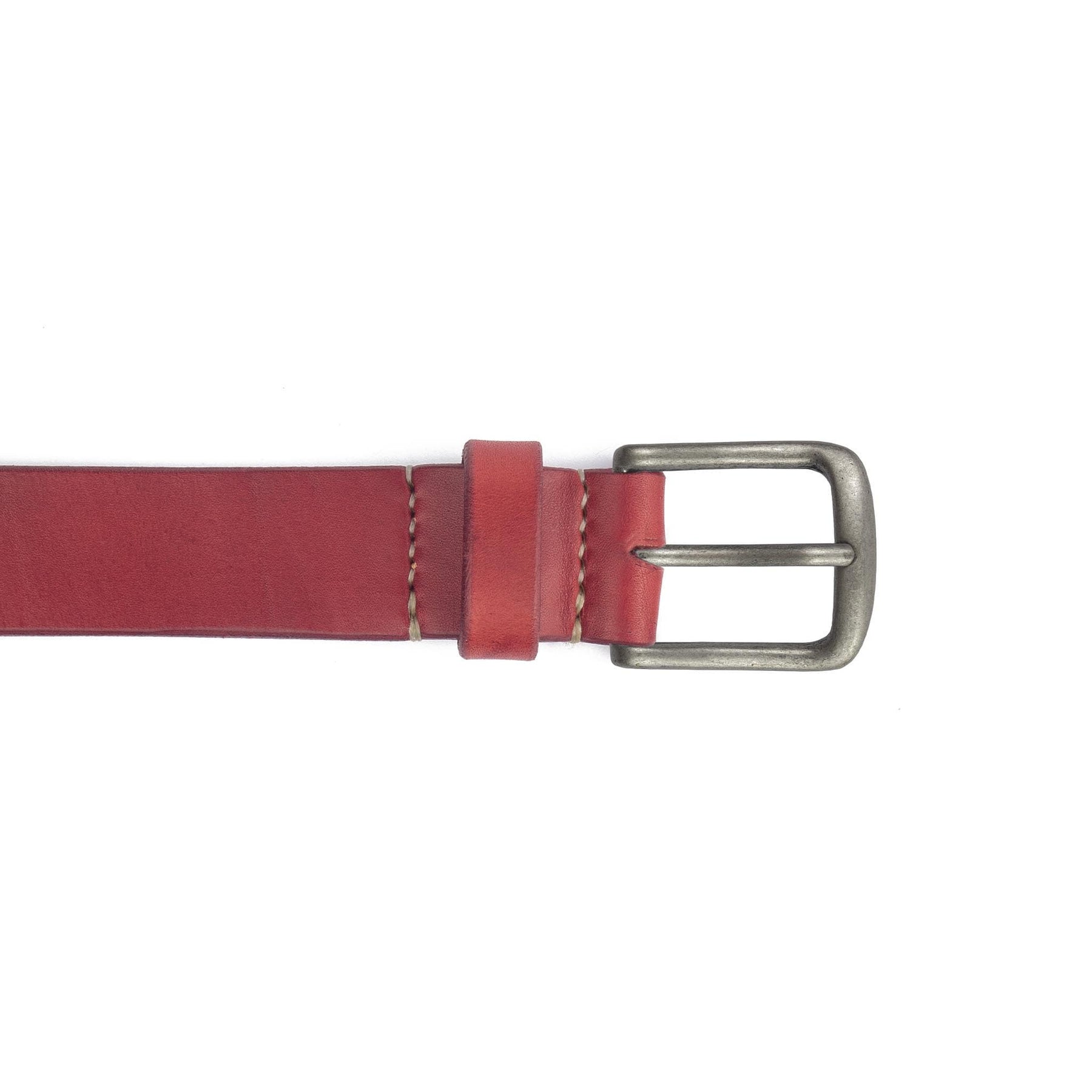
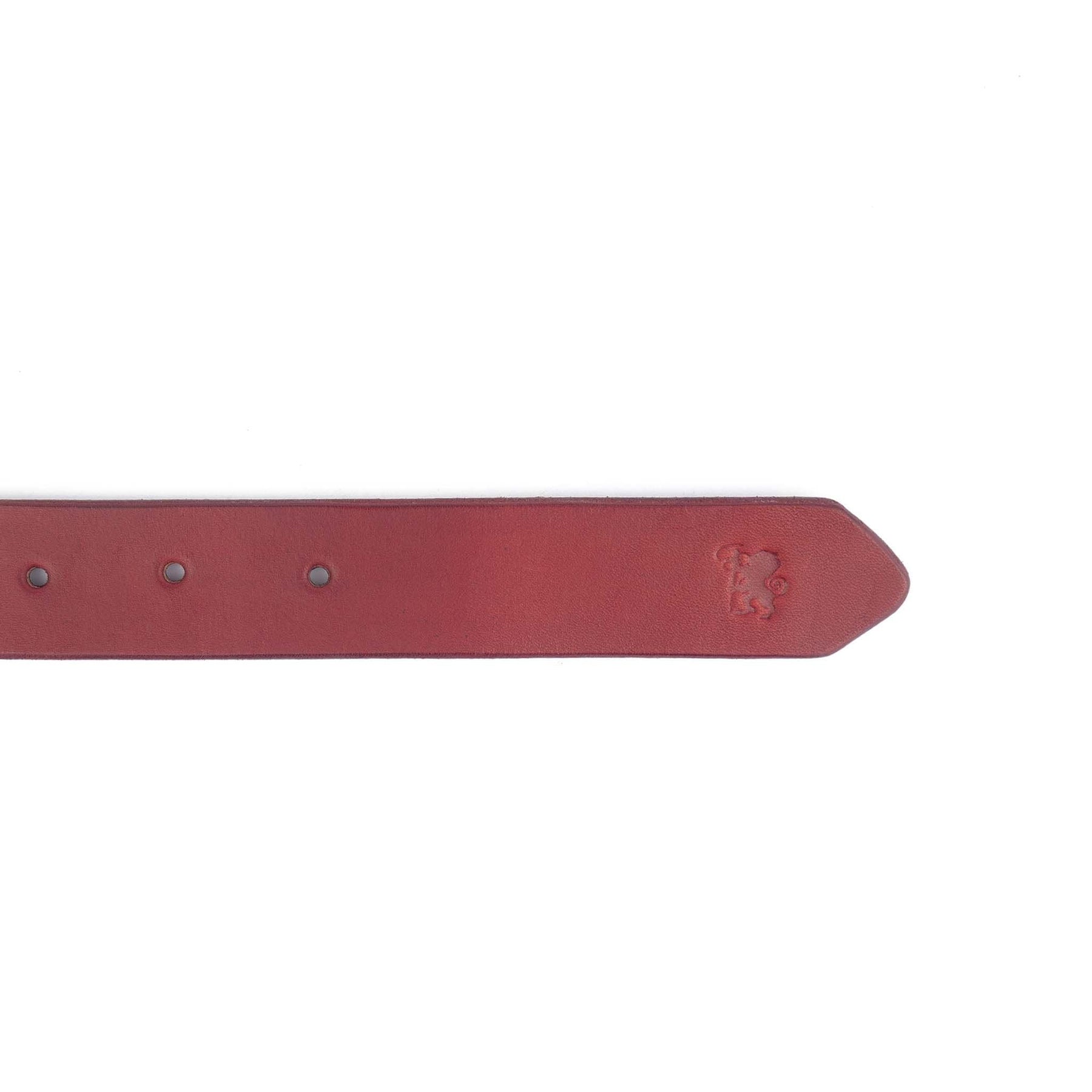
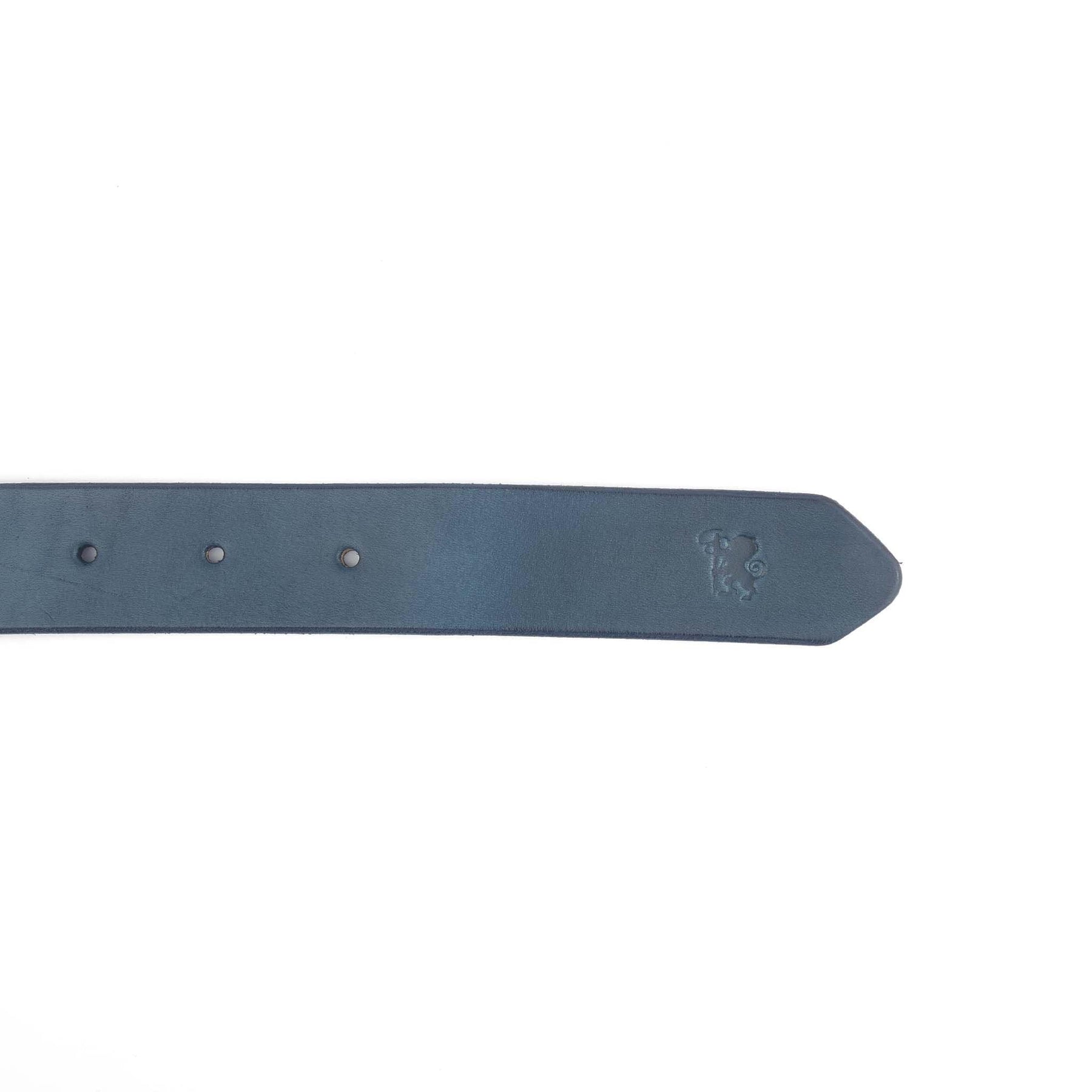
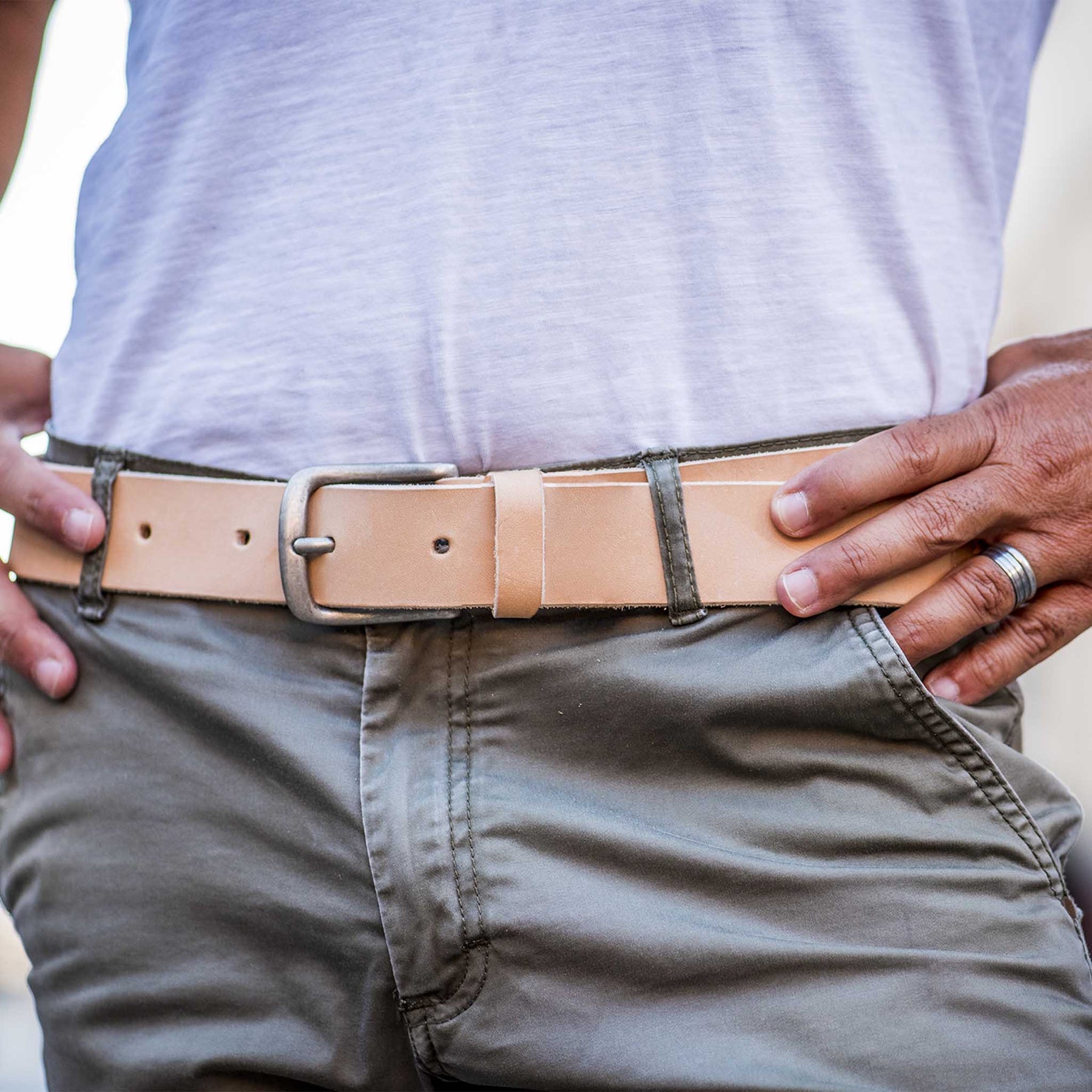
Titos Handmade Leather Belt for Men
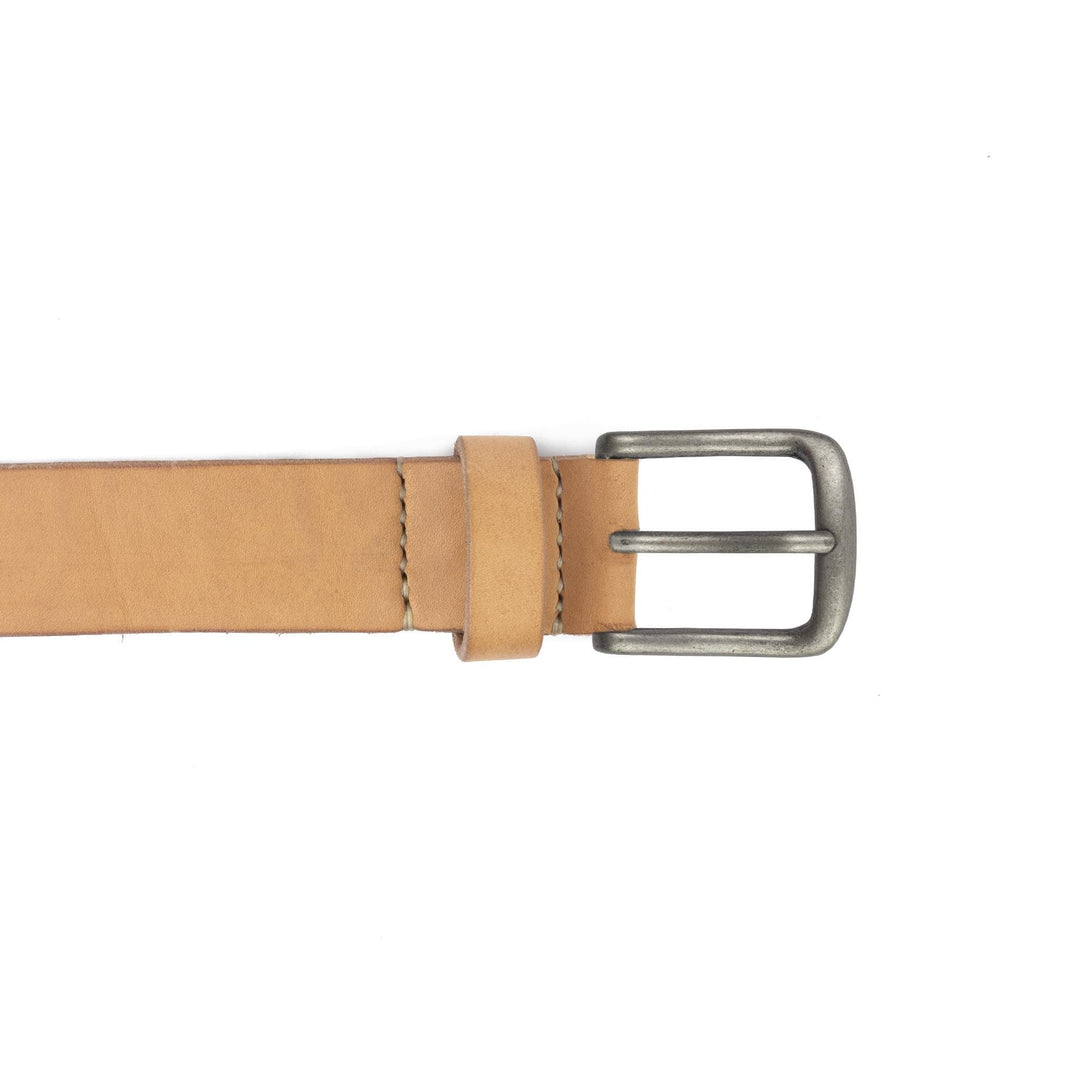
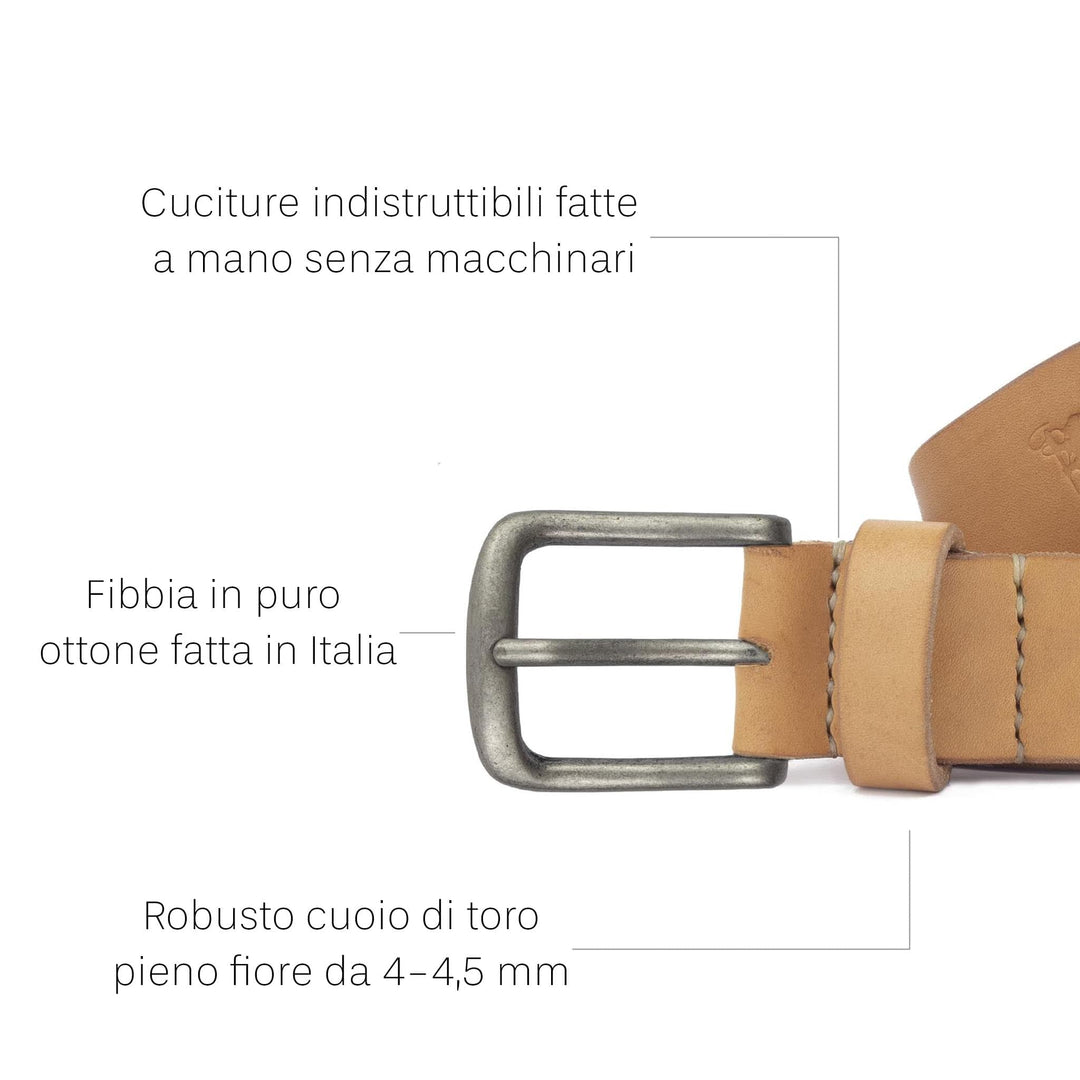
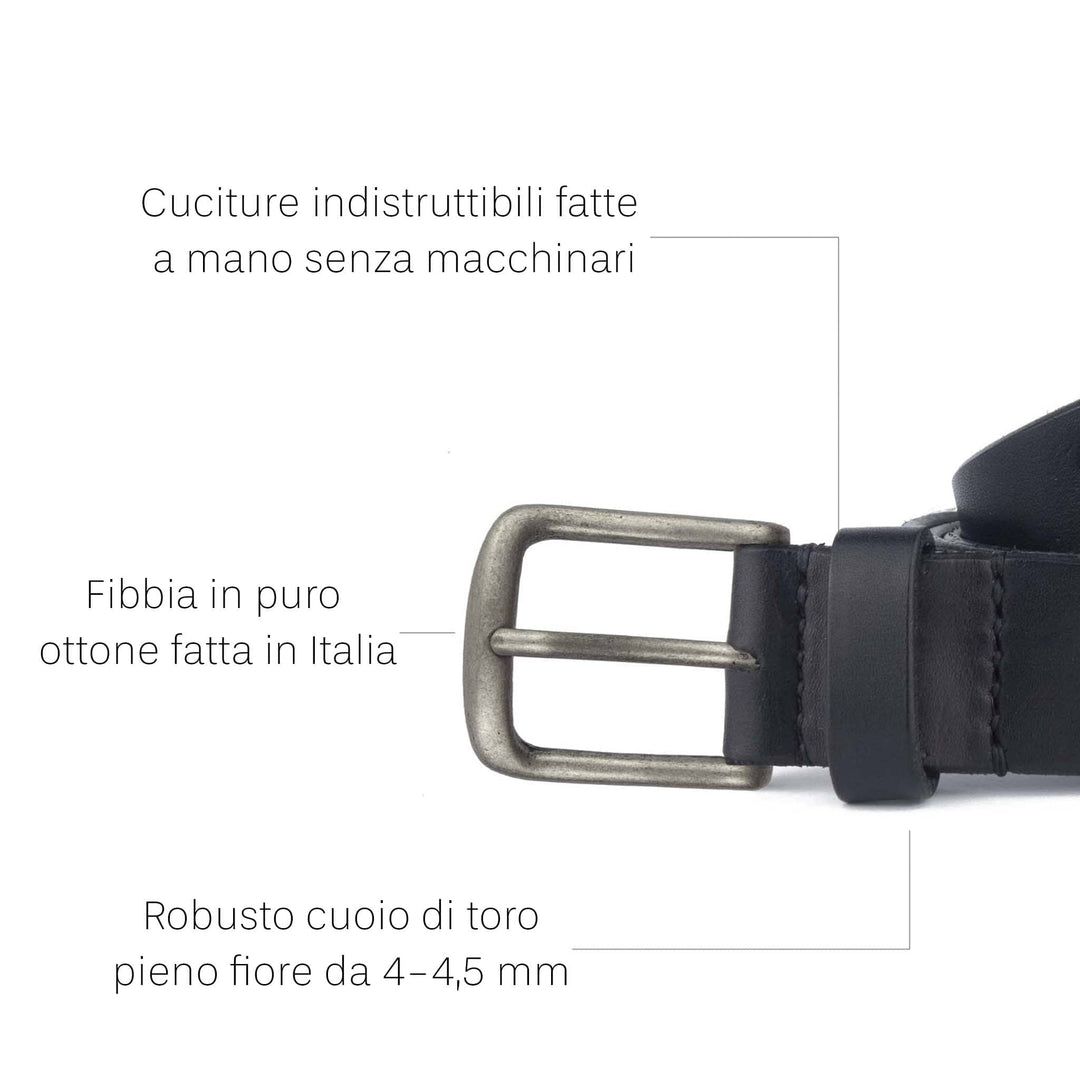
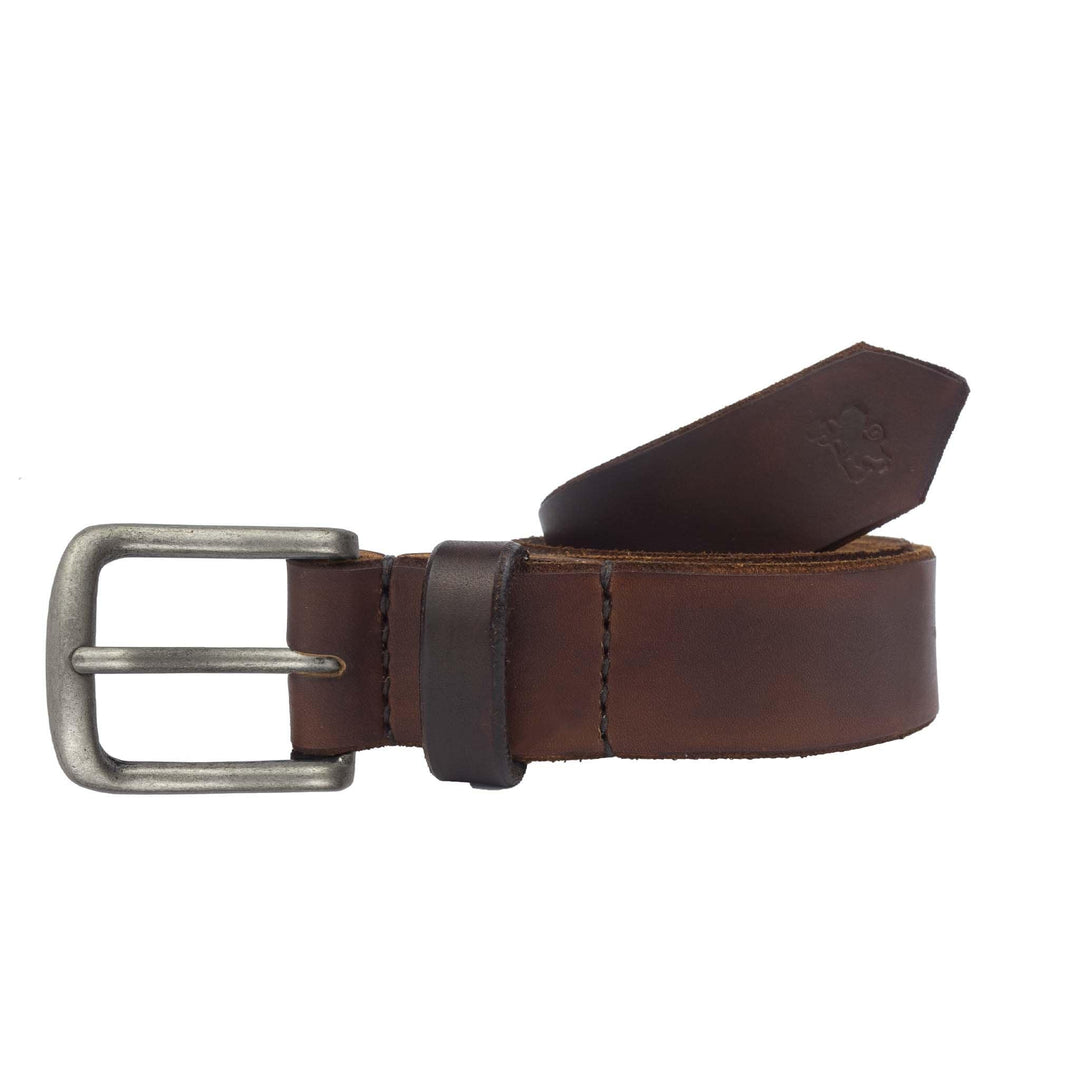
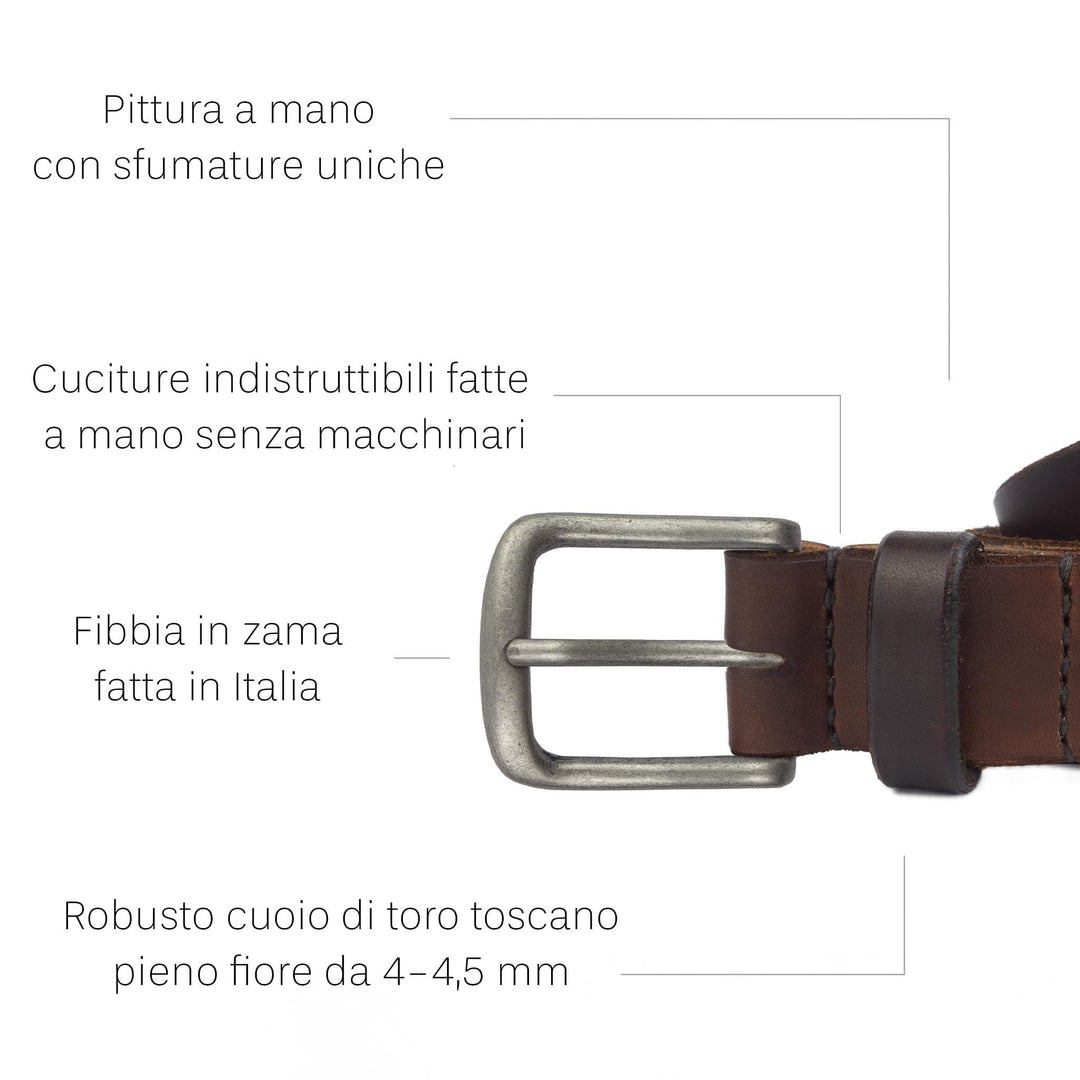
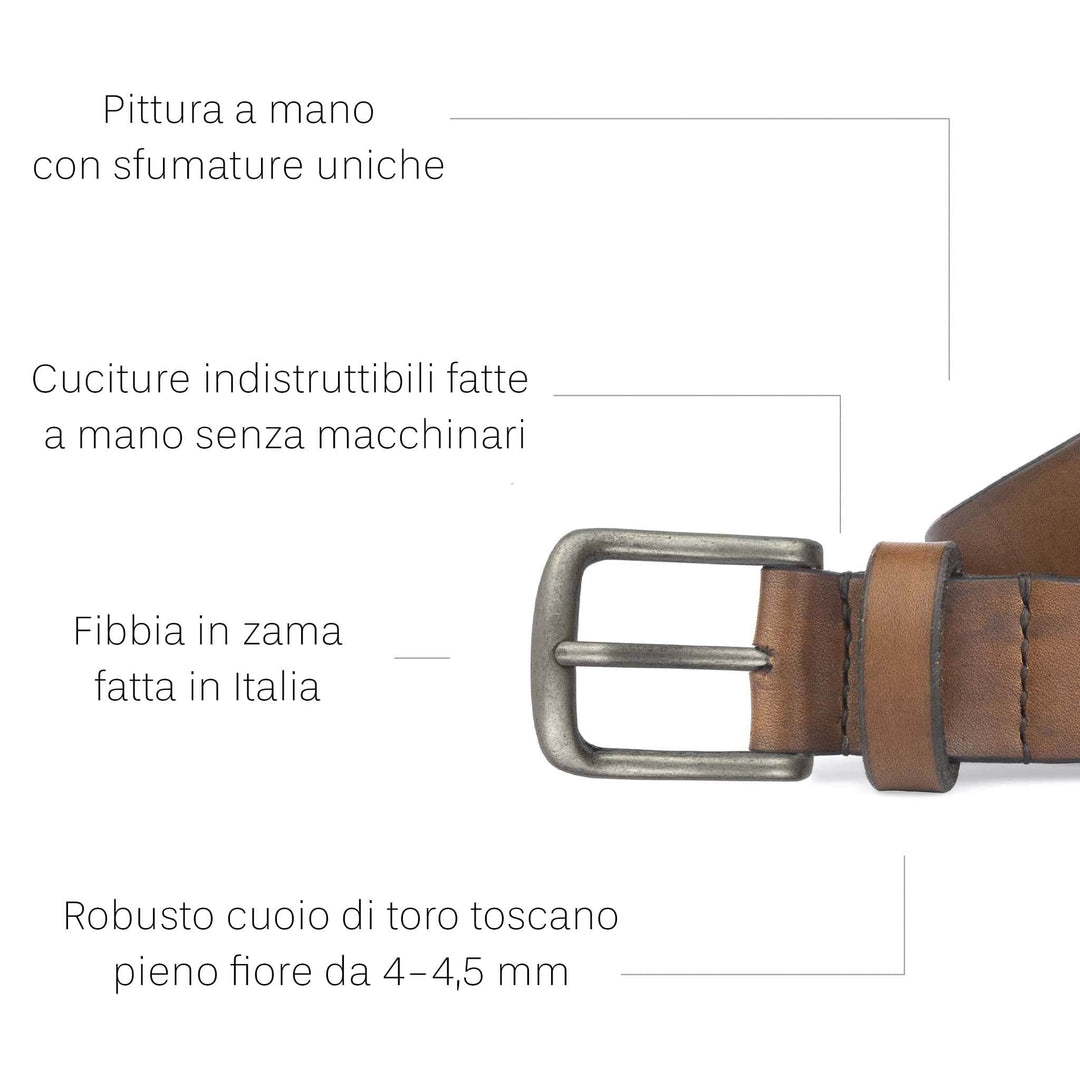
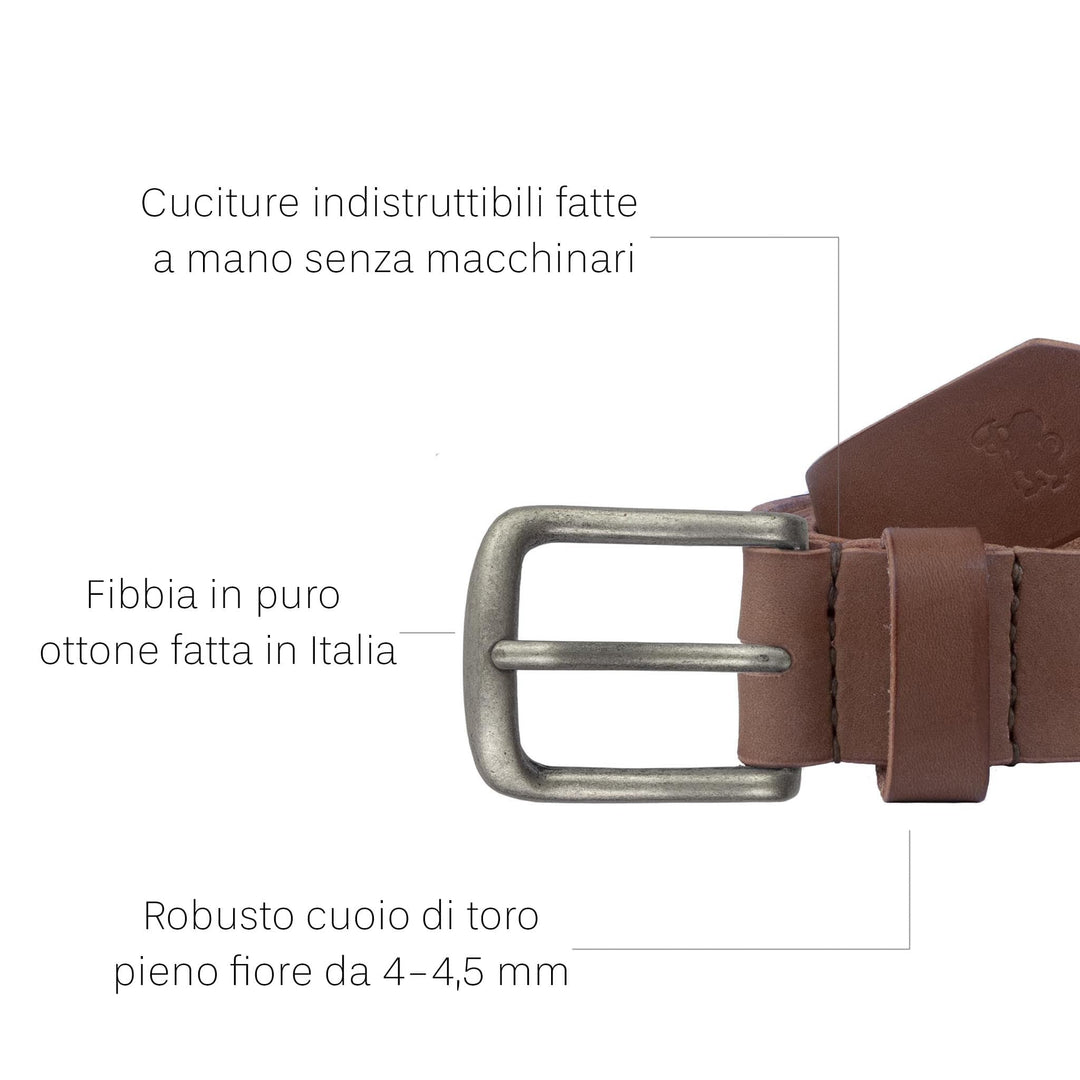
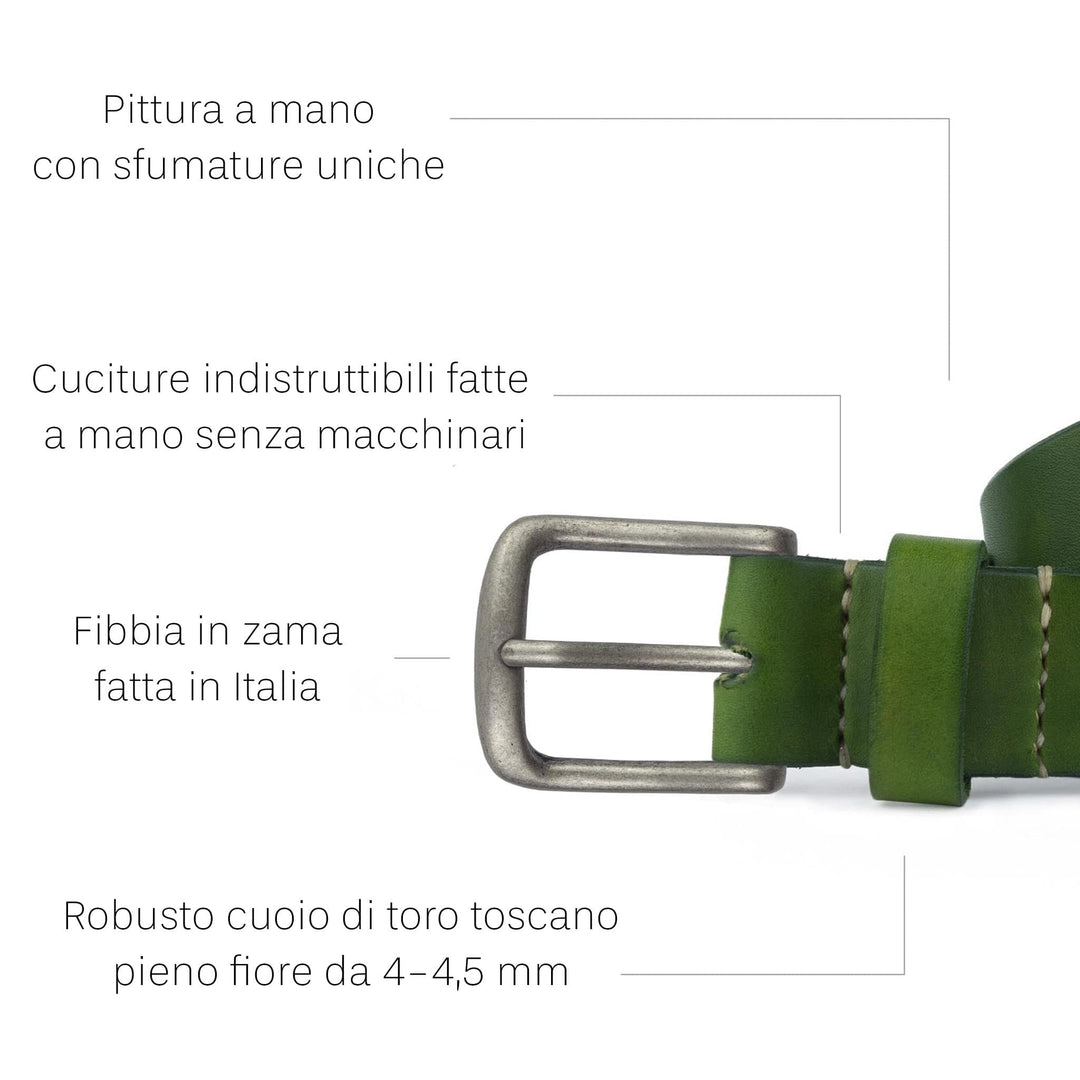
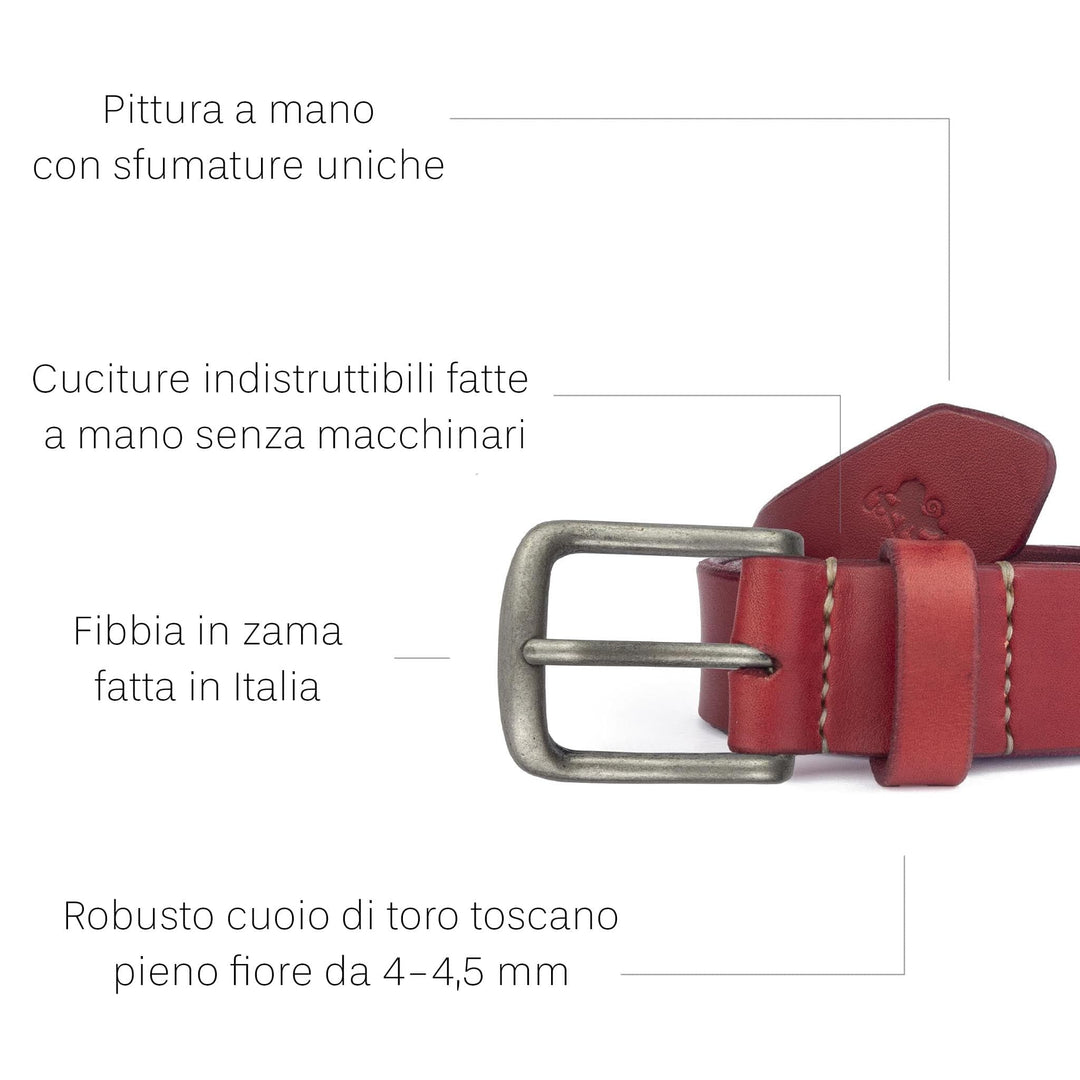
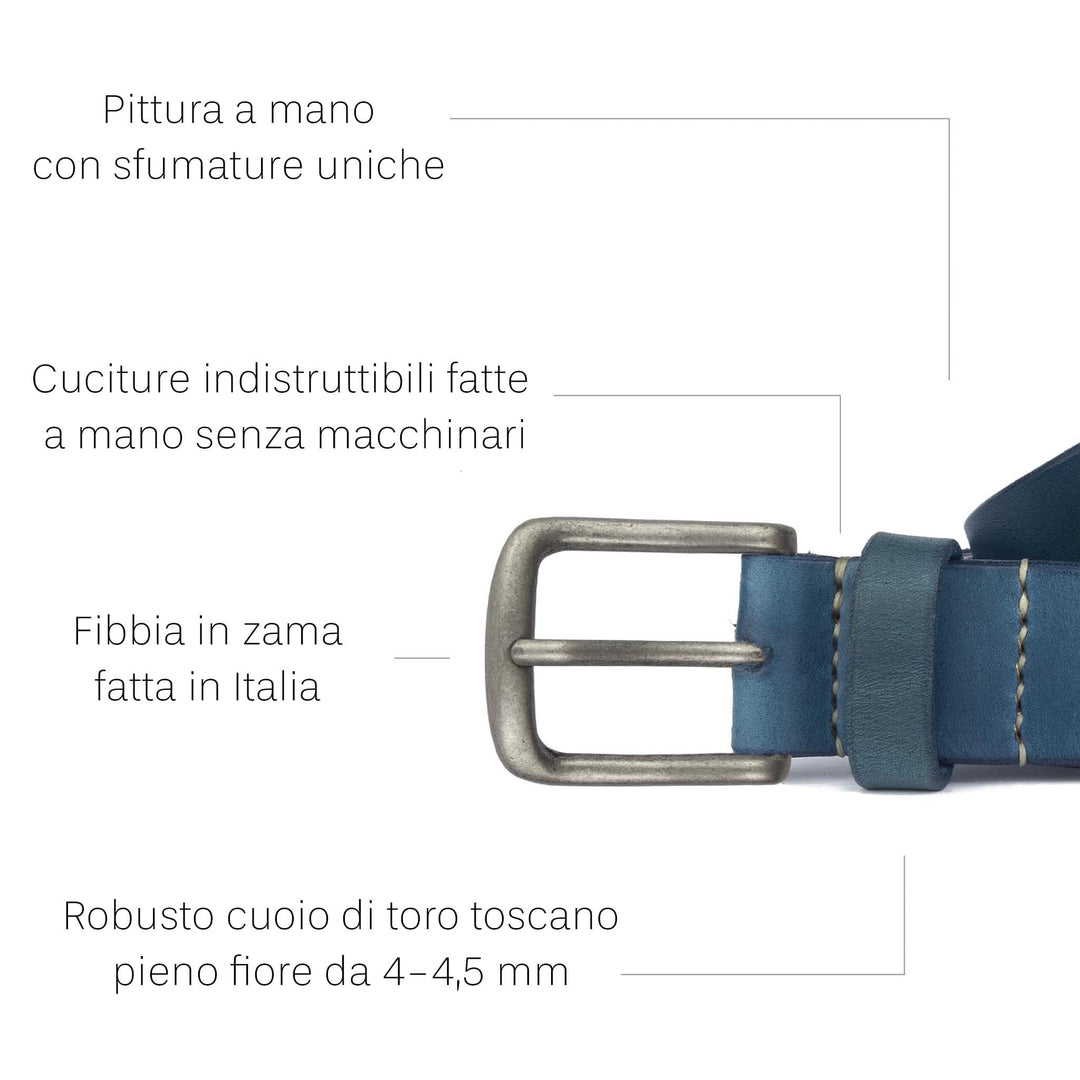
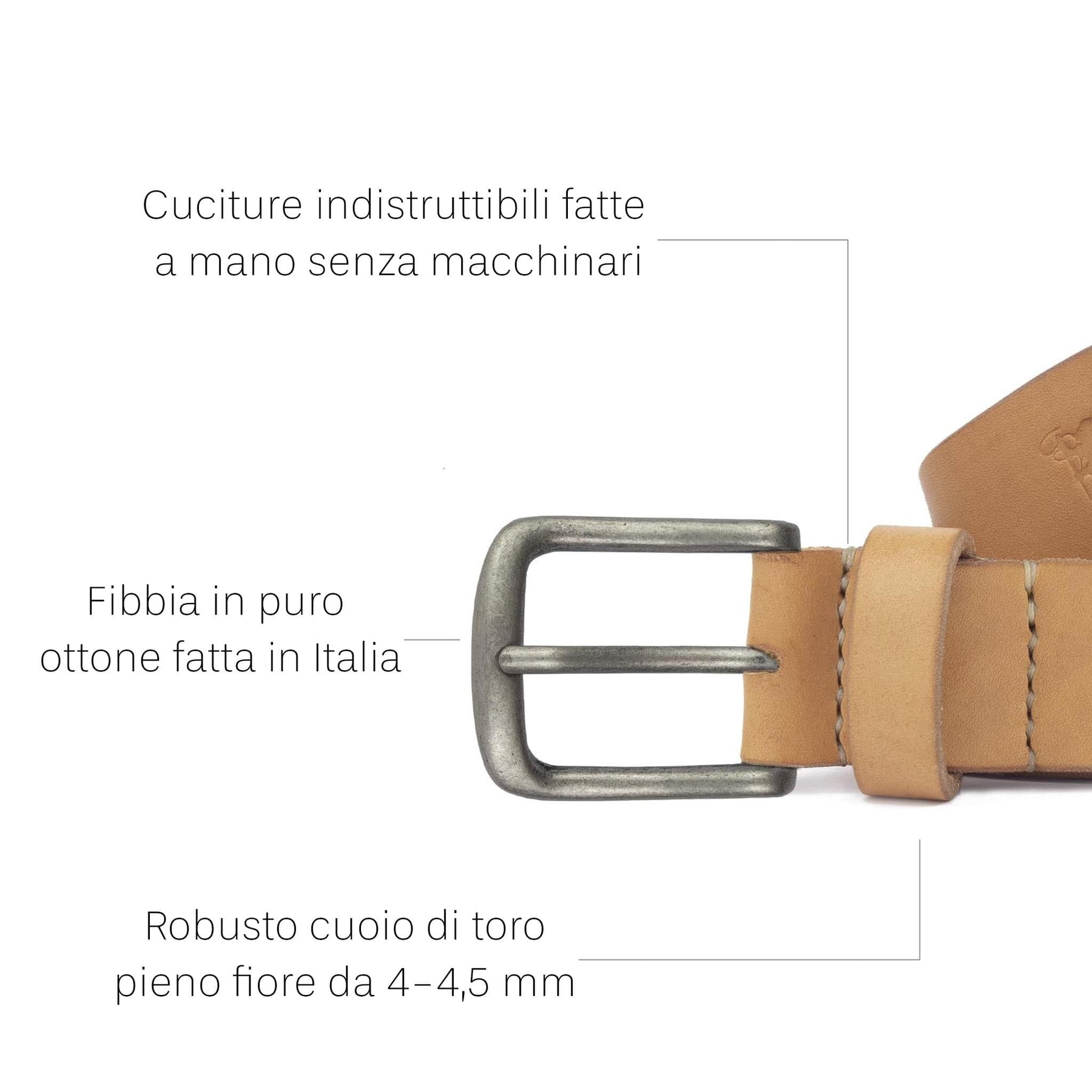
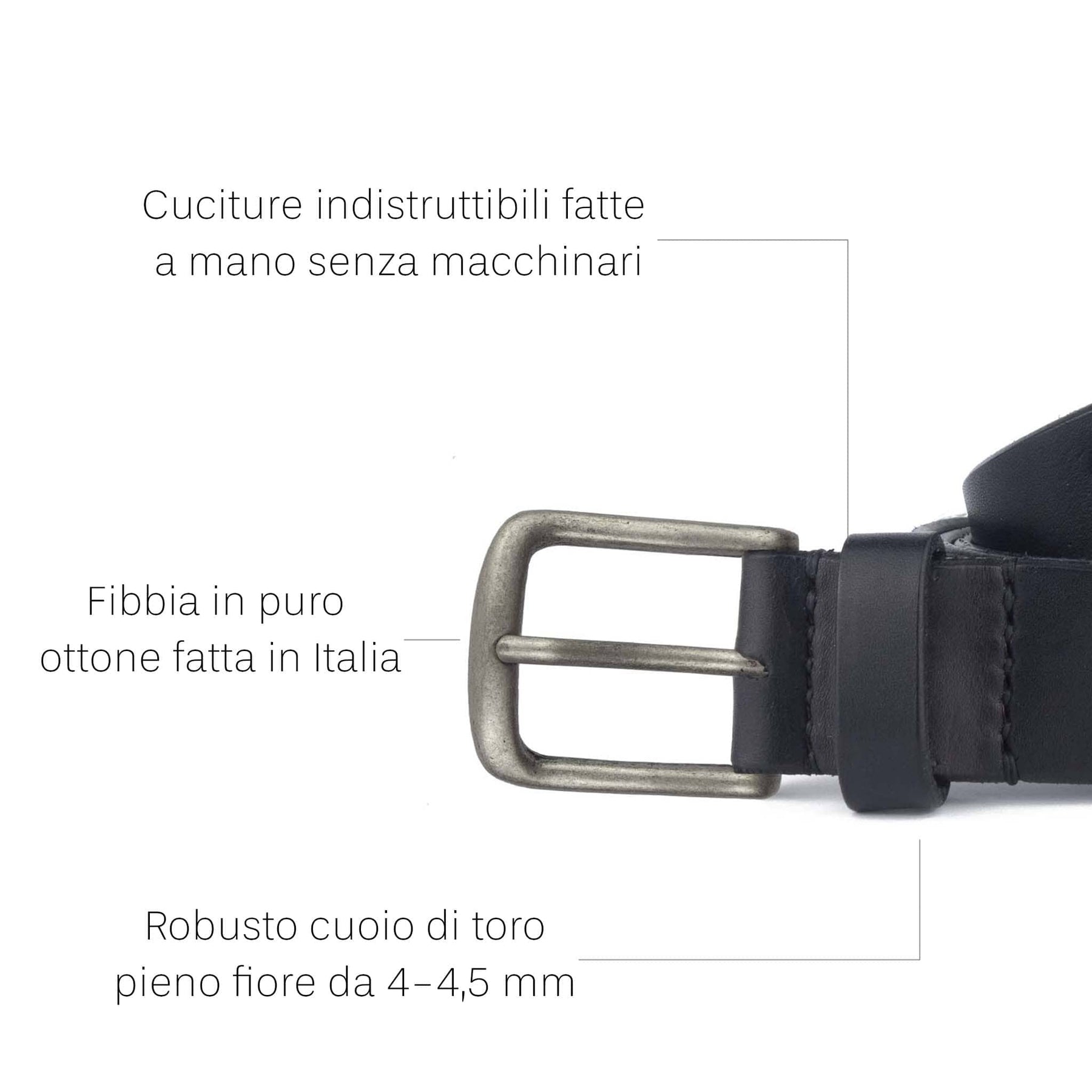
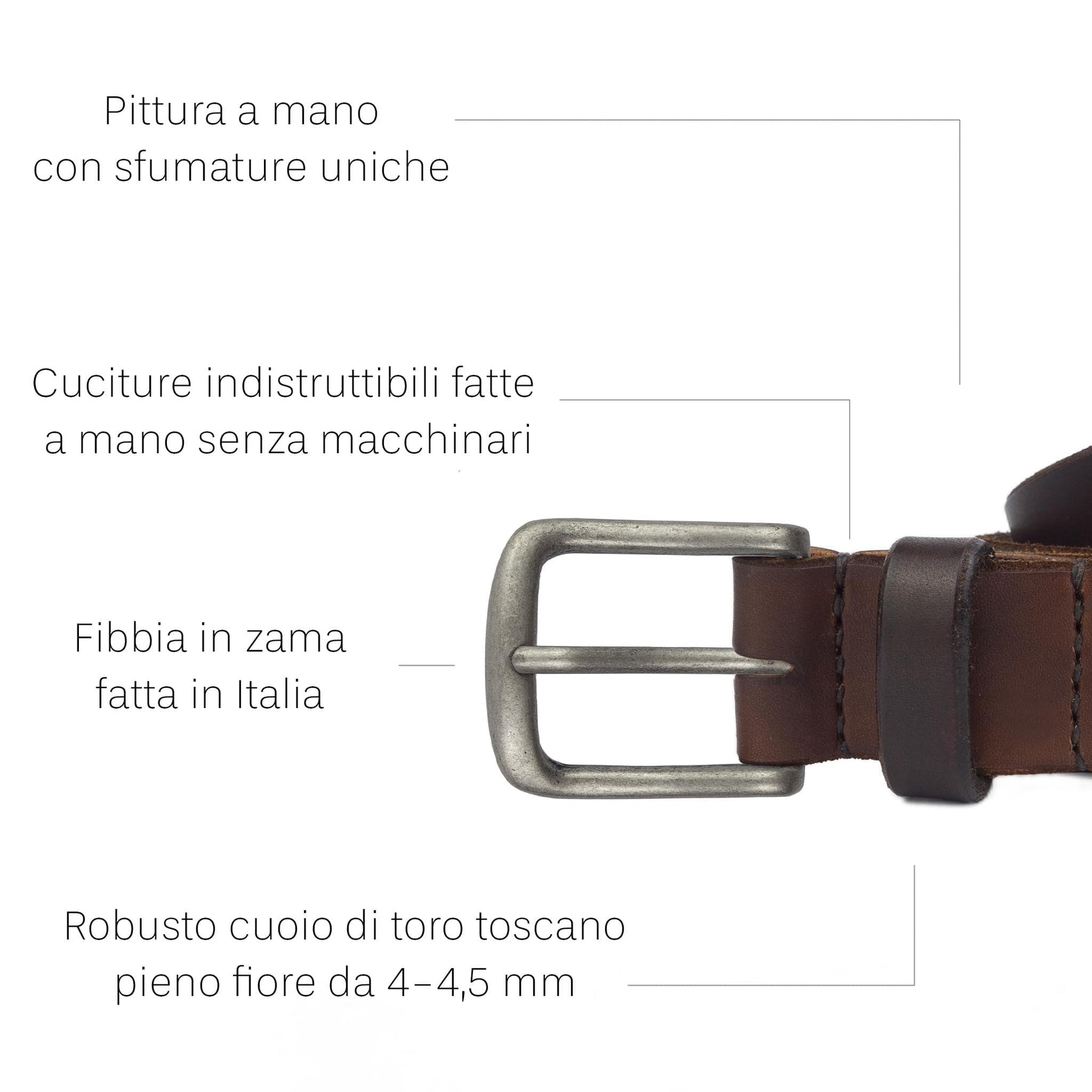
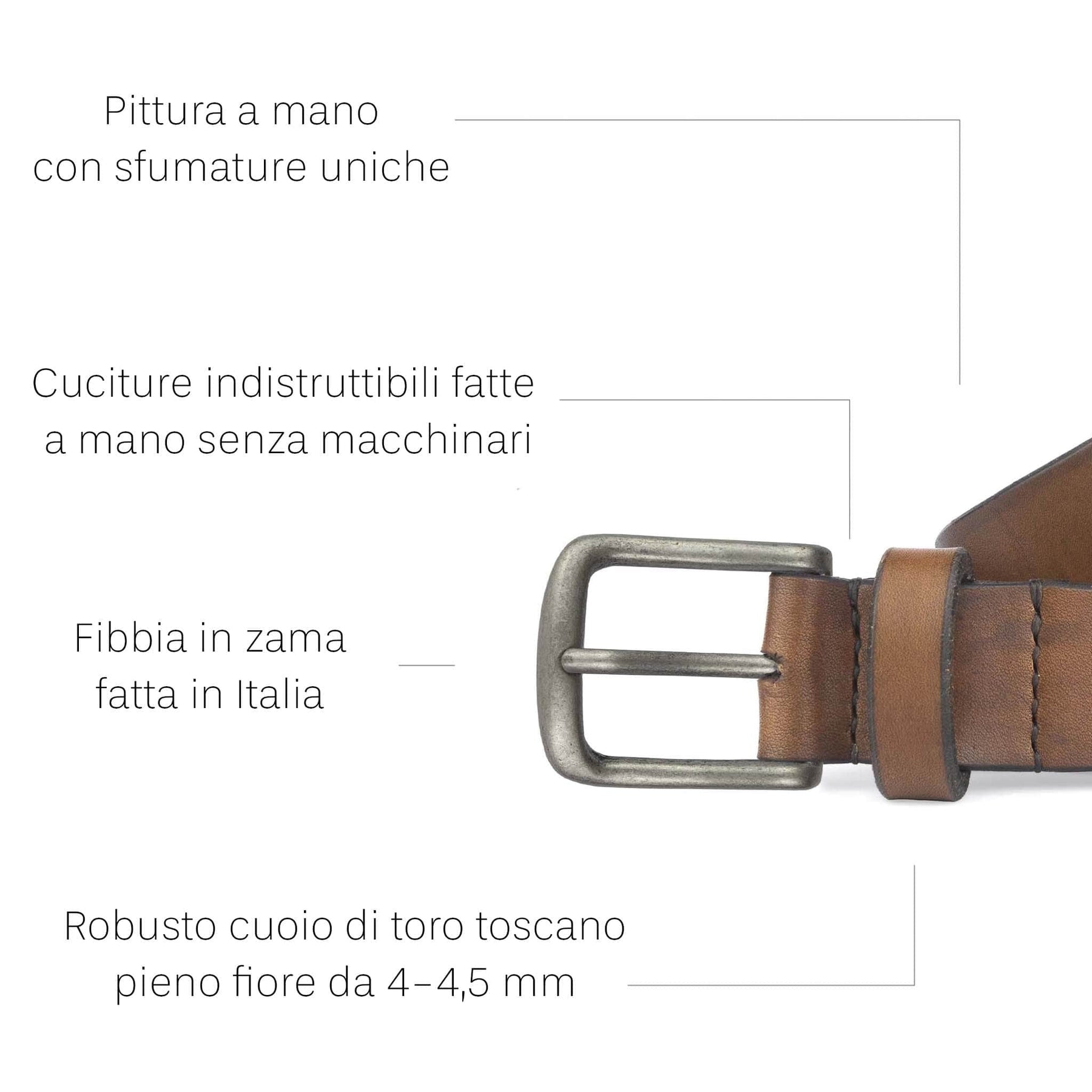
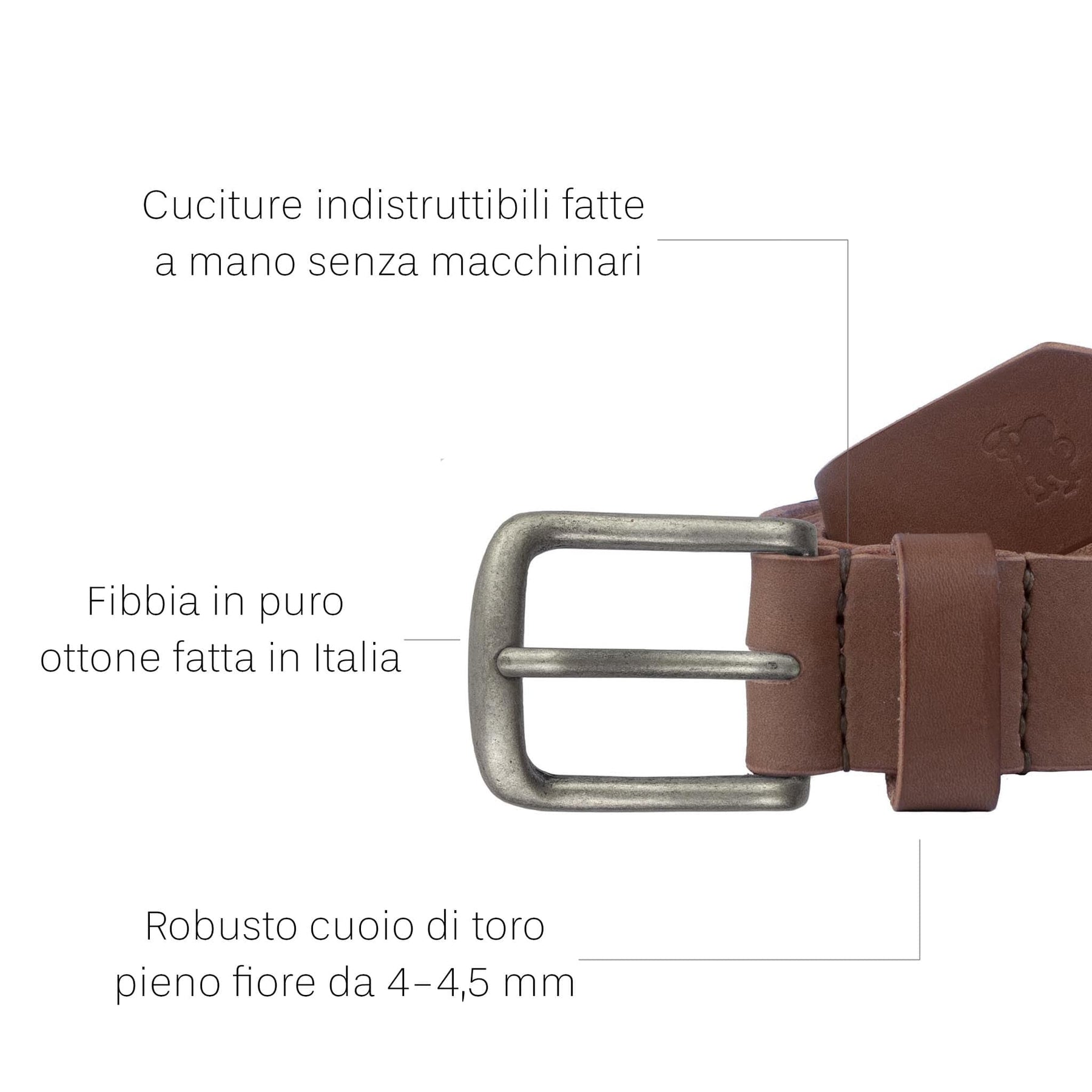
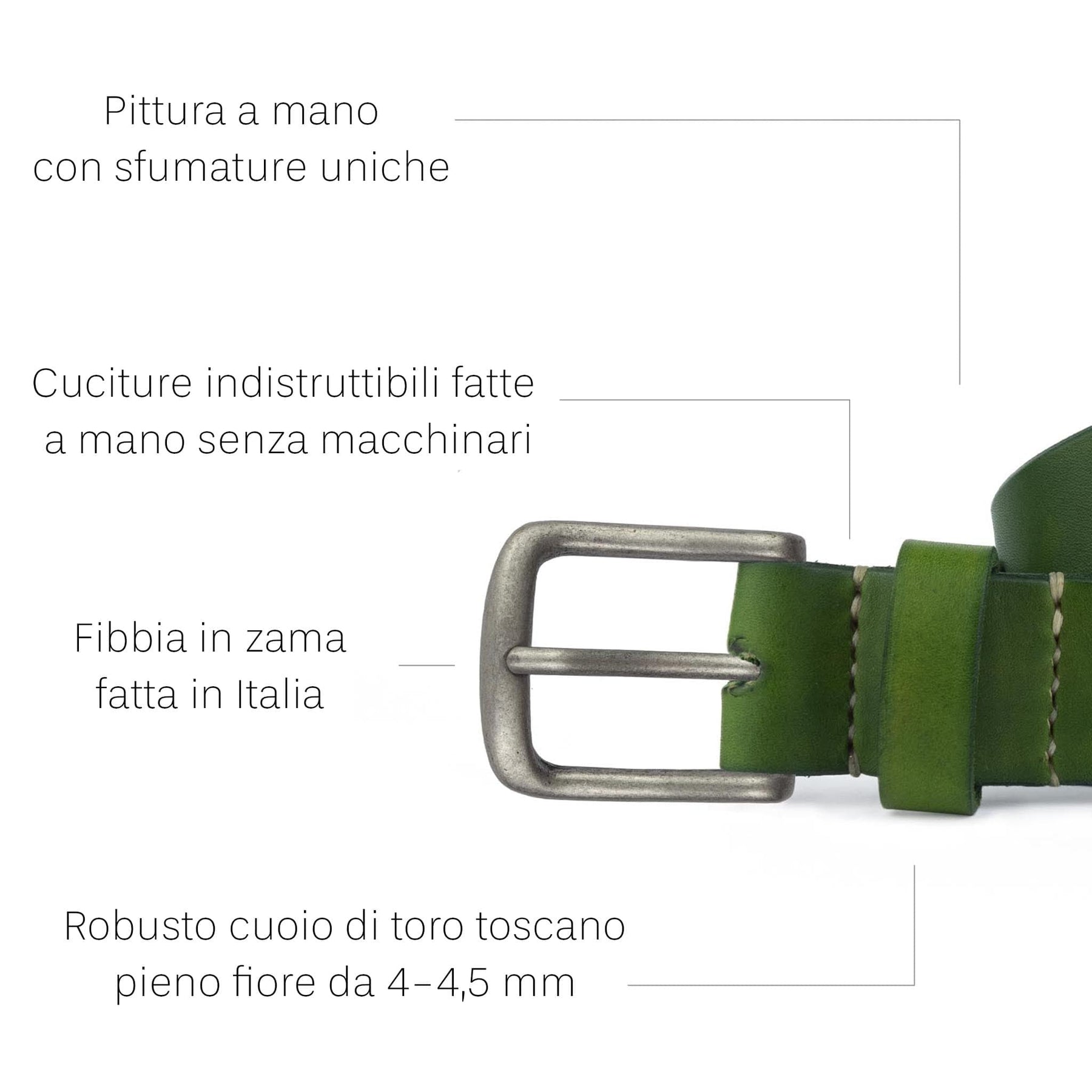
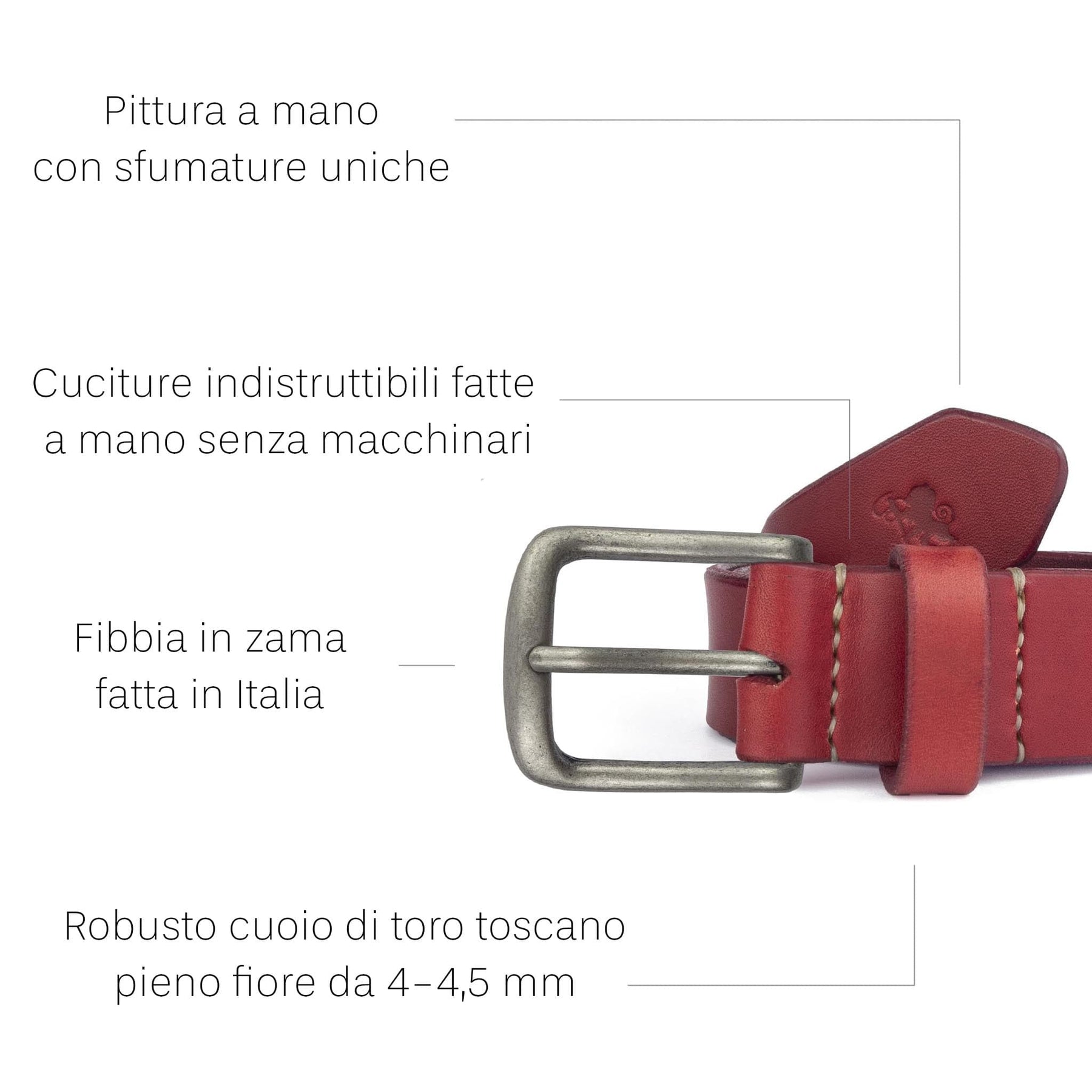
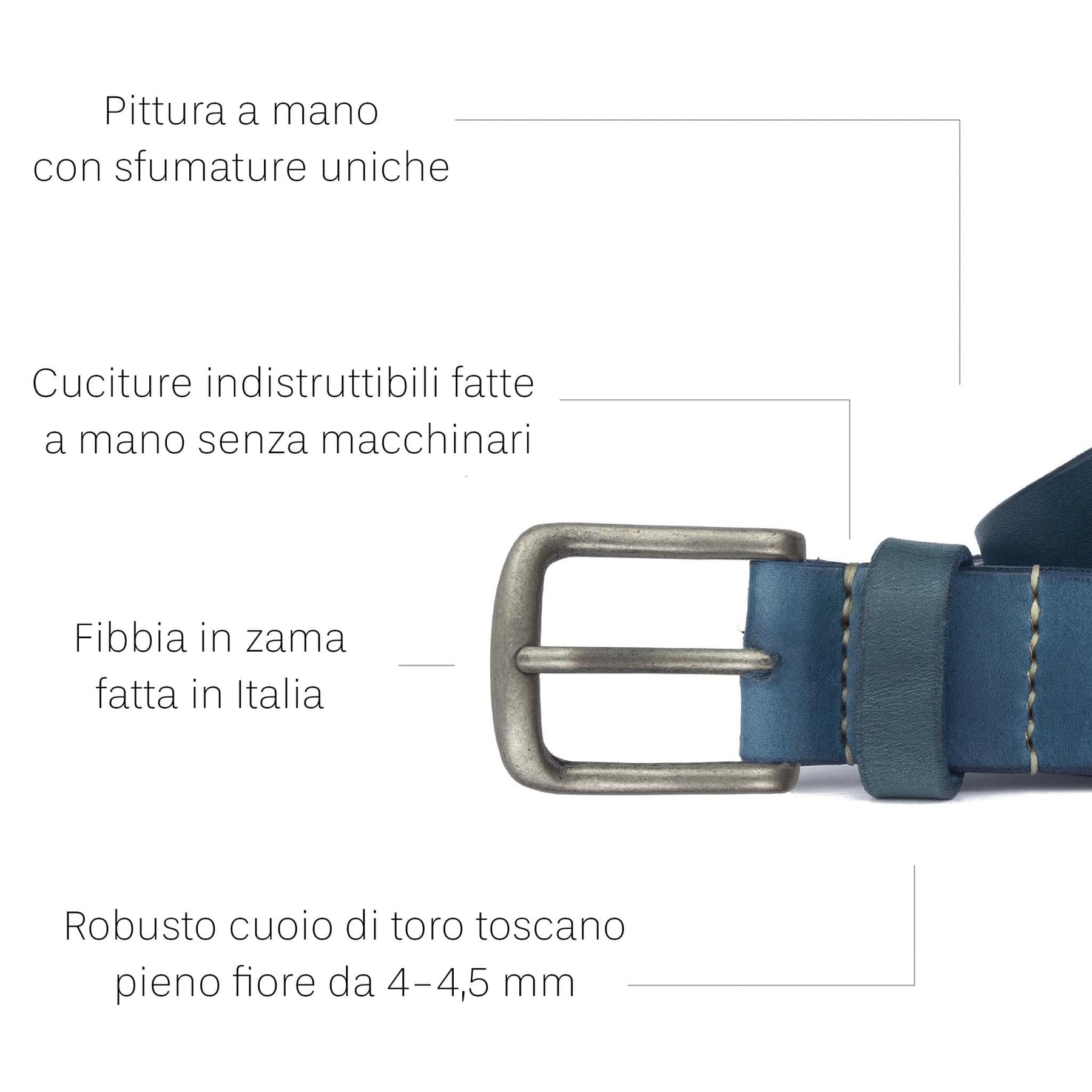
- Single-layer vegetable-tanned bull leather
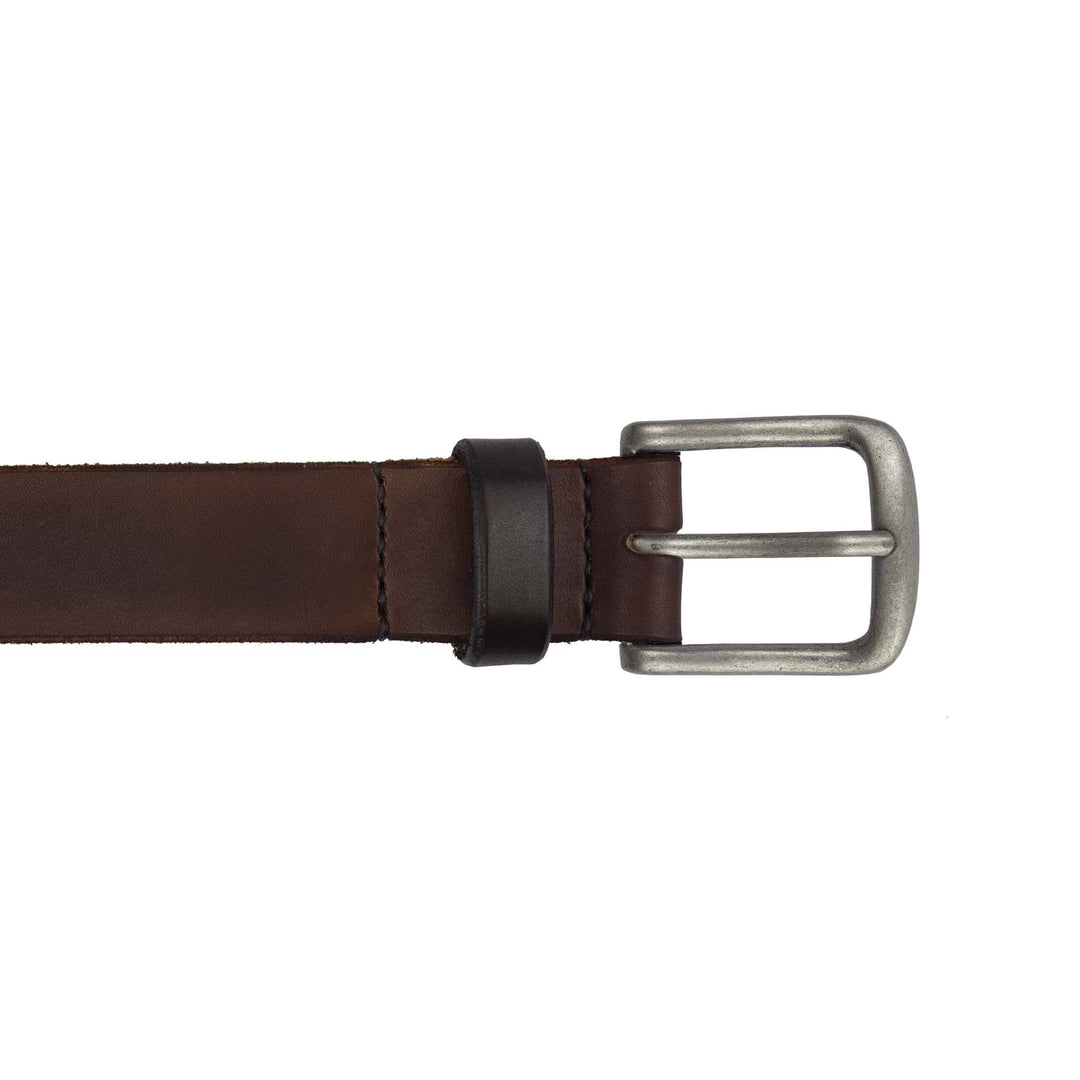
- Durable hand-stitched seams without machinery
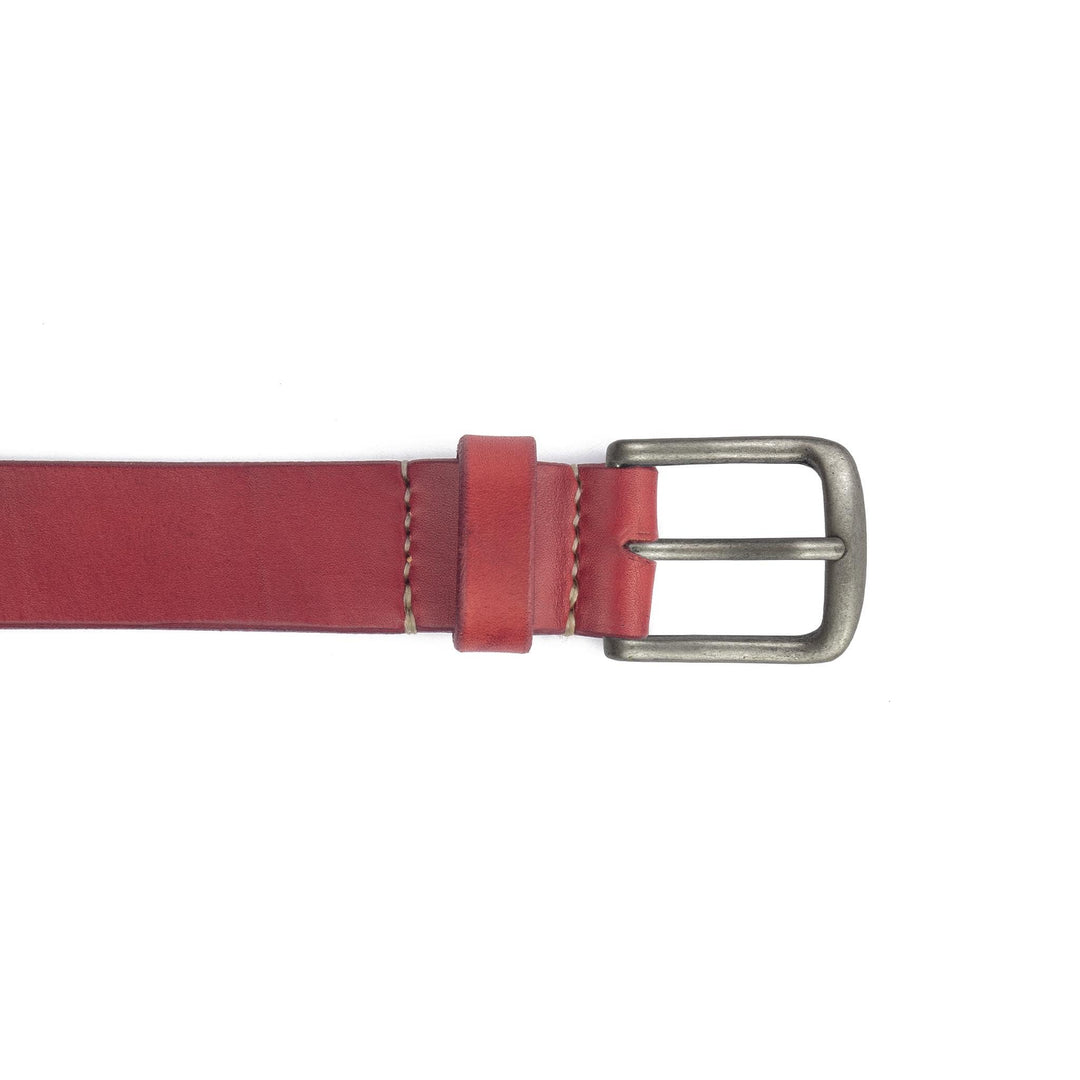
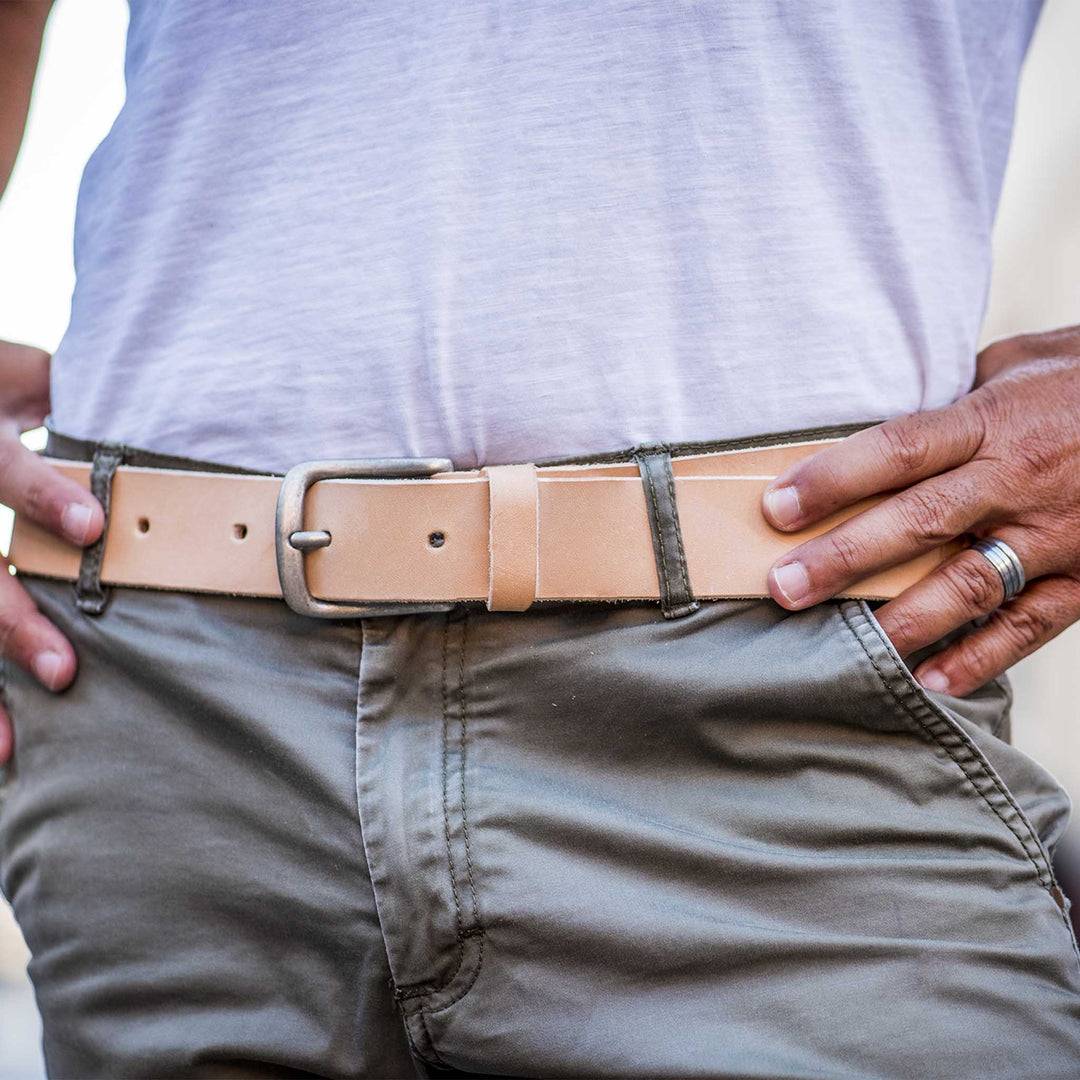
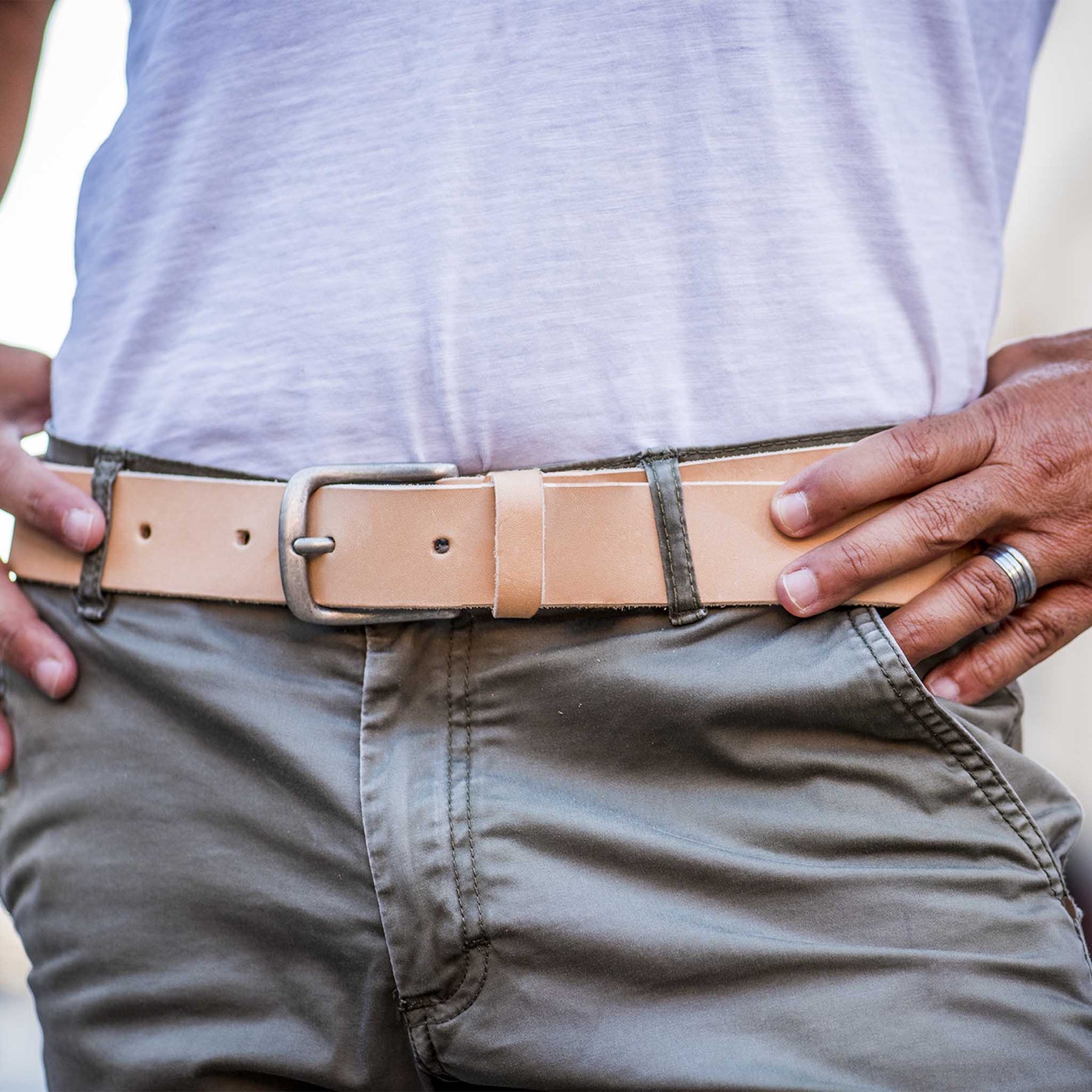
- Leather belt width 4 cm
- Low stock - 4 items left
- Free Returns
- Carbon-neutral express delivery

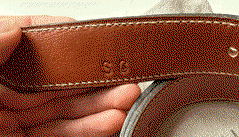
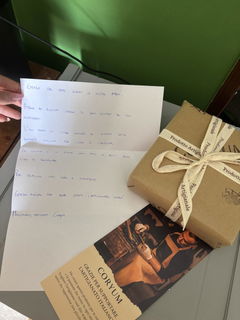
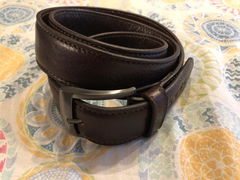
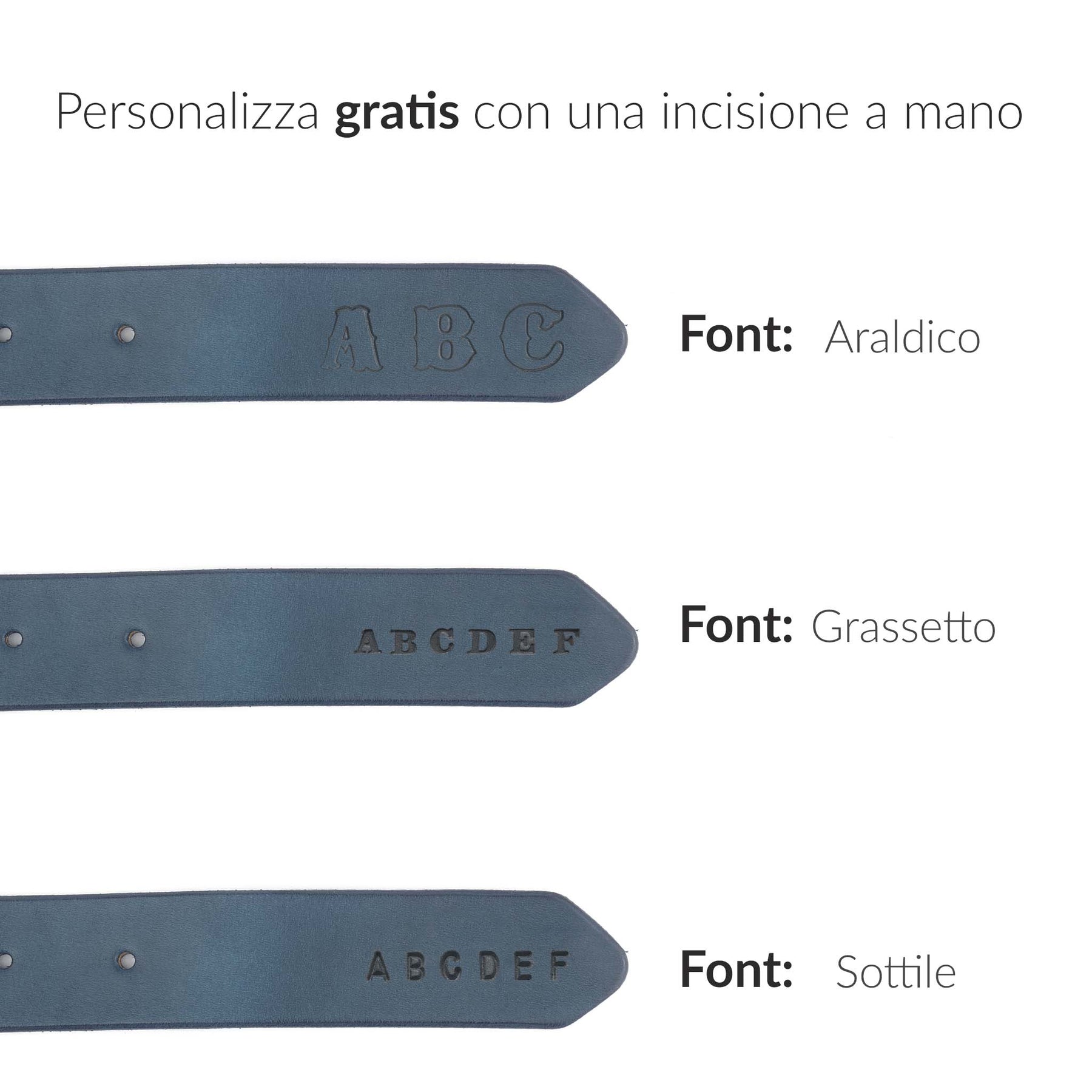
È il mio secondo acquisto e sono super soddisfatta. Ho scelto di regalare una cintura artigianale per poter donare qualcosa di unico e originale. Bella l'idea di poter incidere le iniziali. Appena aperta la scatola, si può sentite l'odore del cuoio e si apprezza la cura della lavorazione.
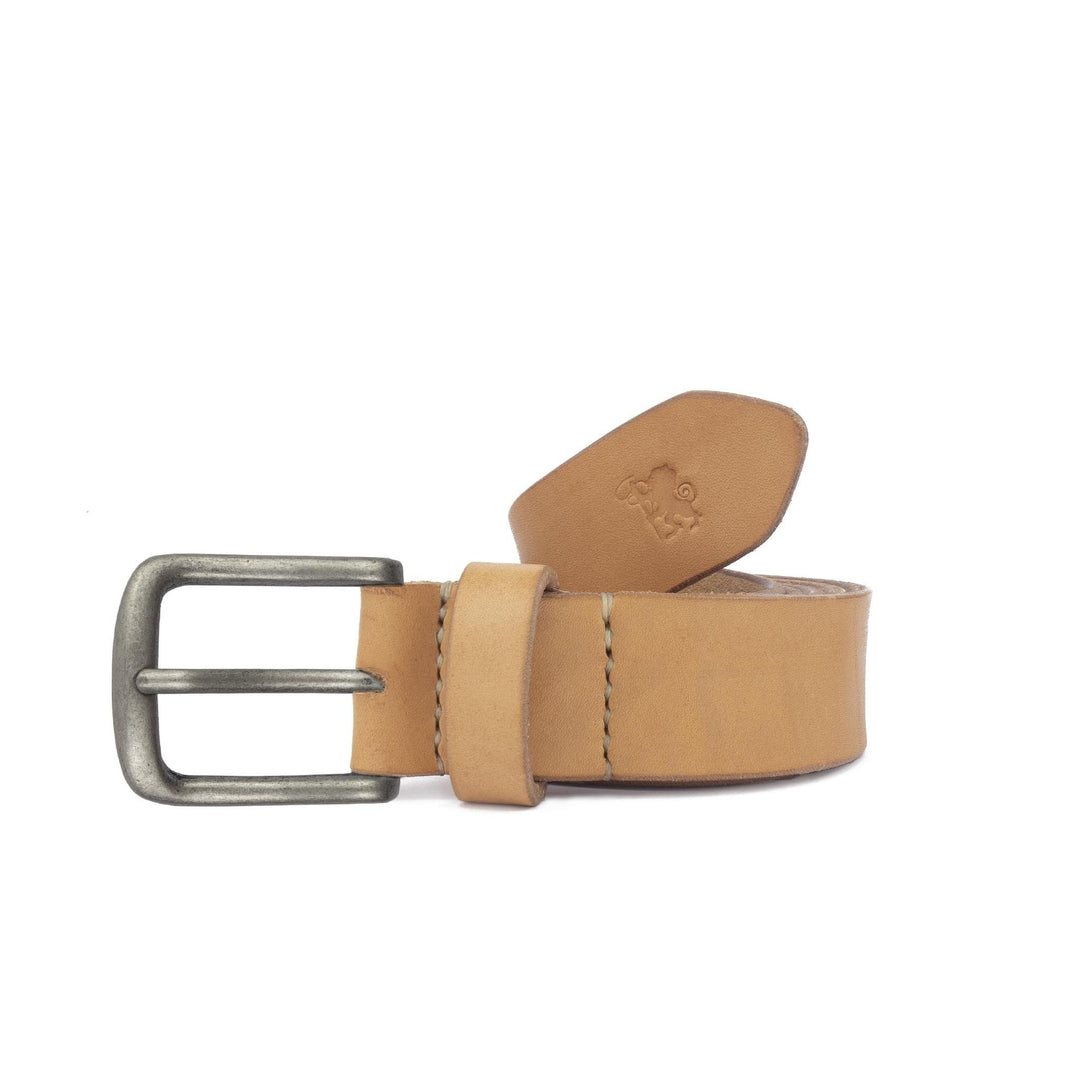
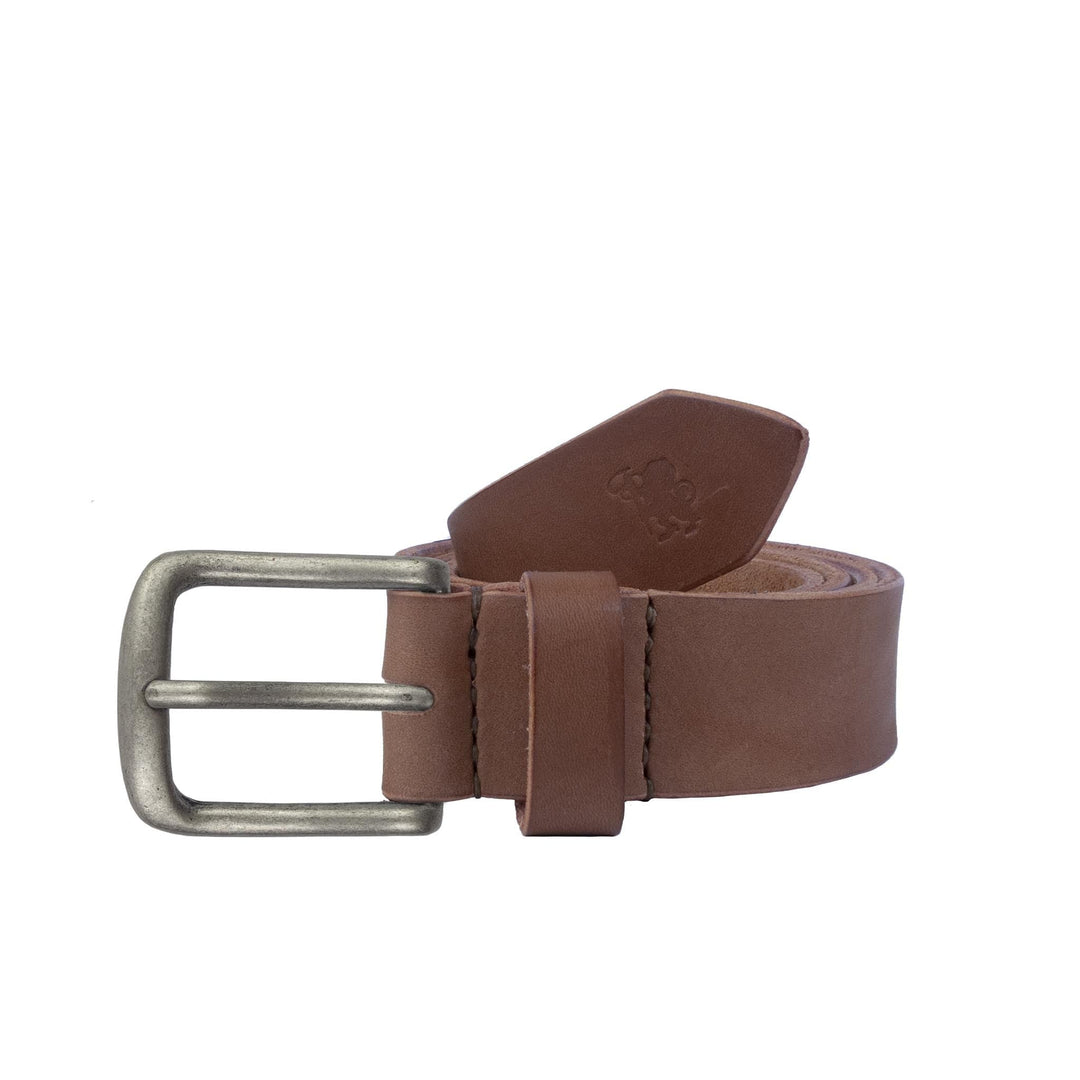
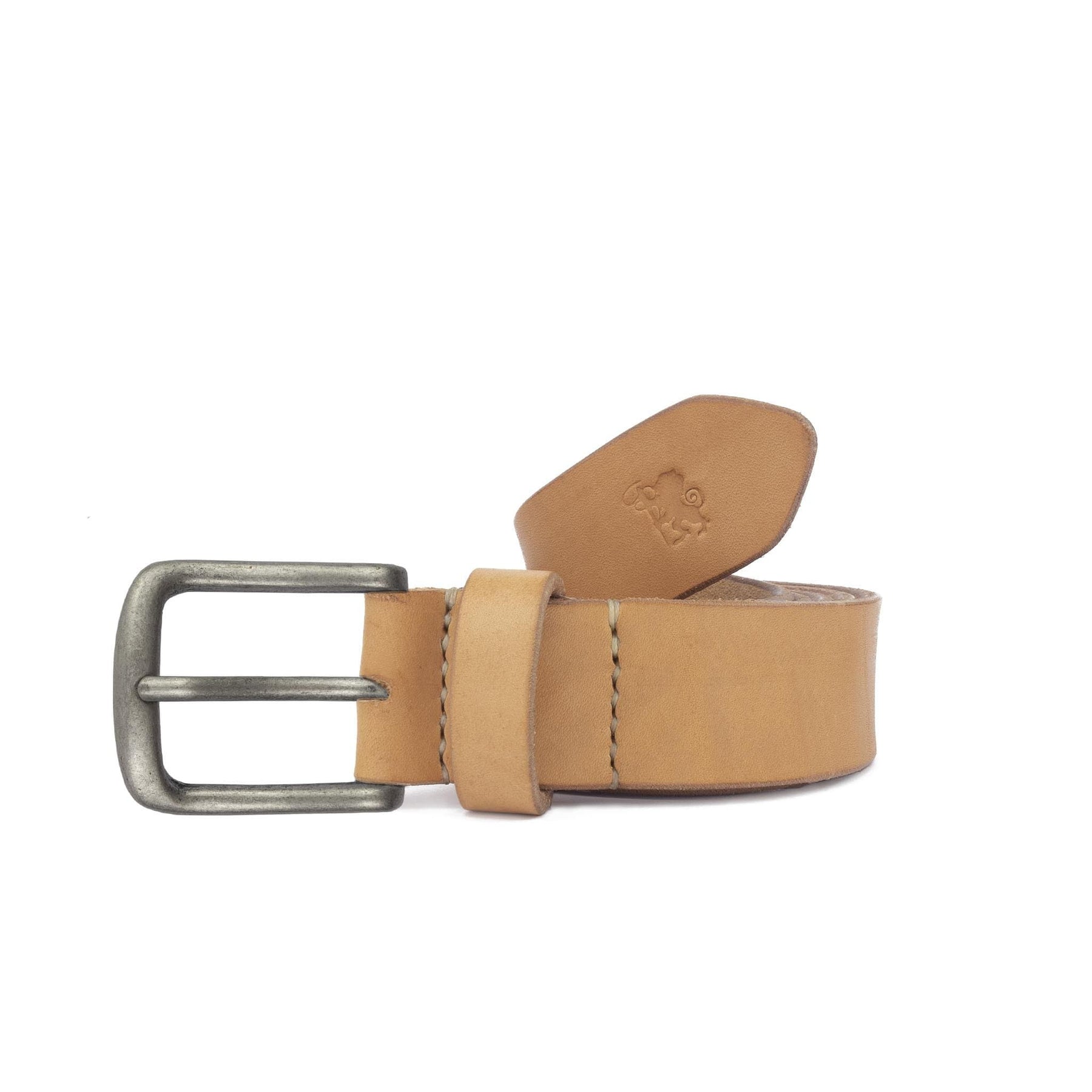
Titos handmade leather belt
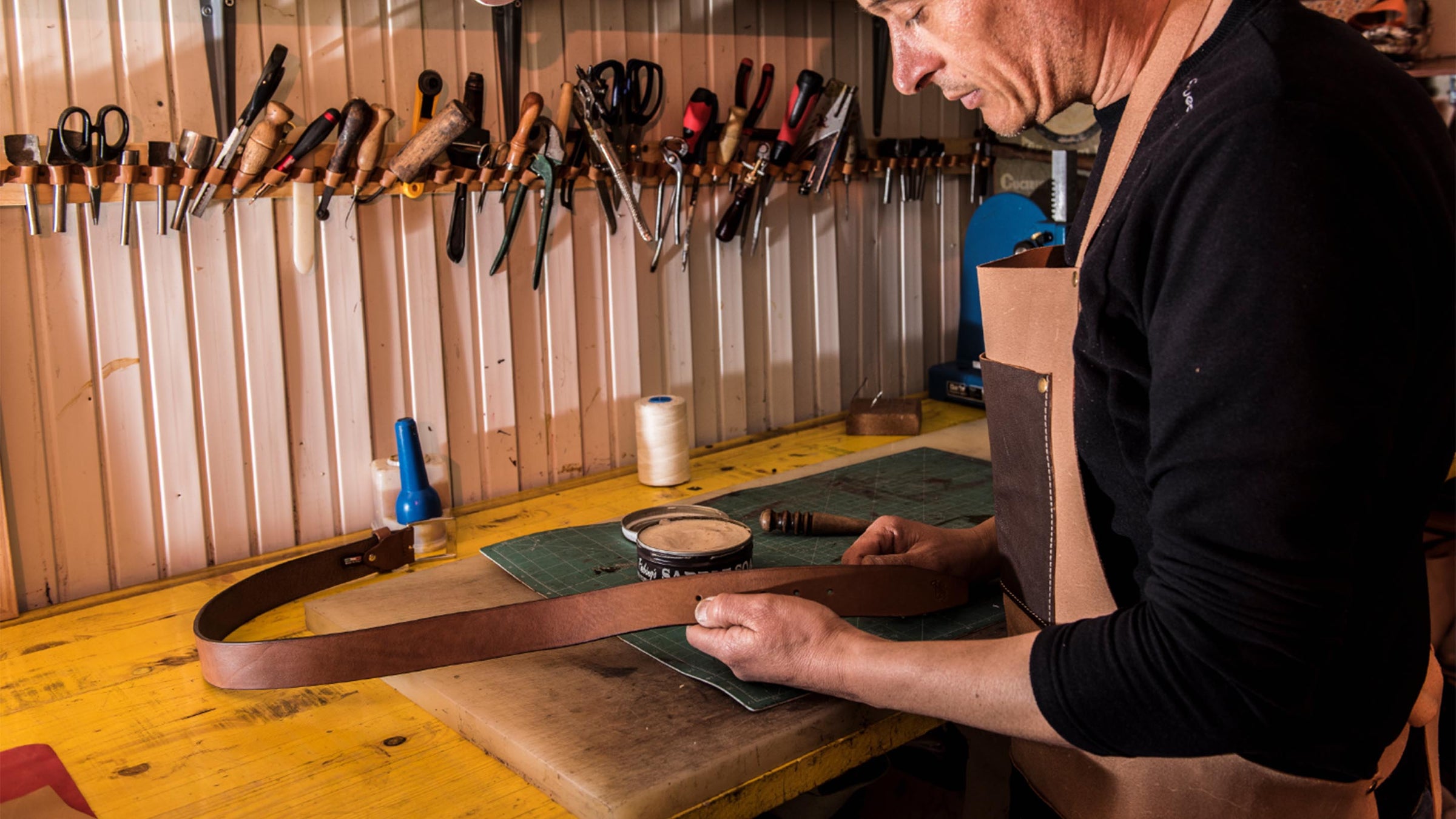
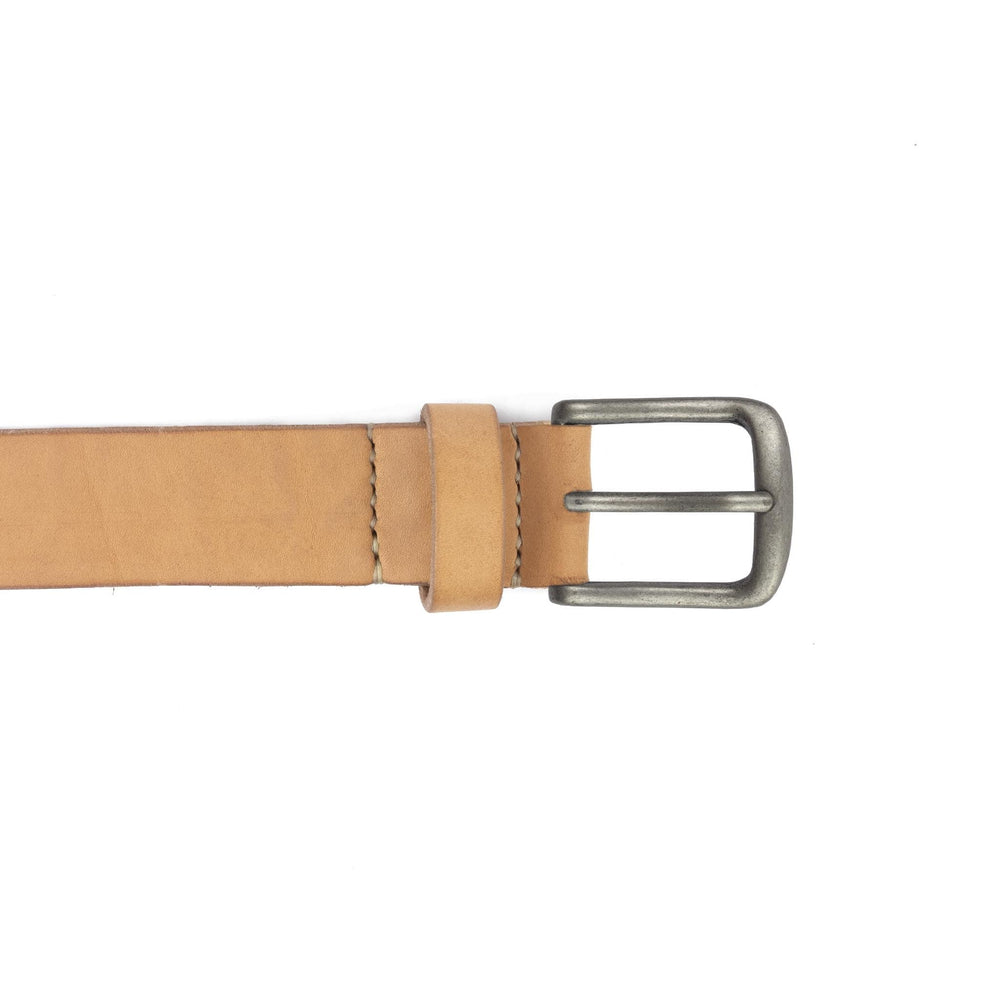
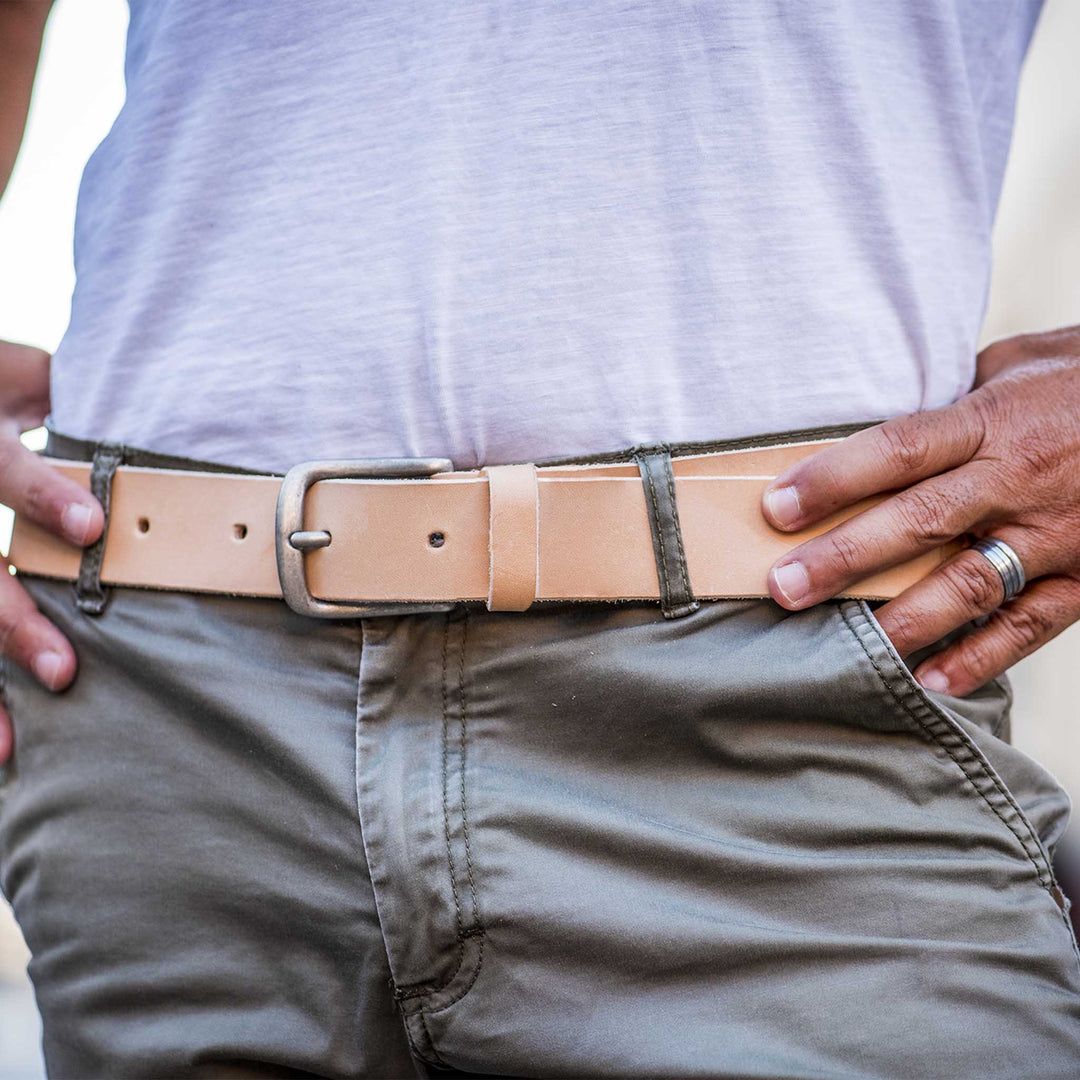
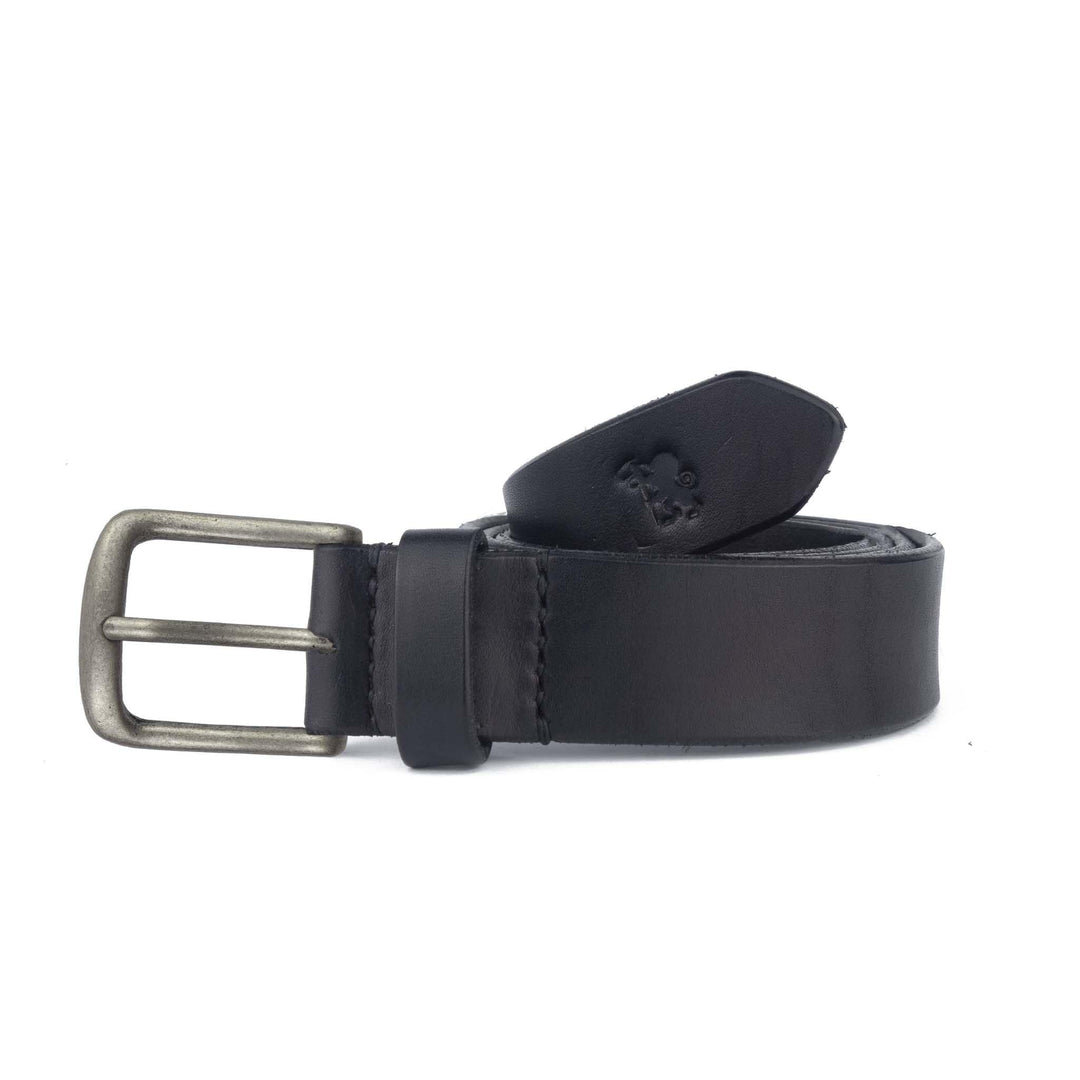
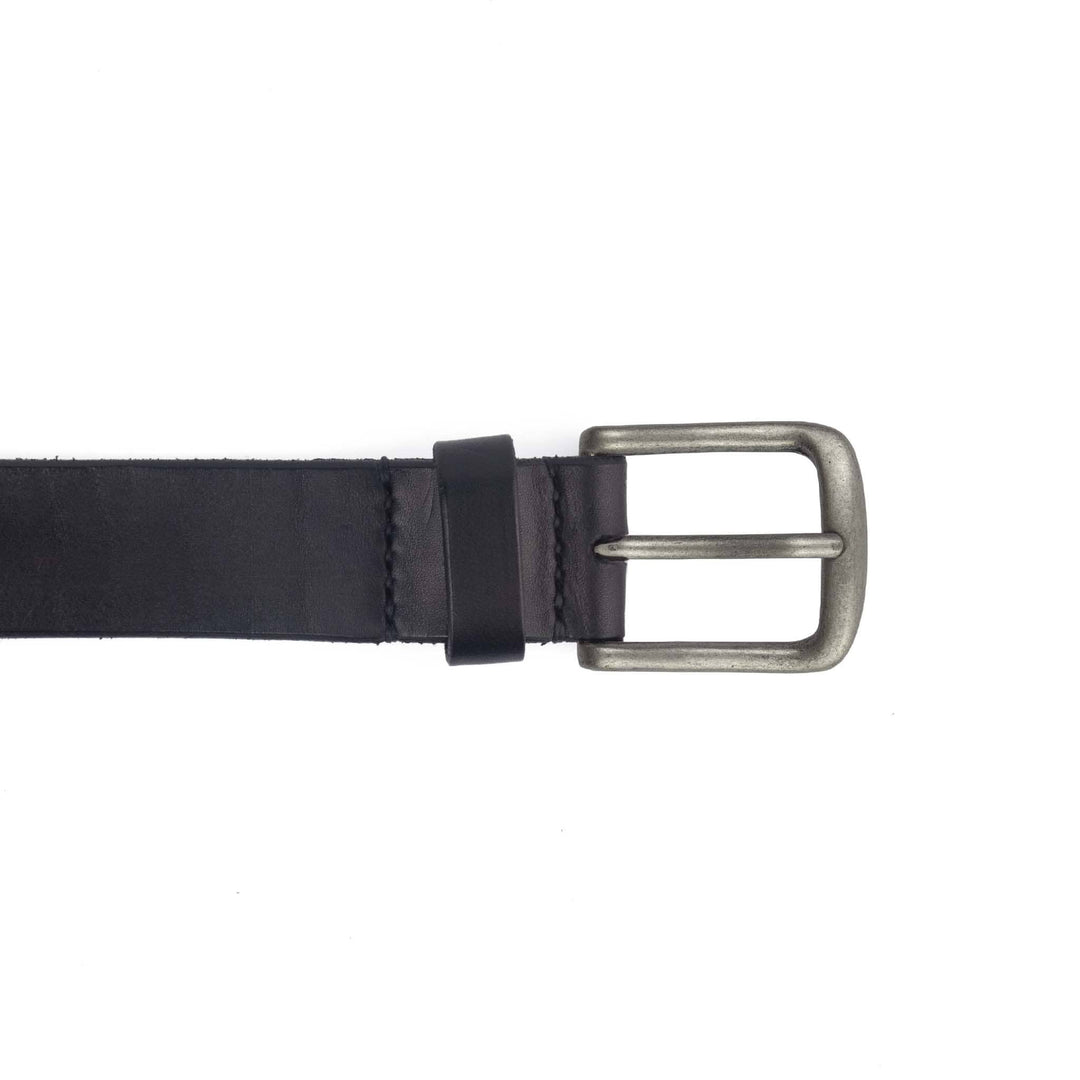
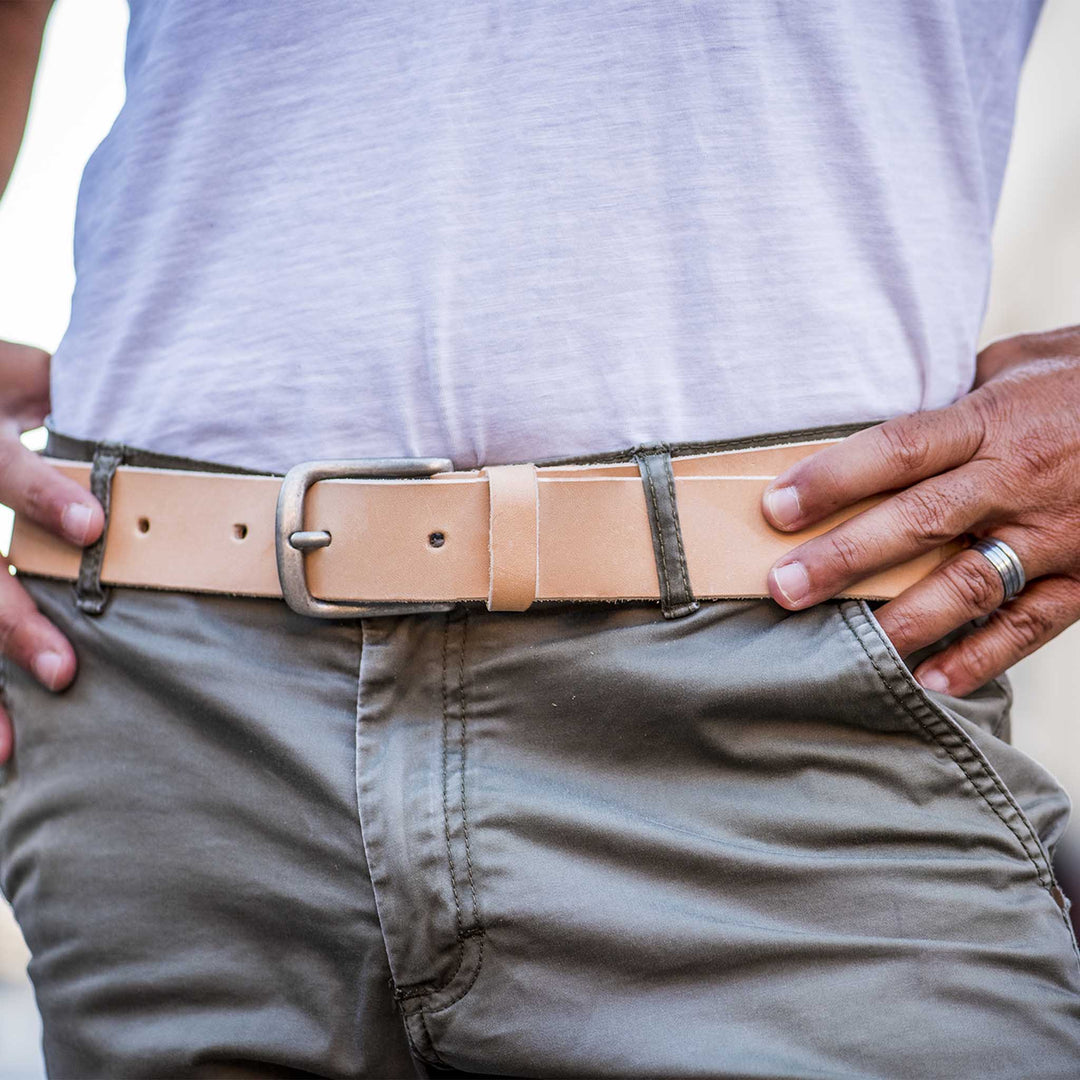
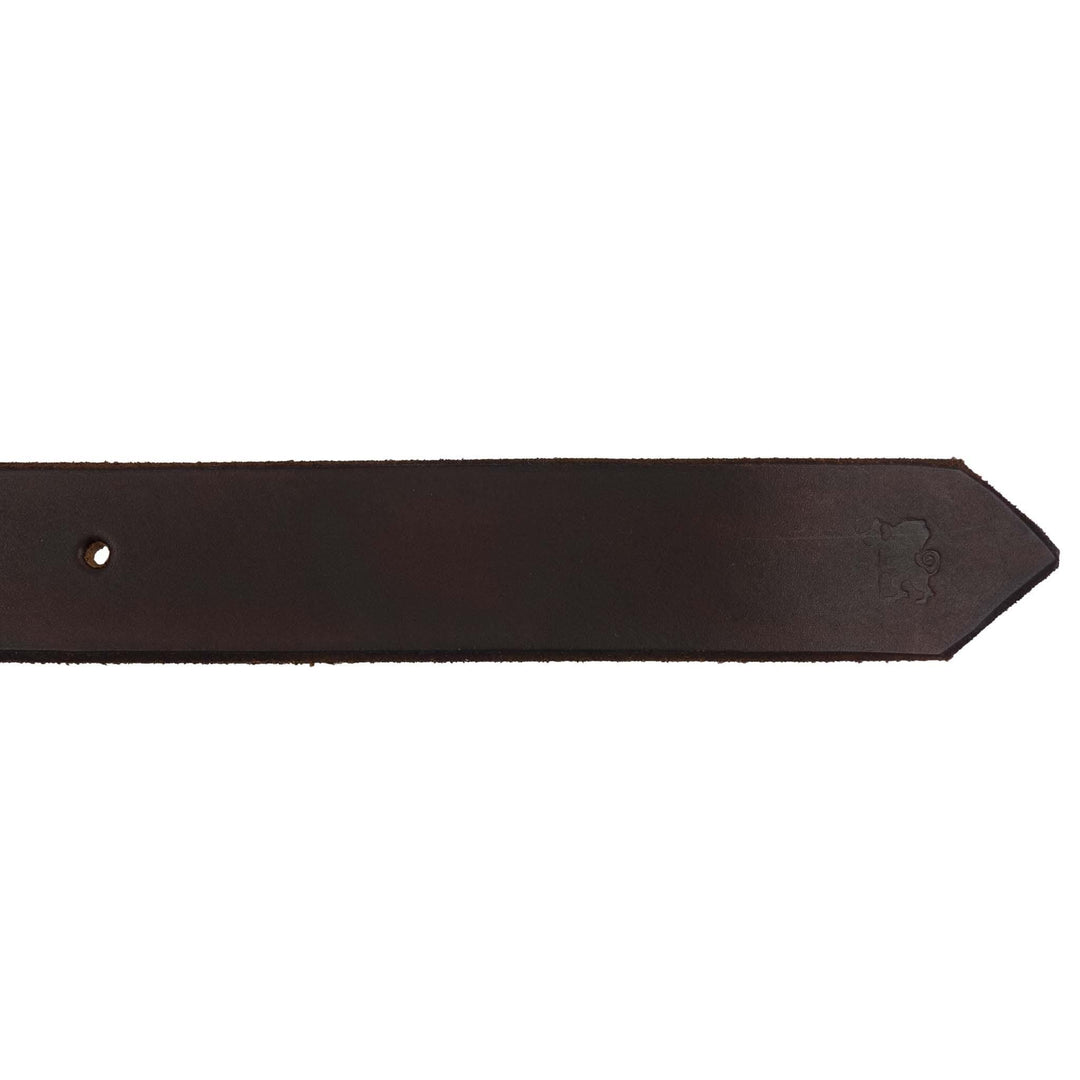
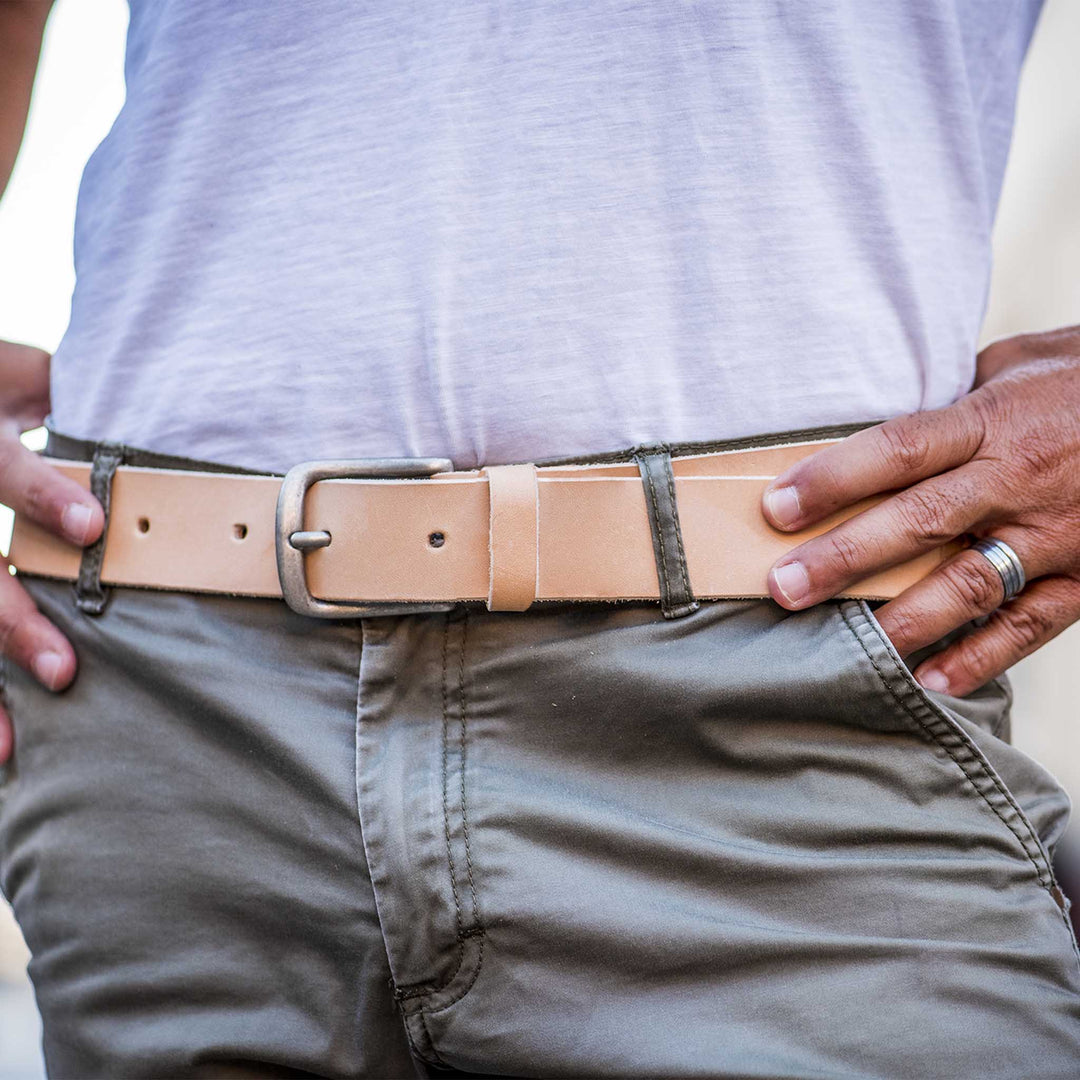
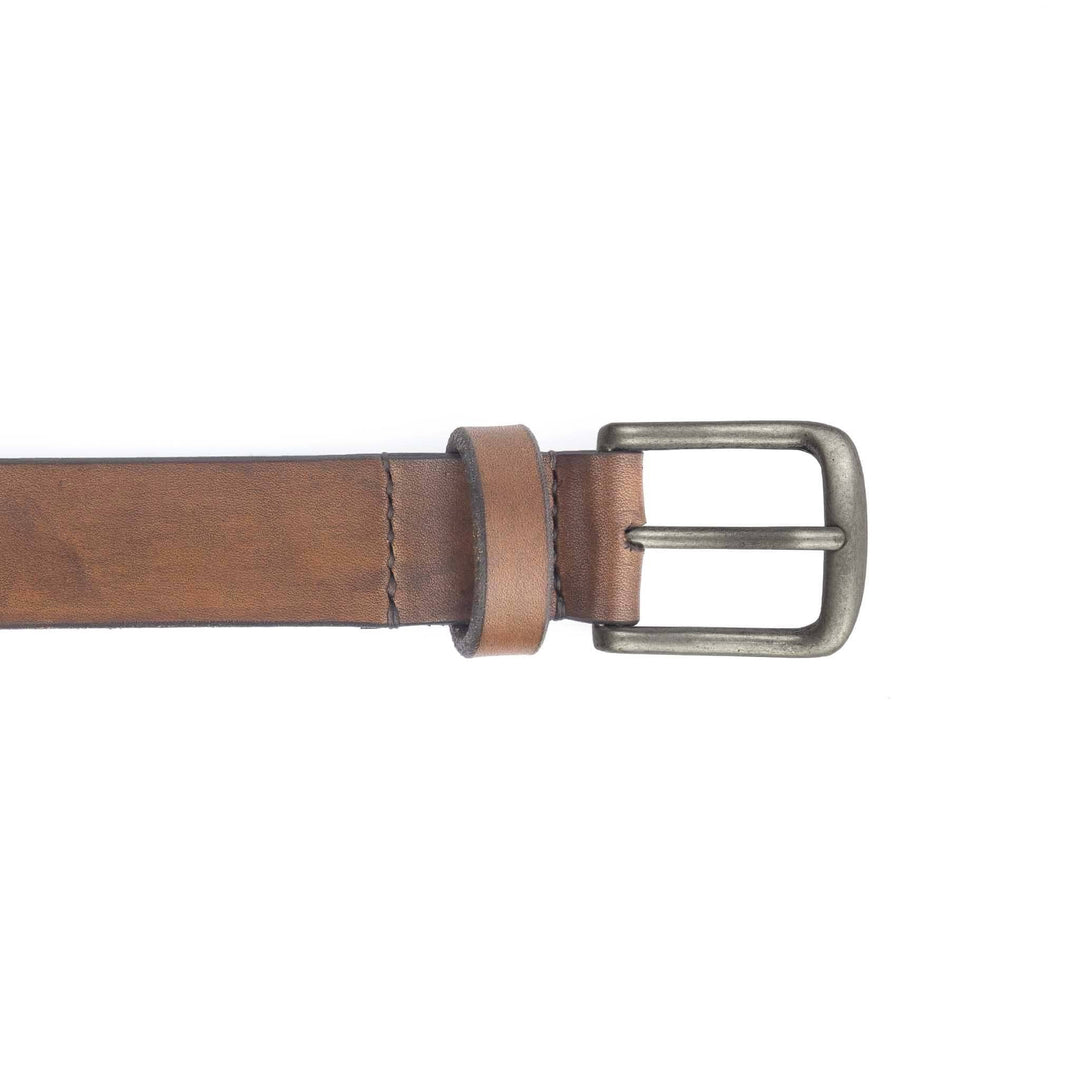
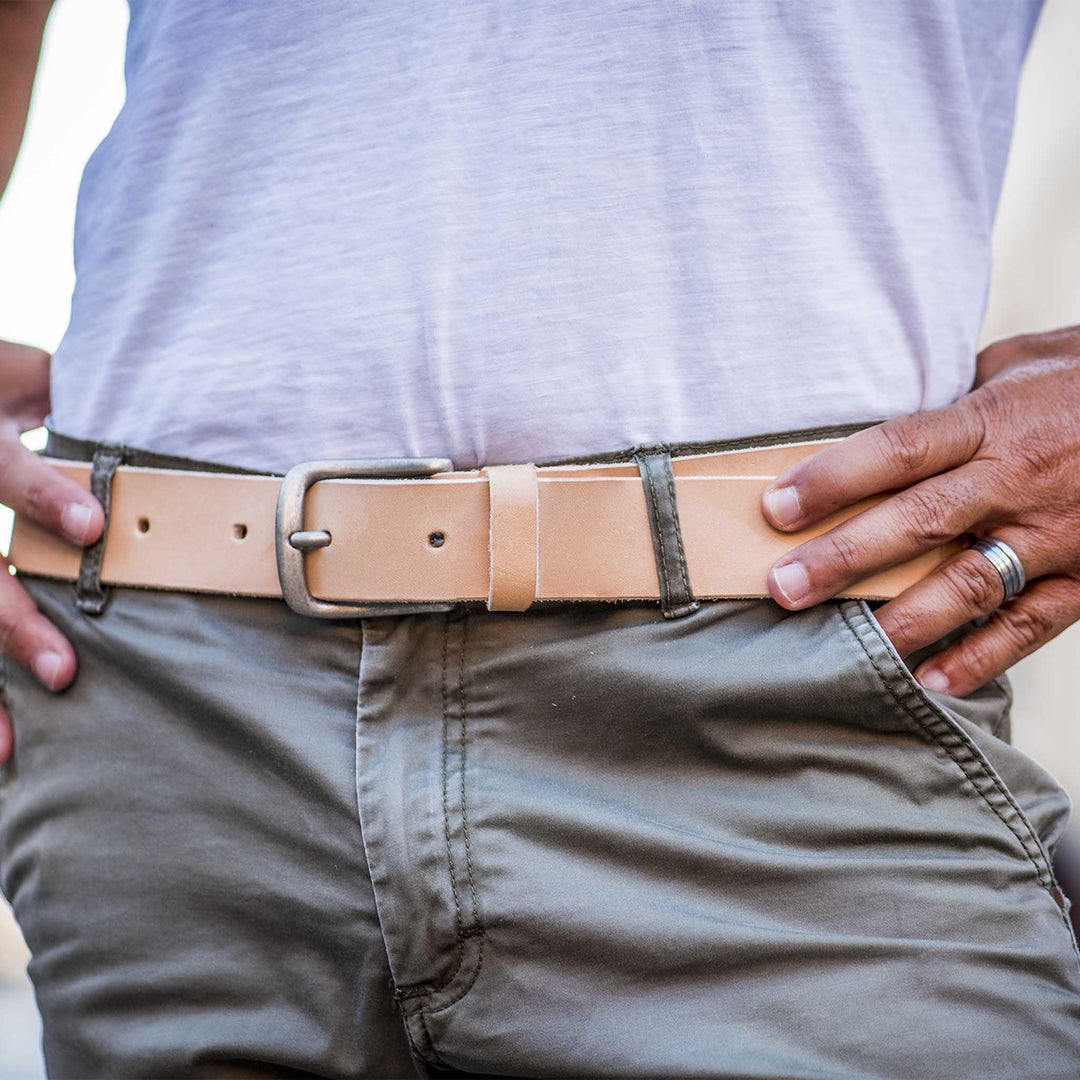
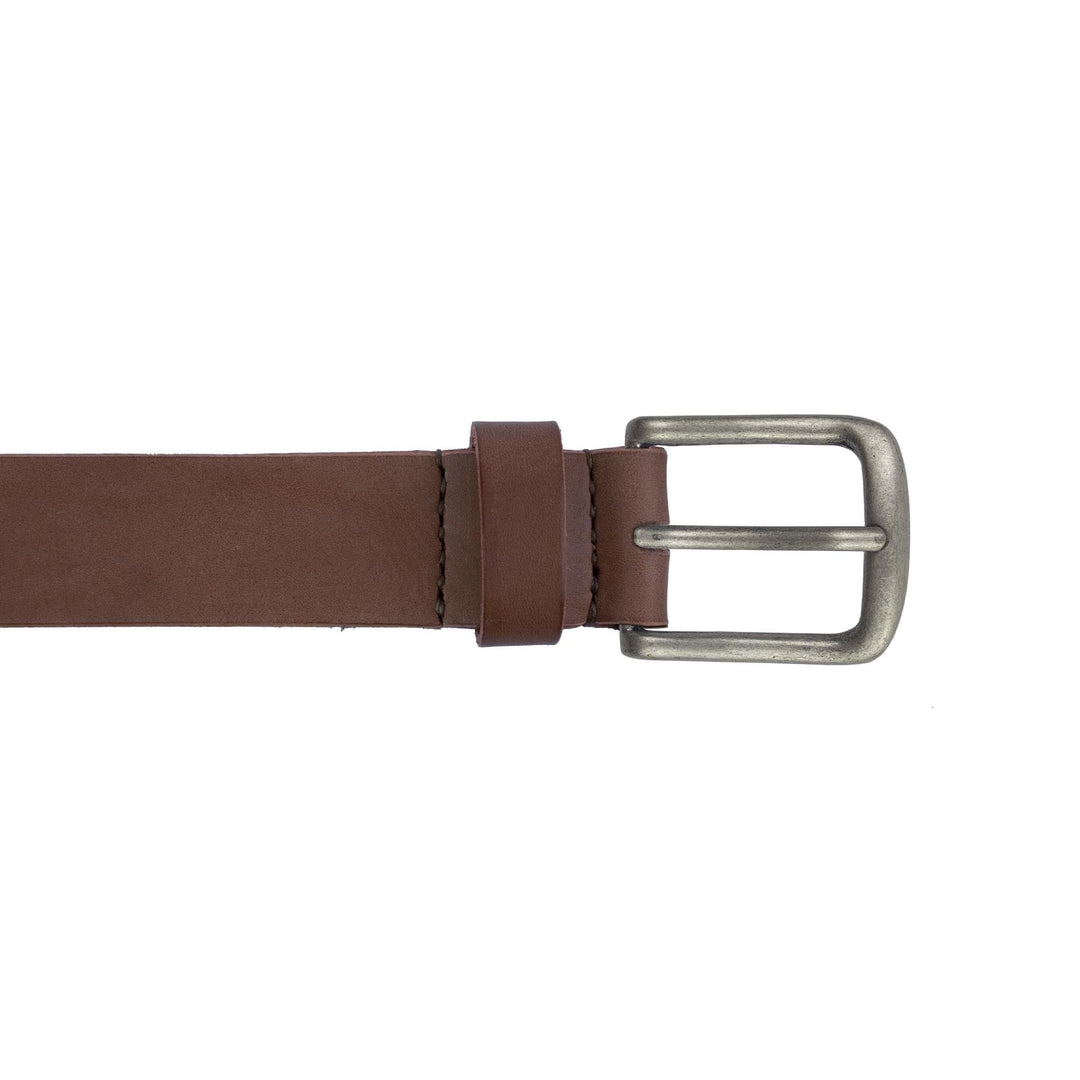
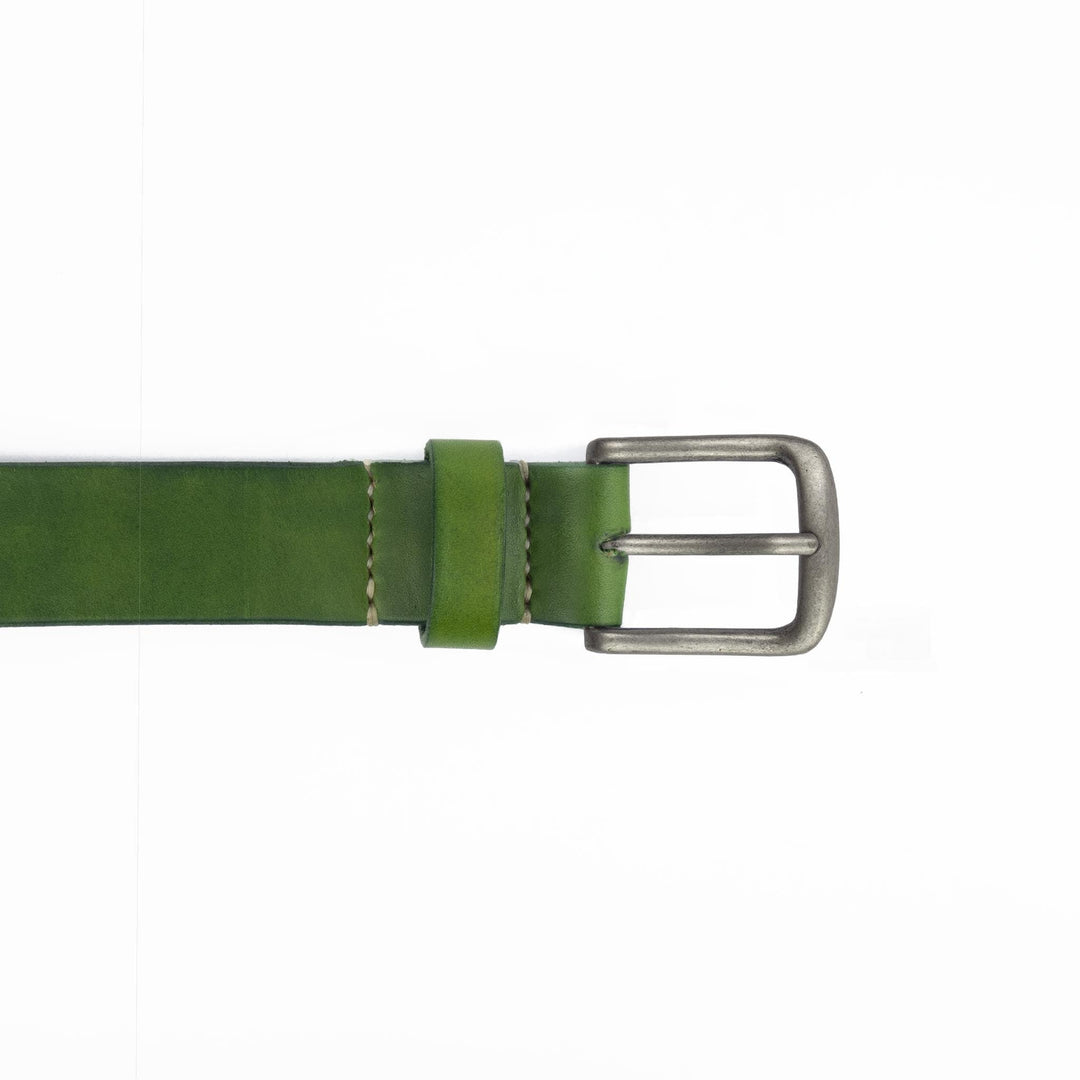
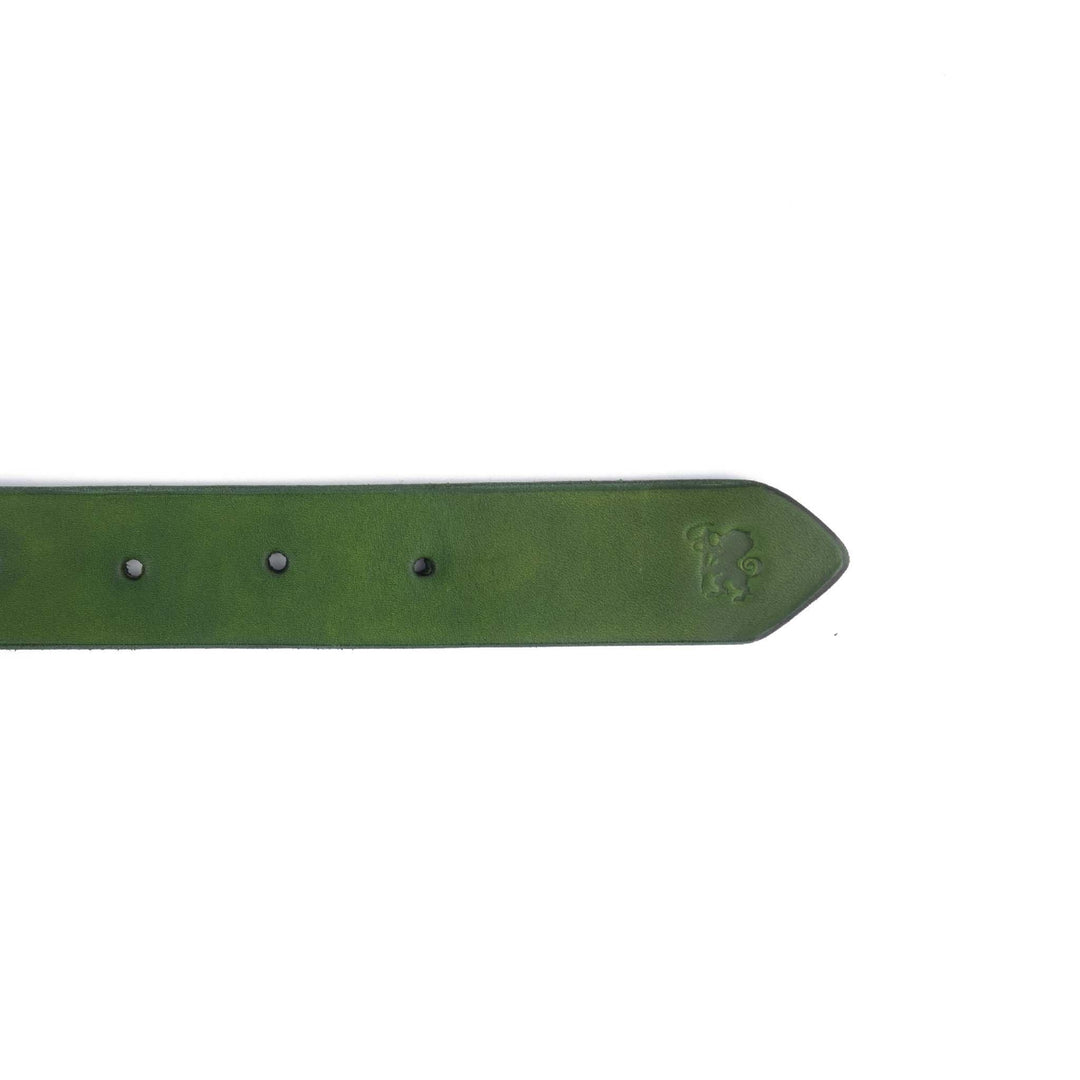
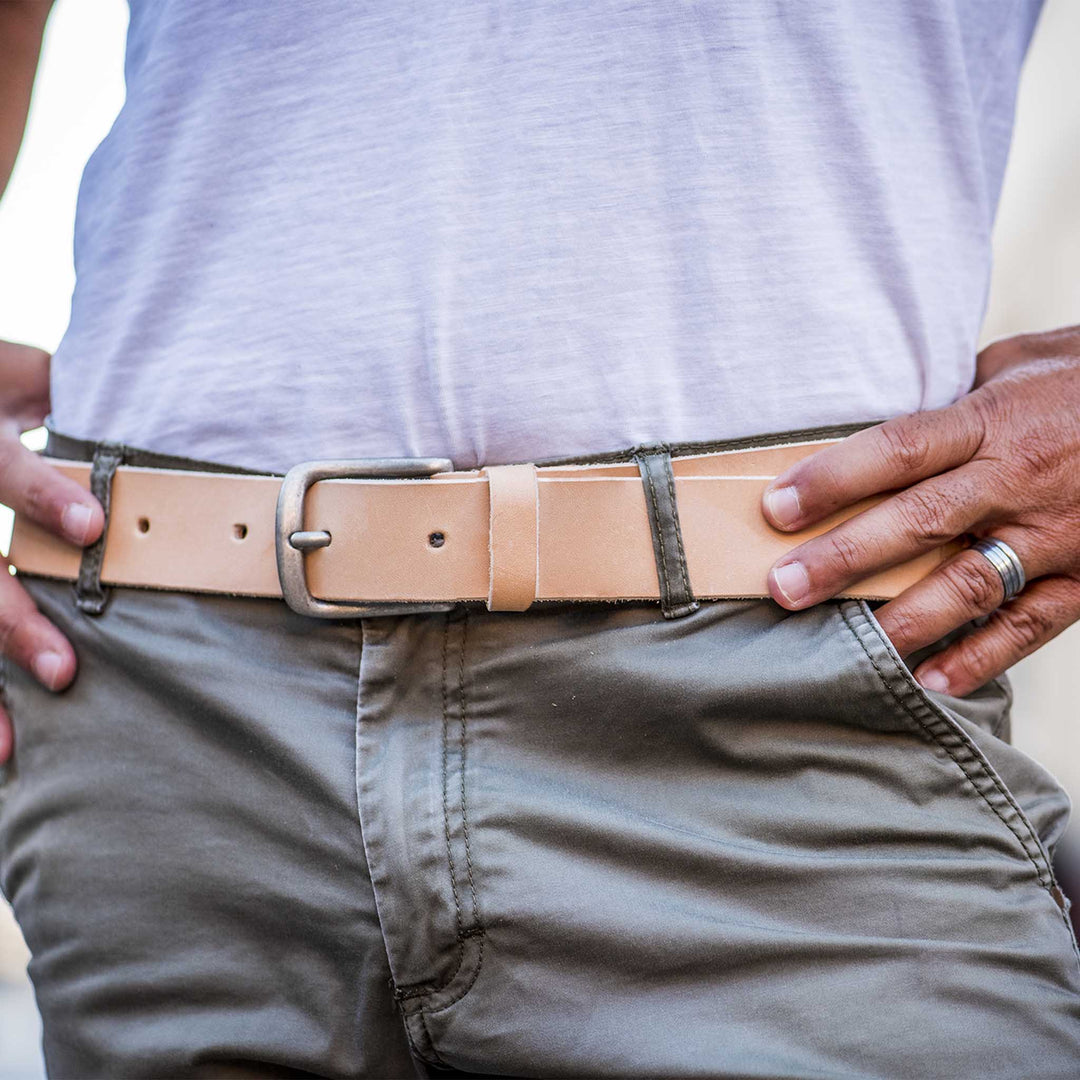
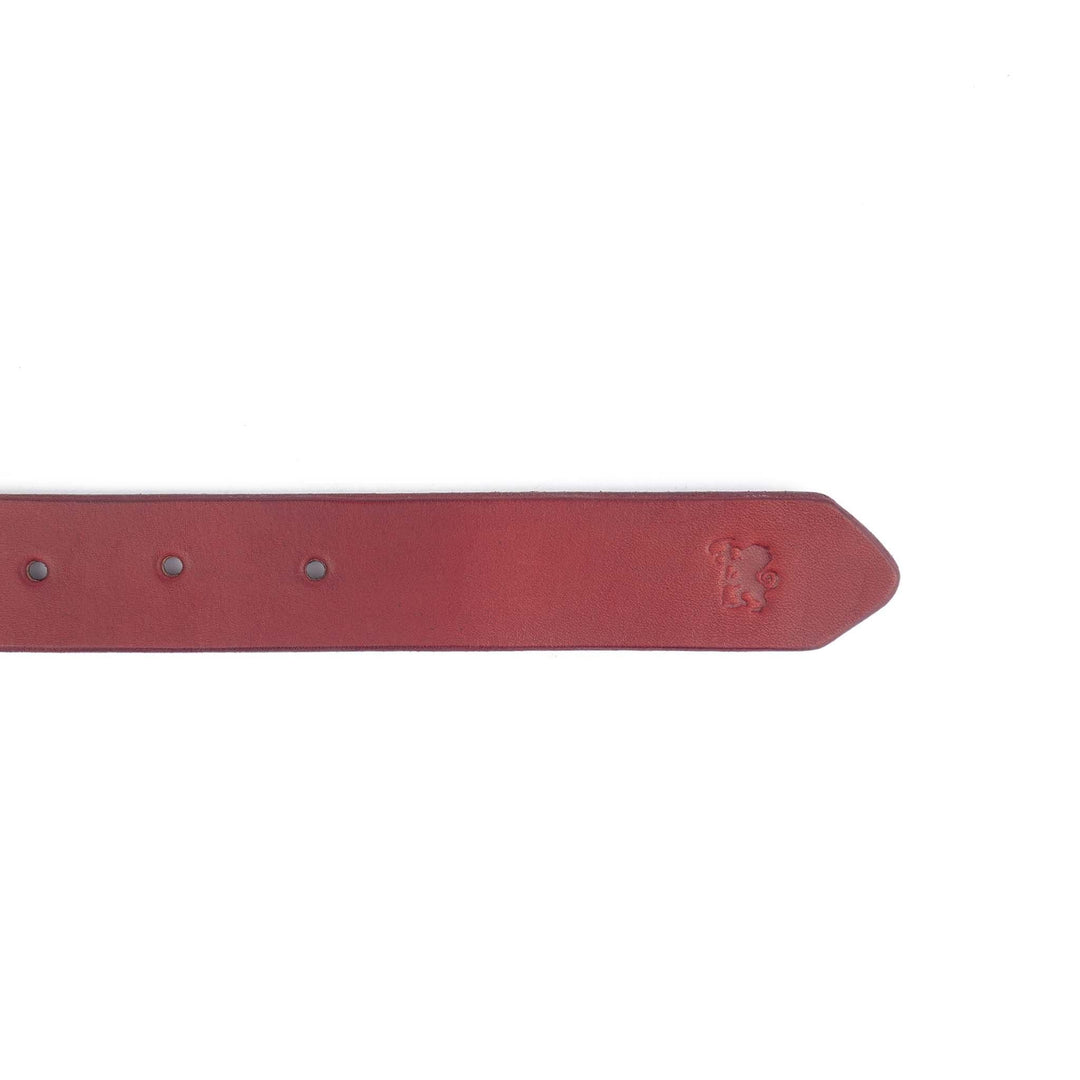
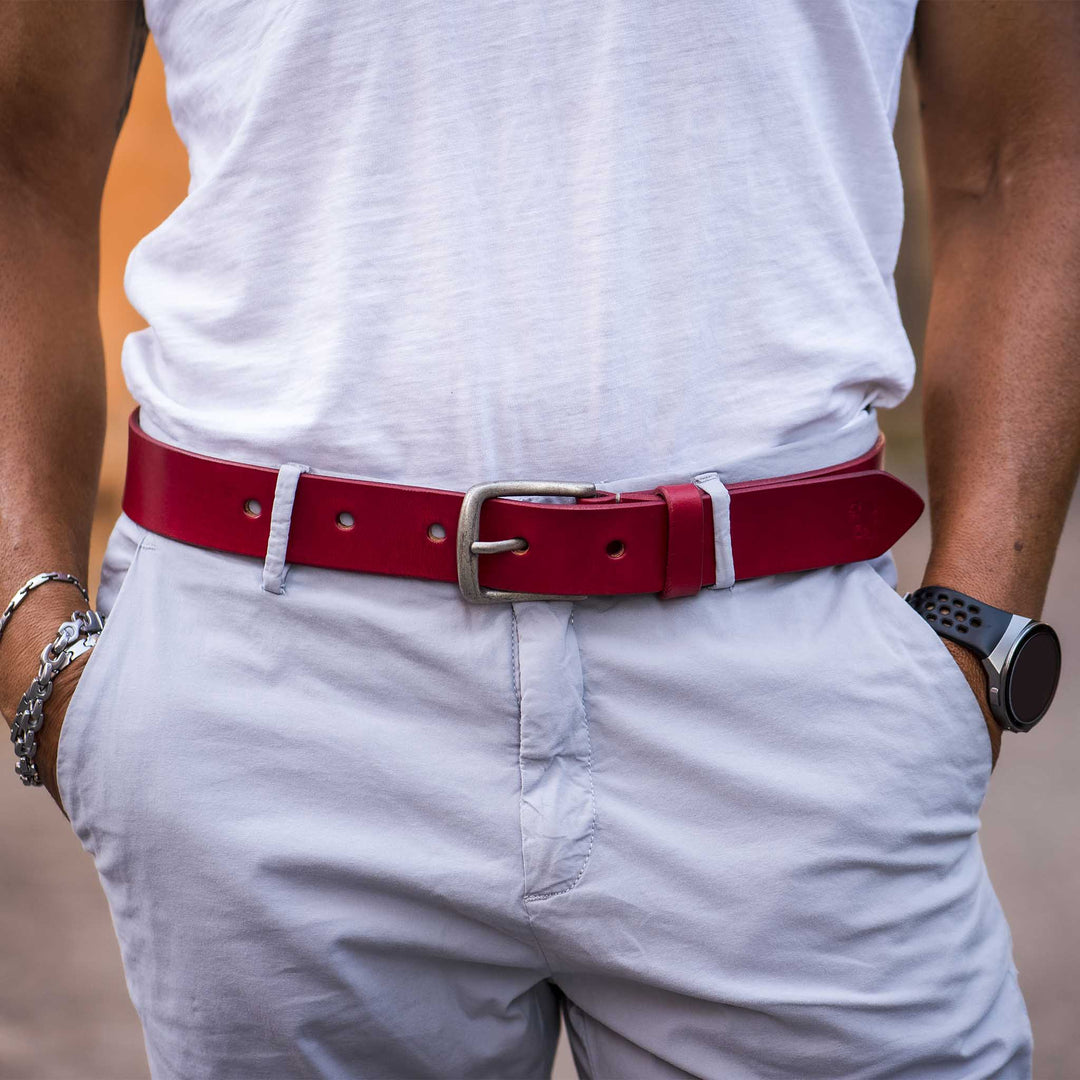
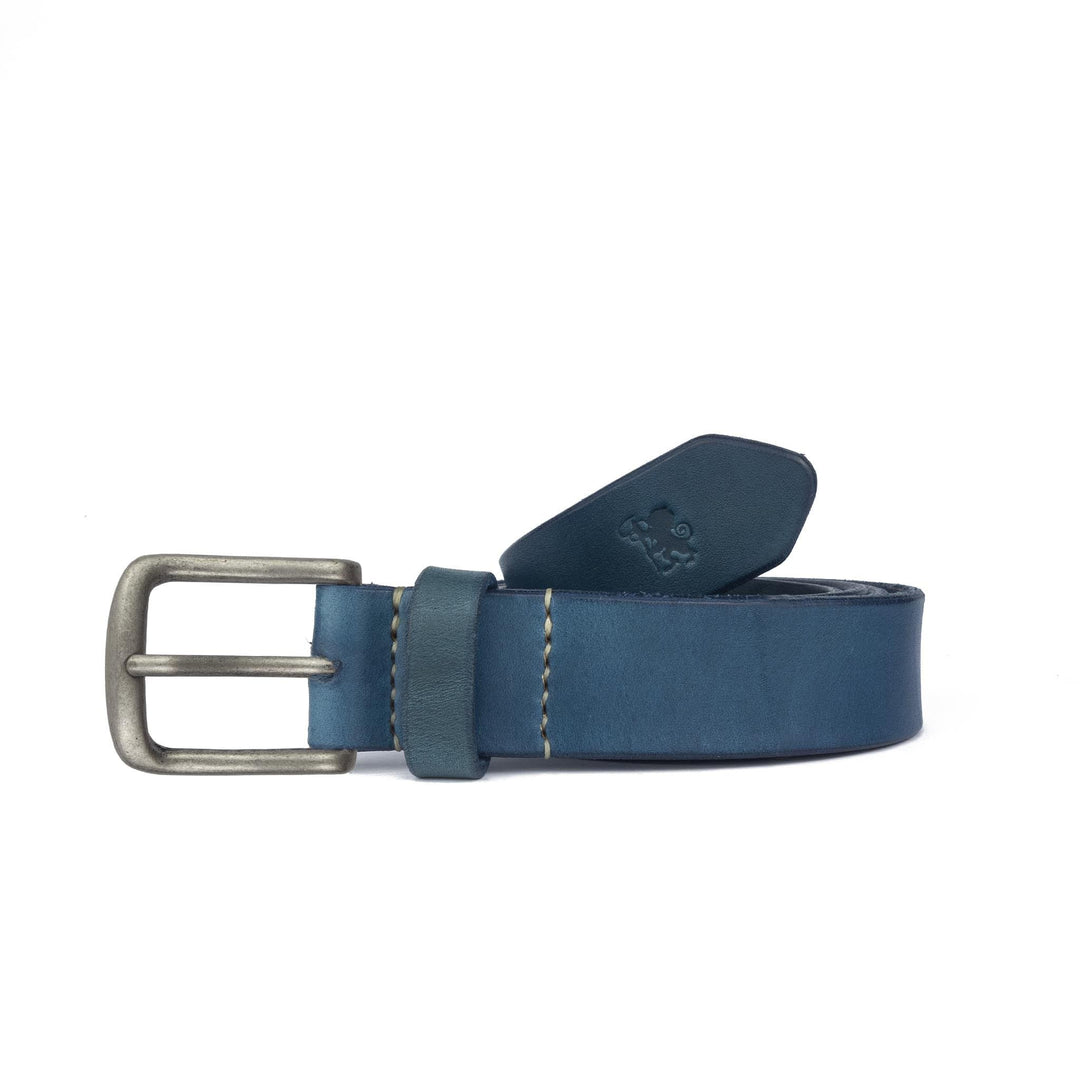
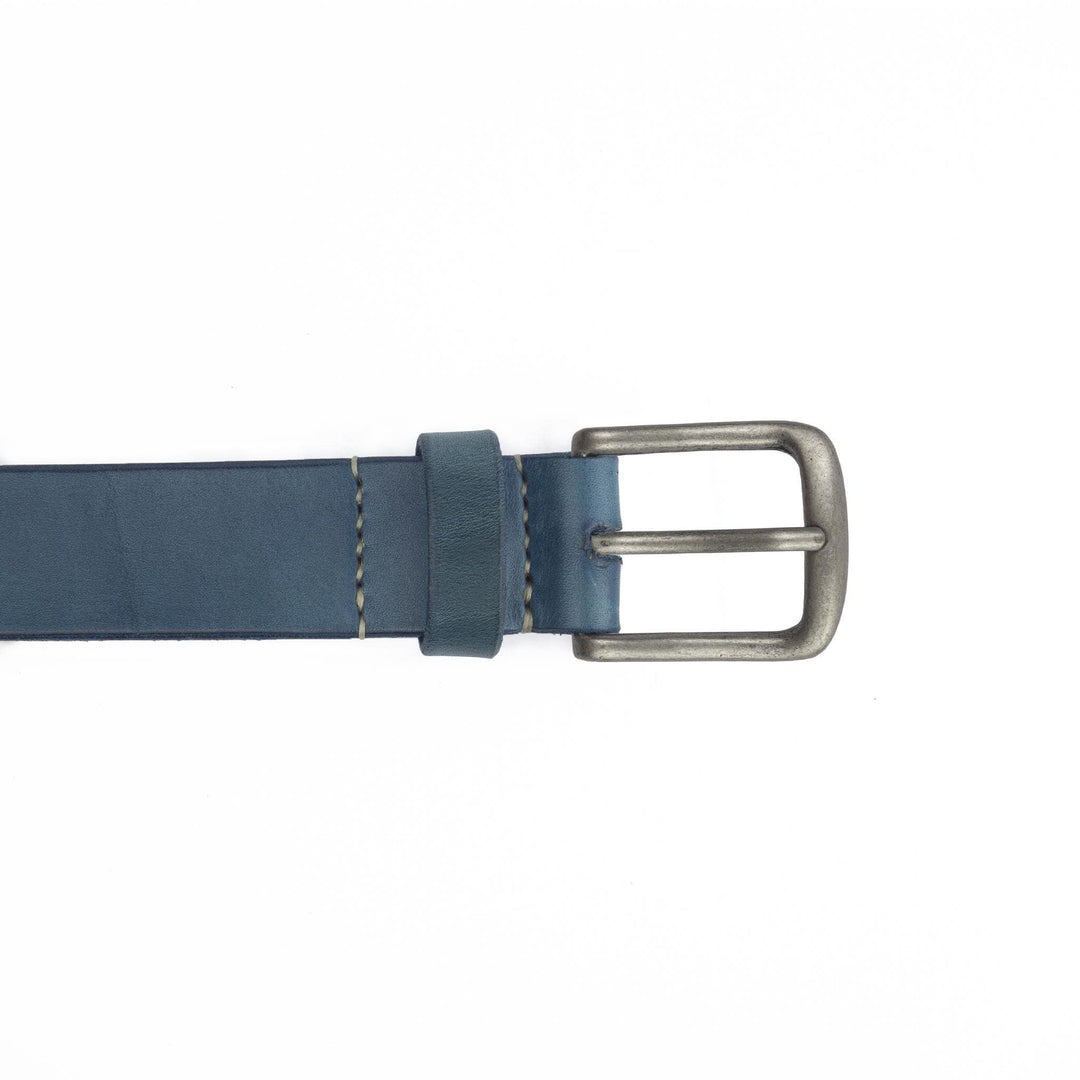
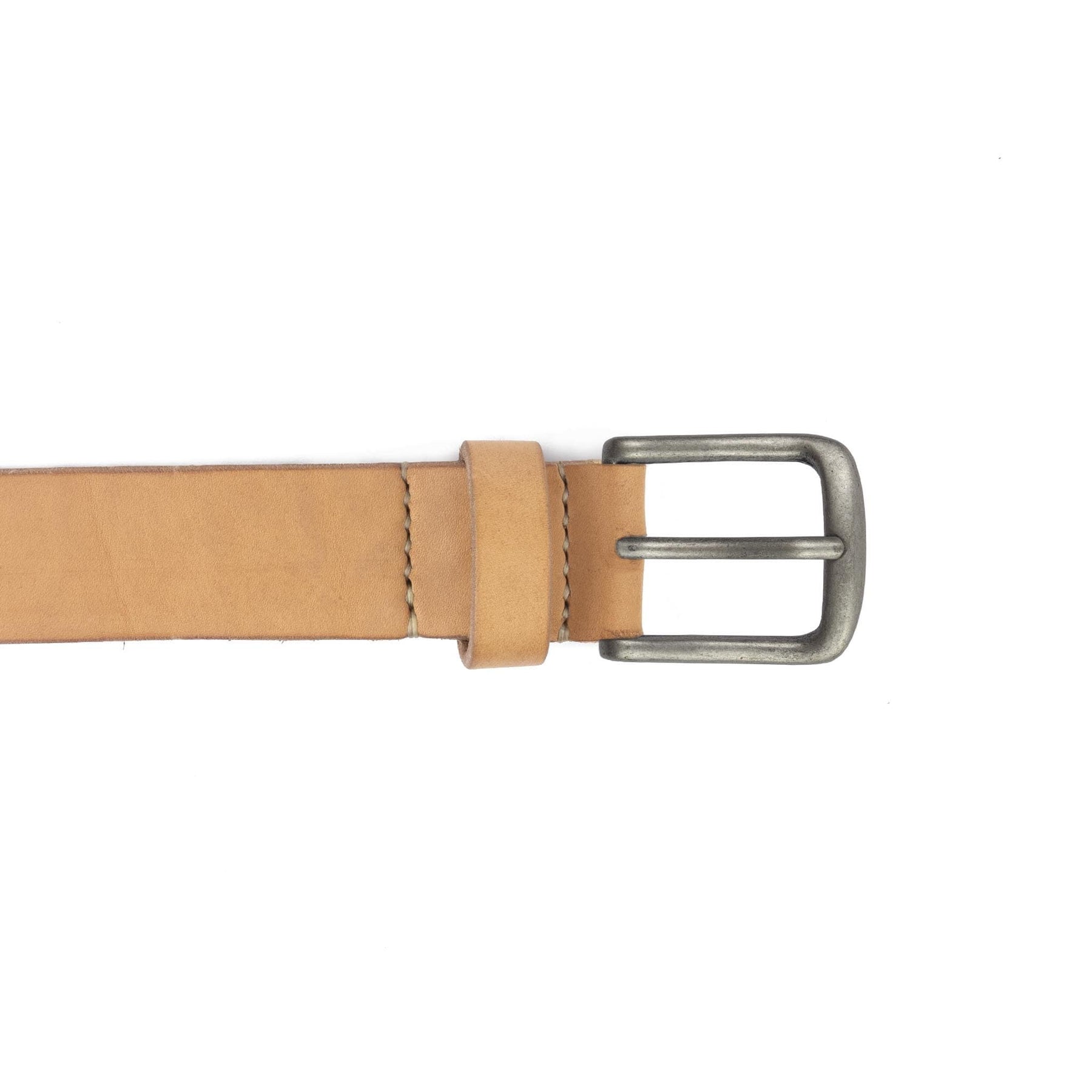
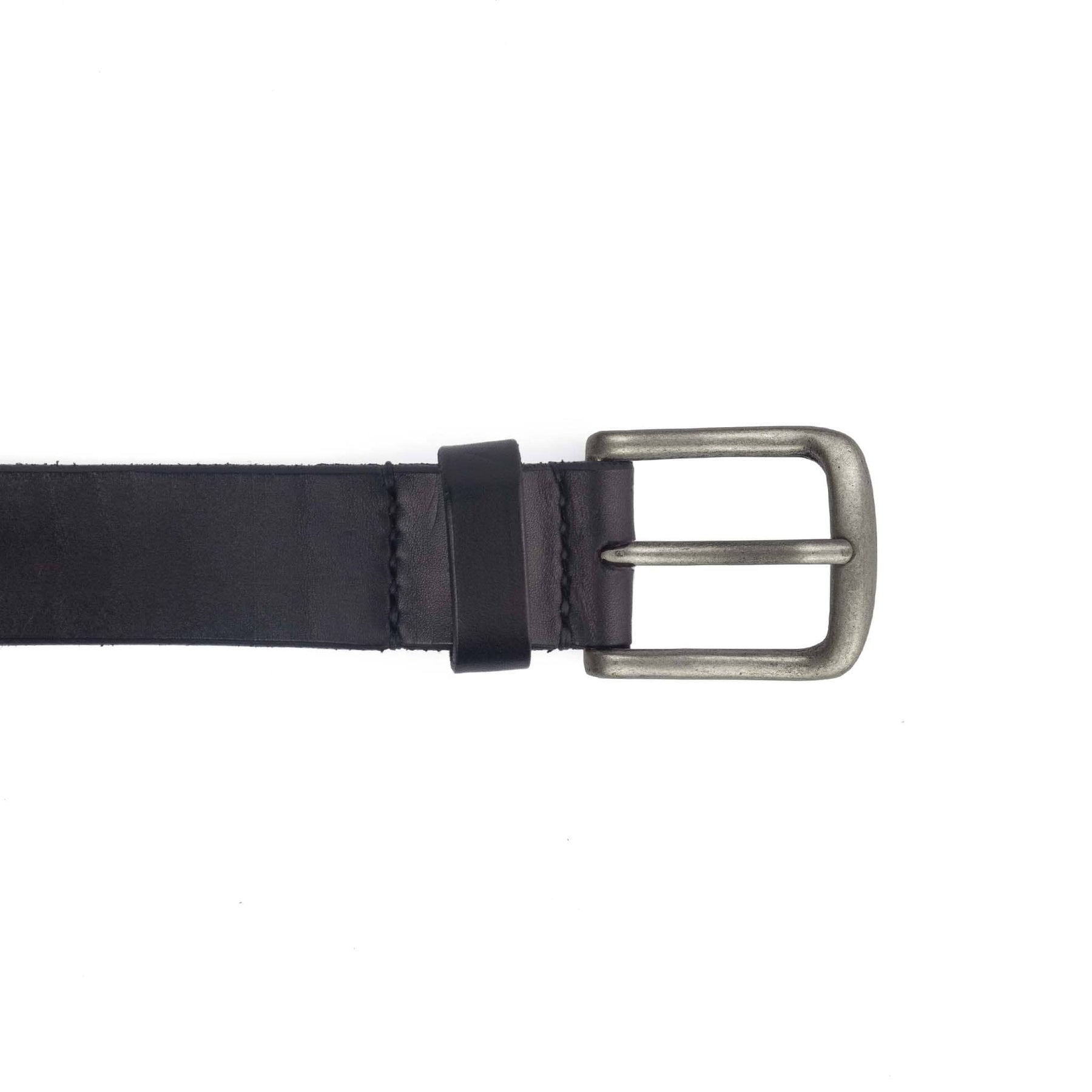
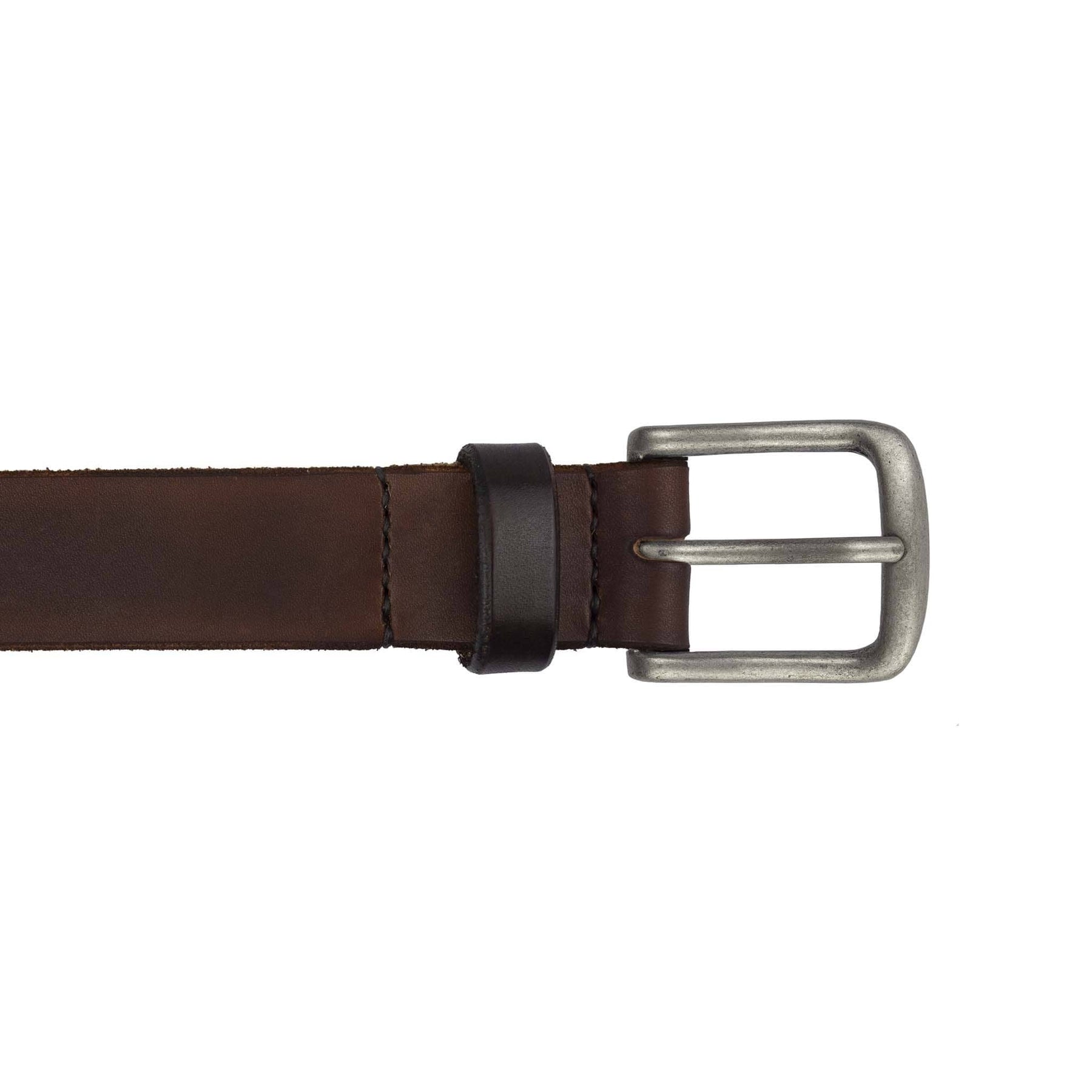
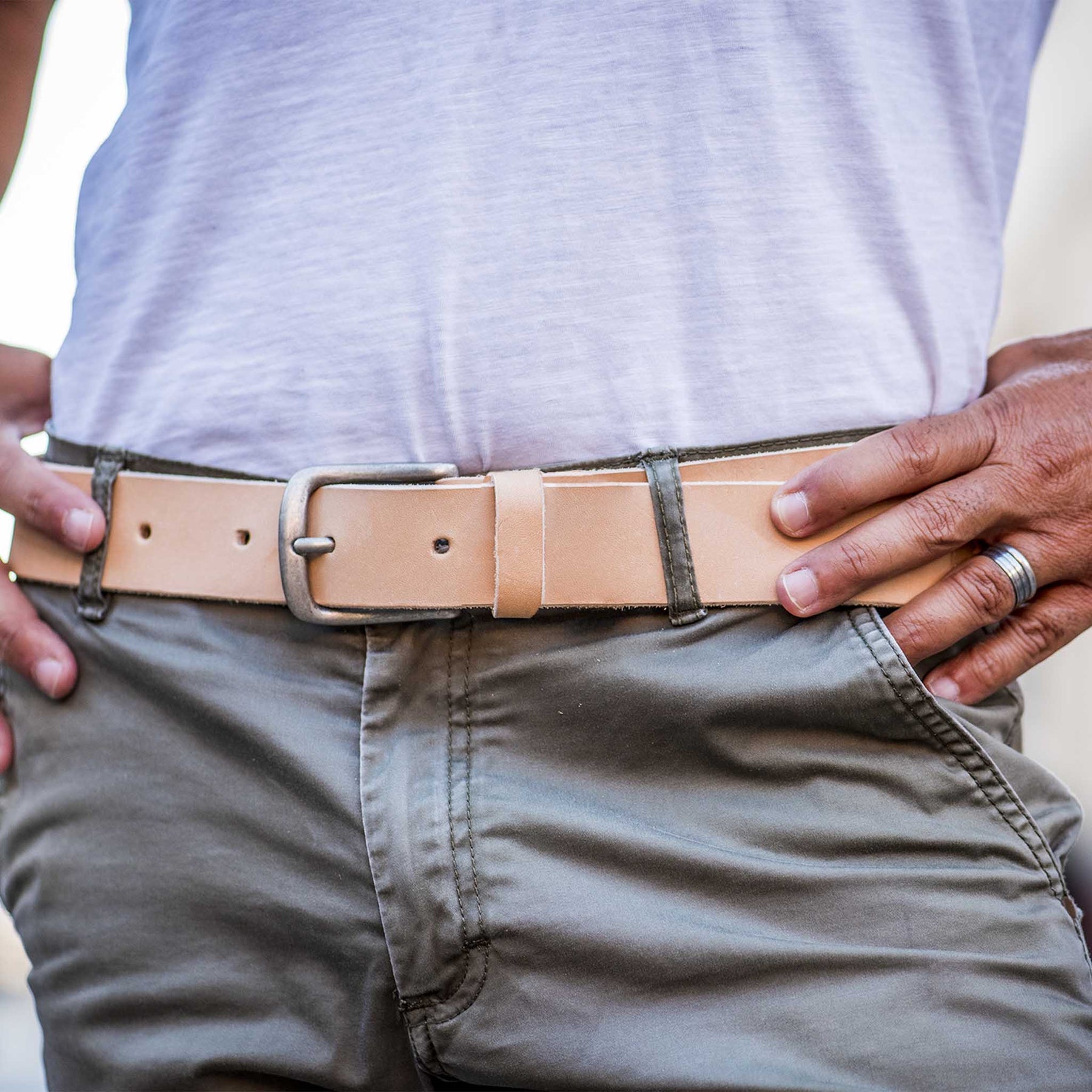
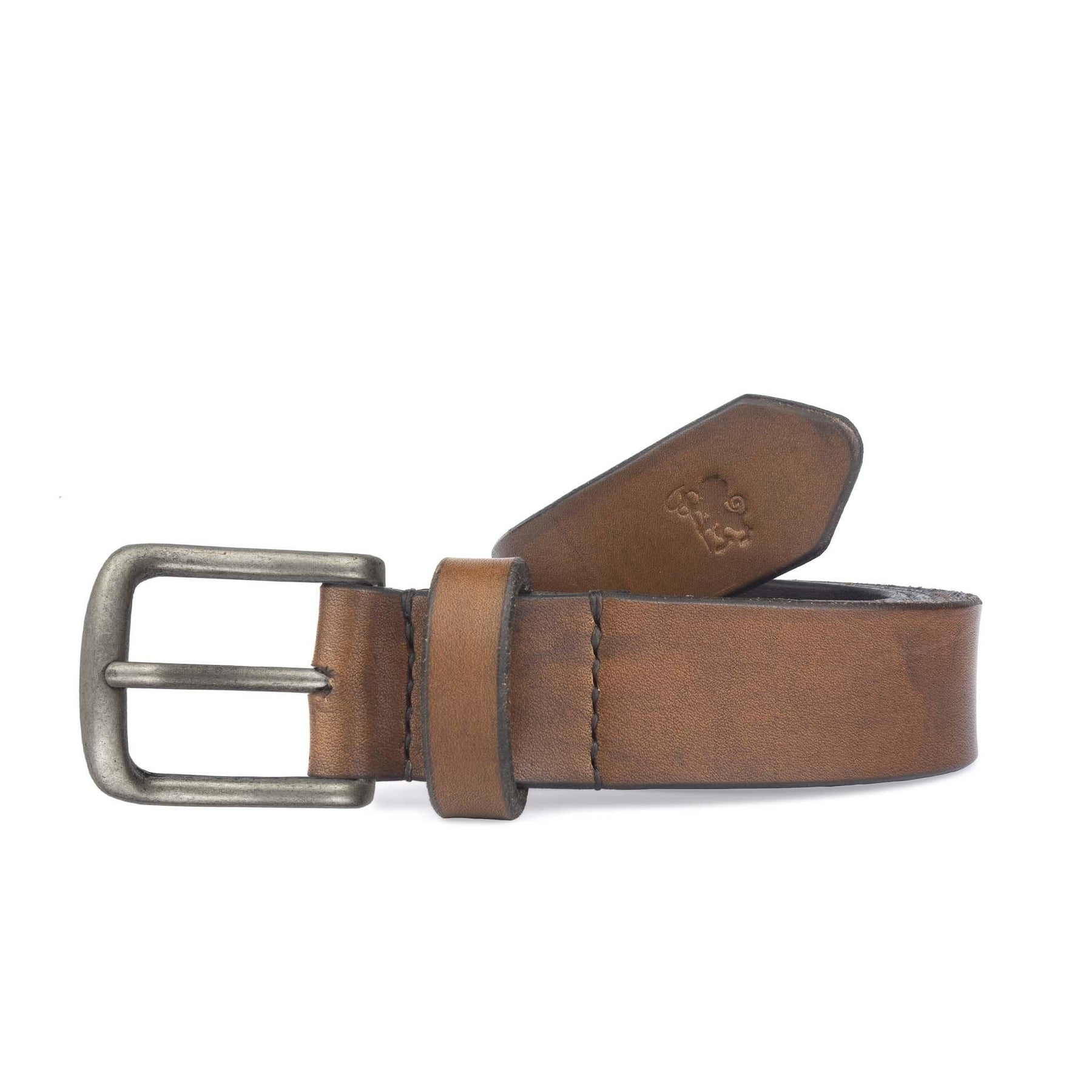
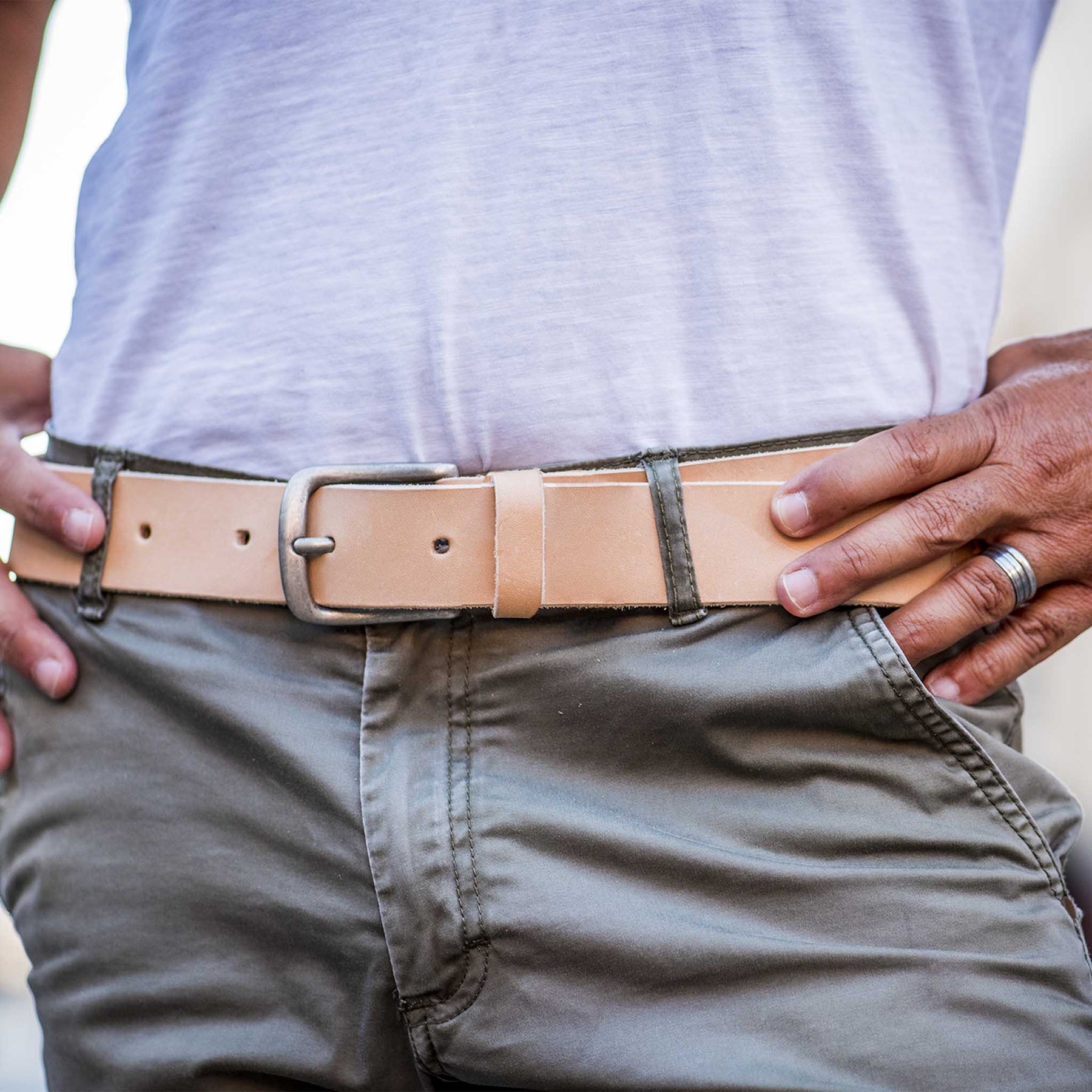
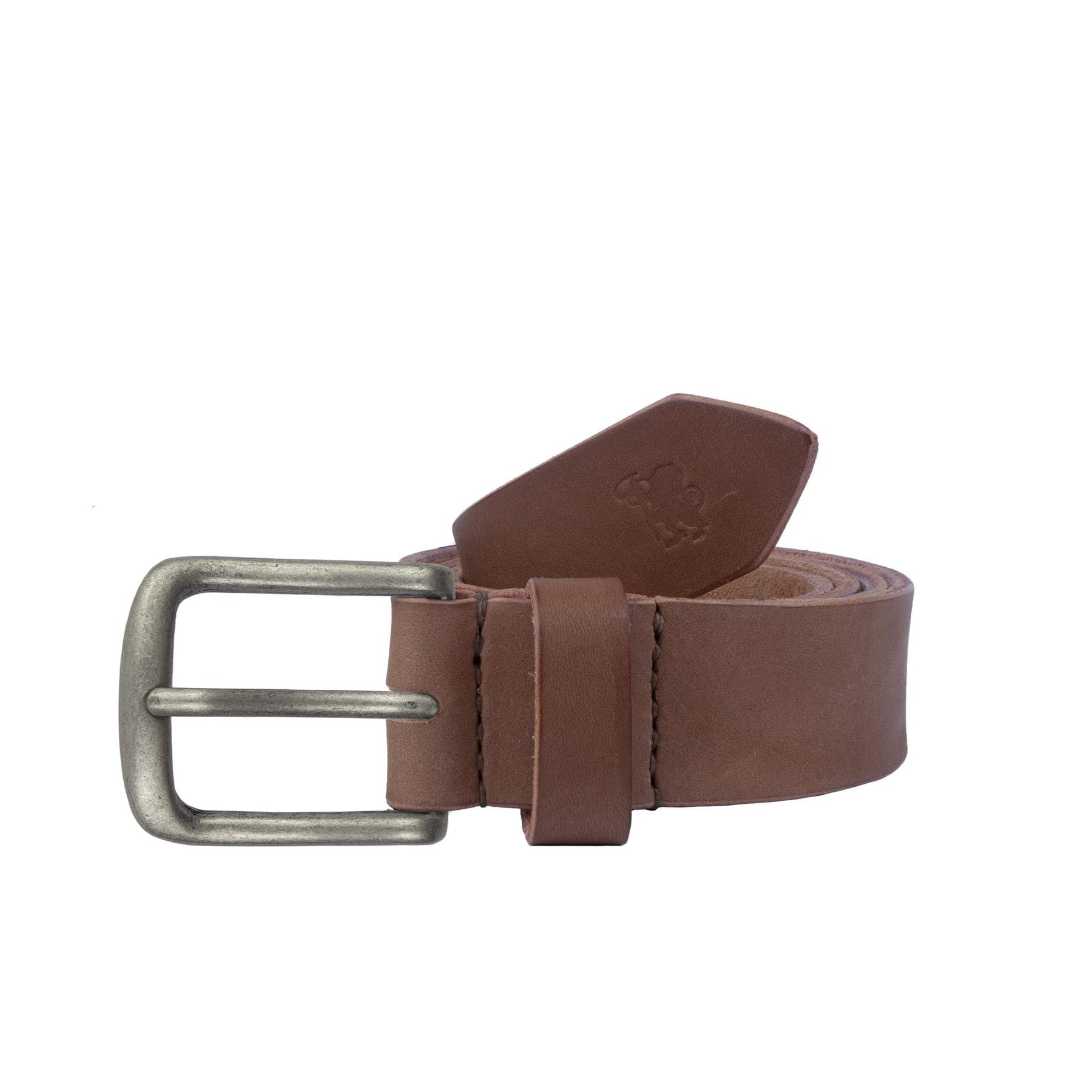
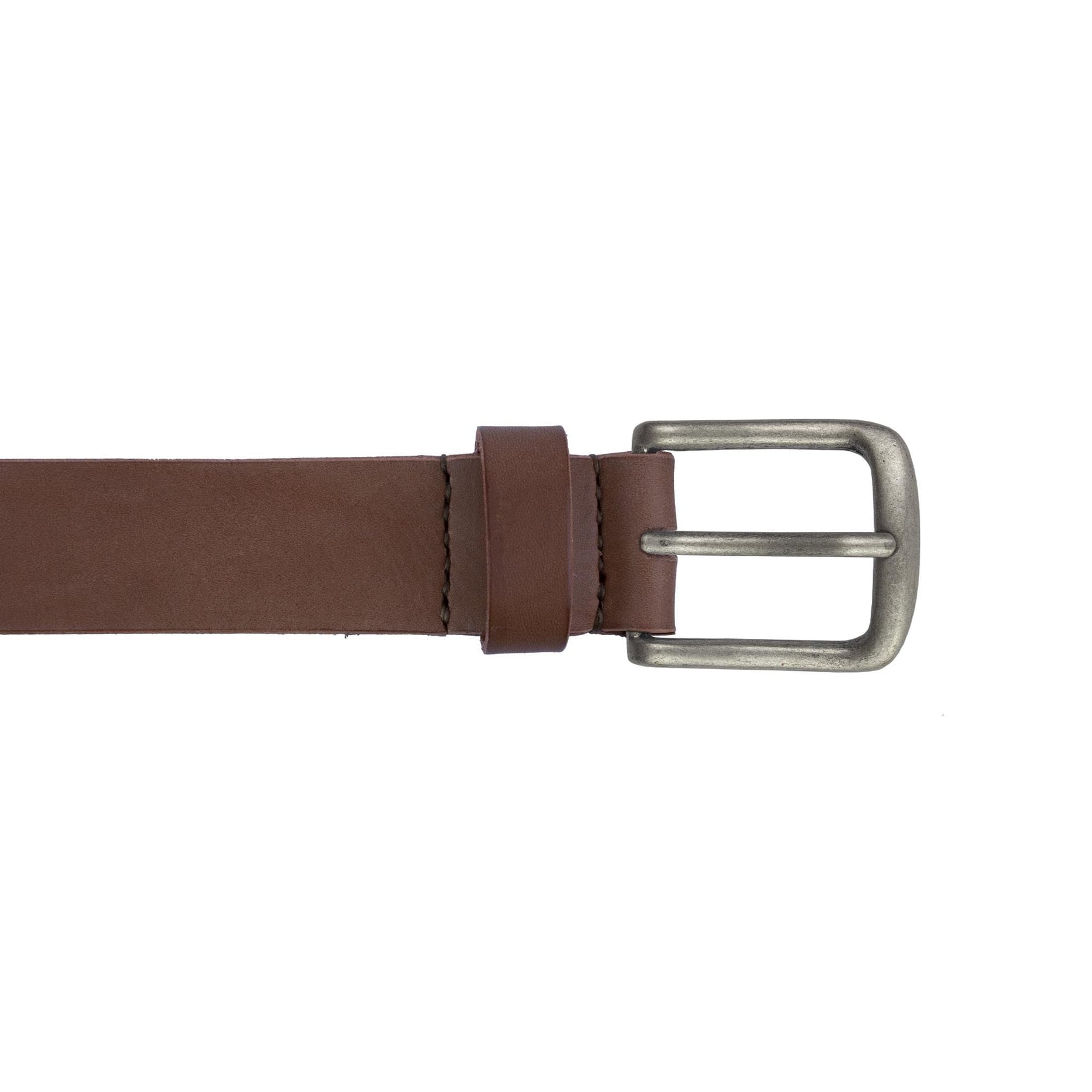
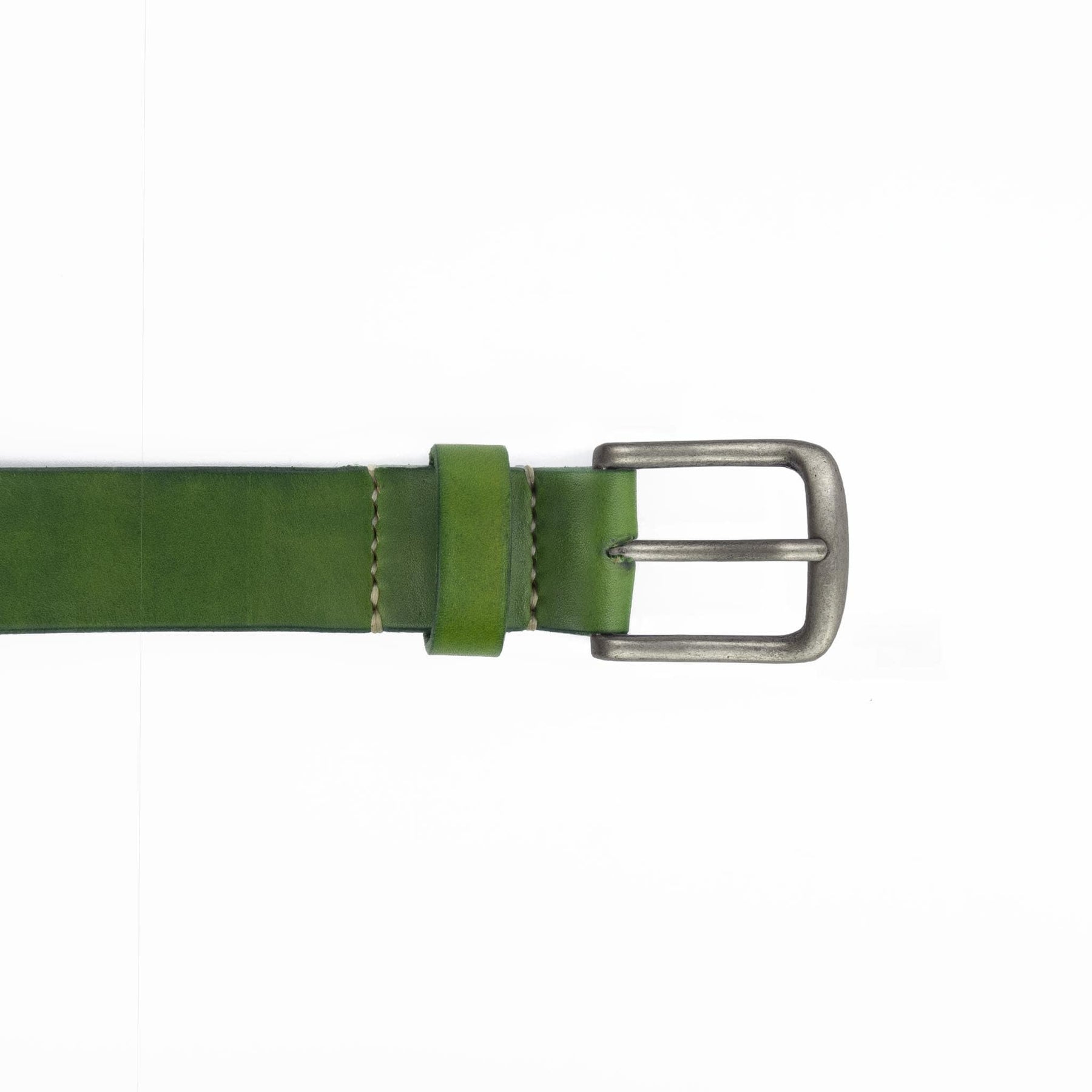
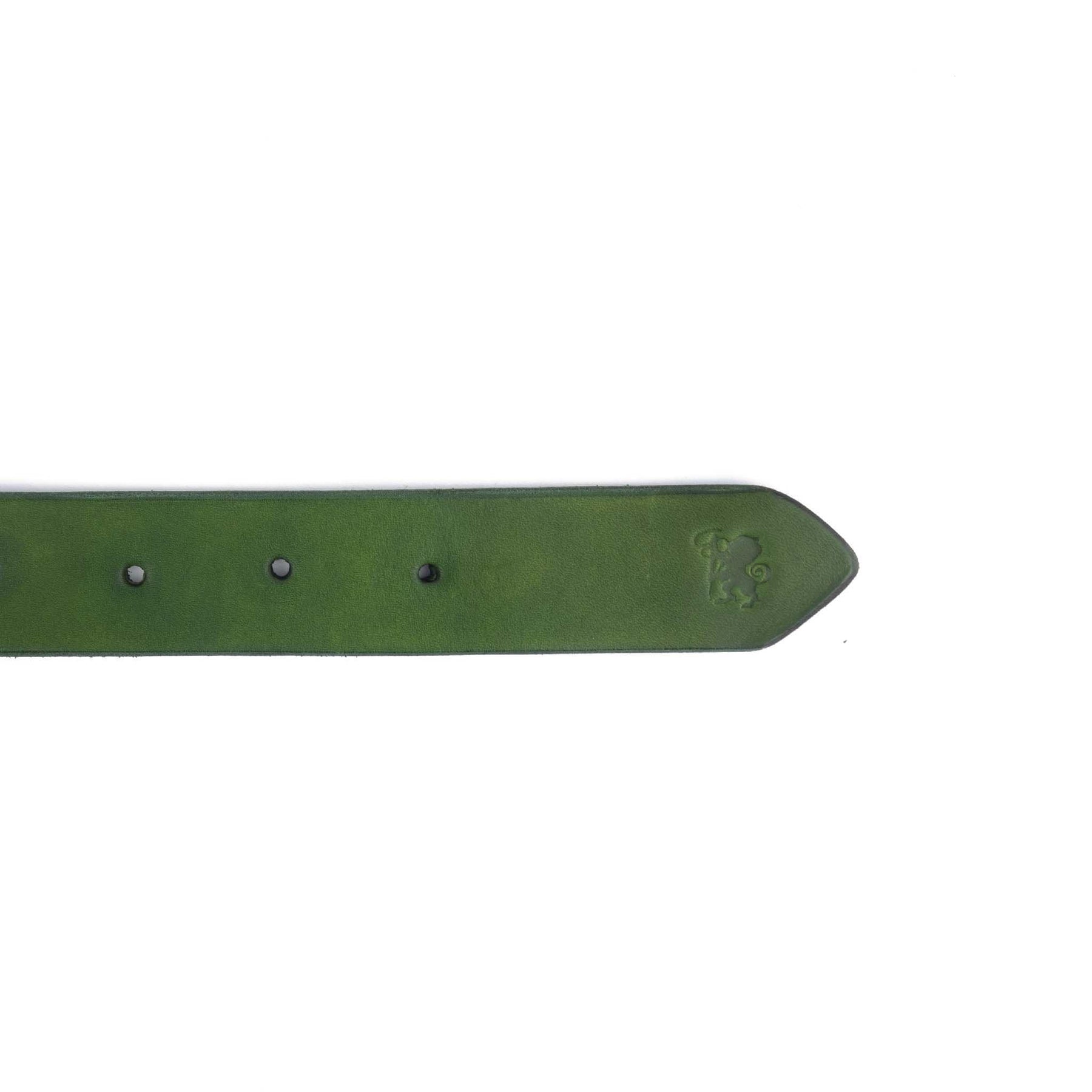
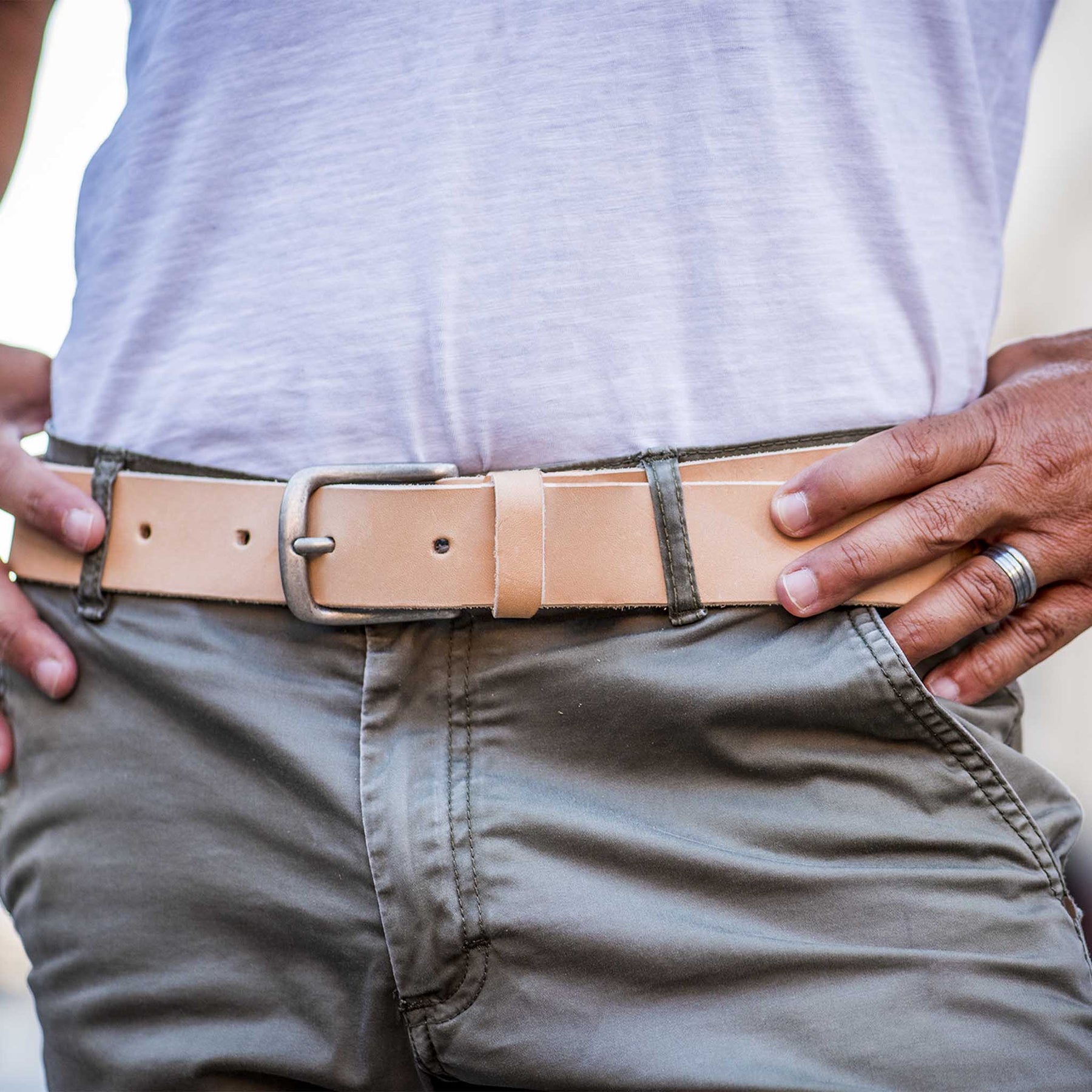
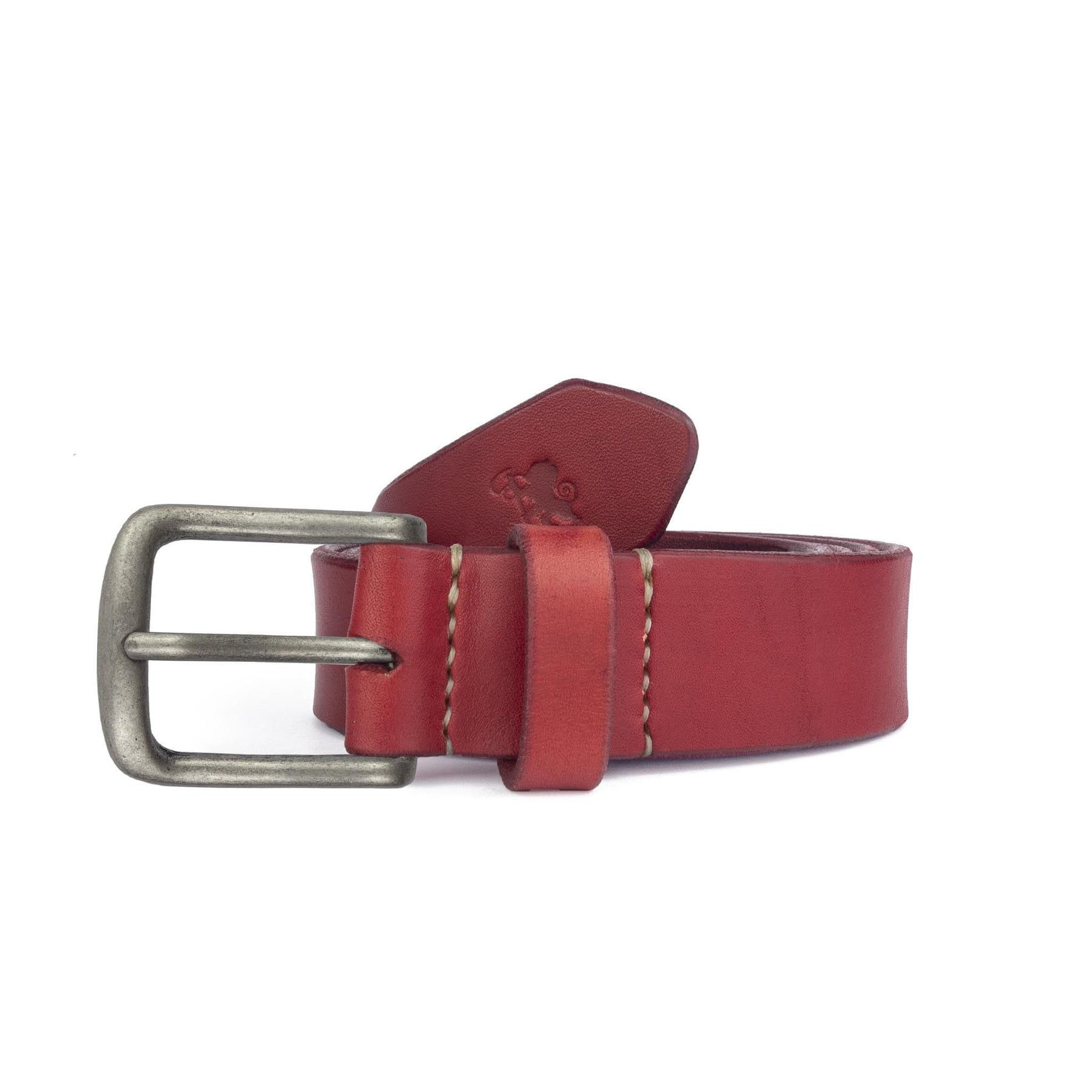
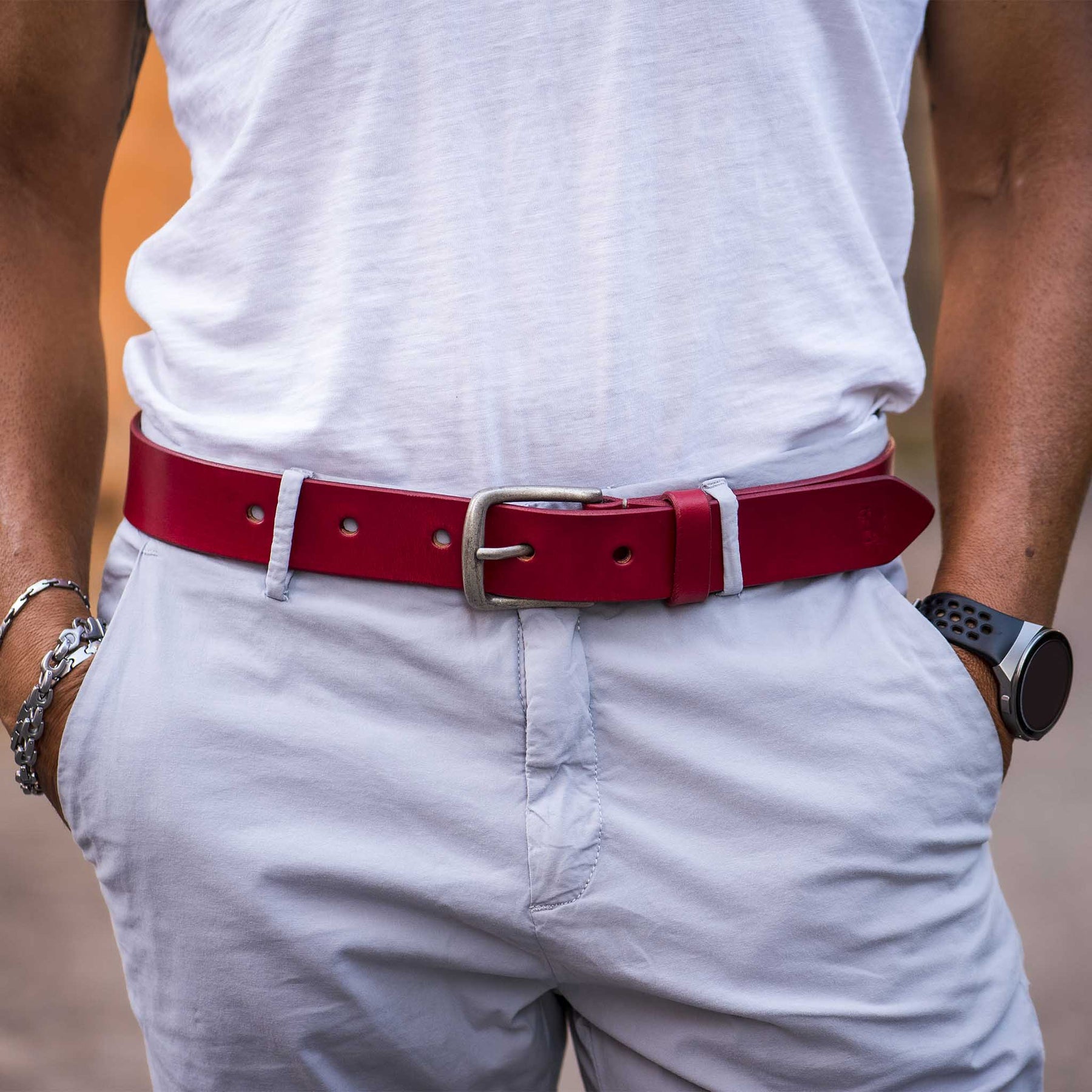
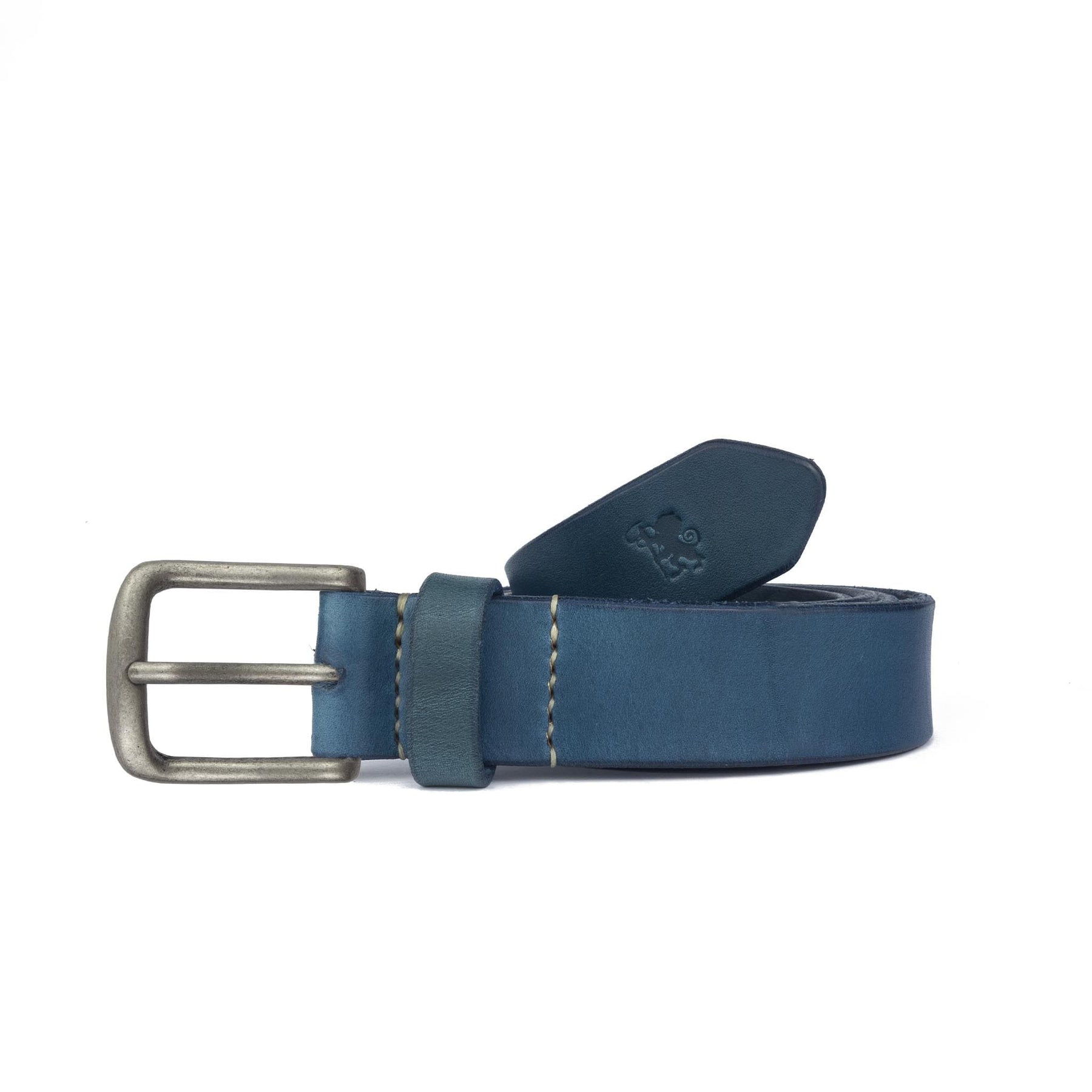
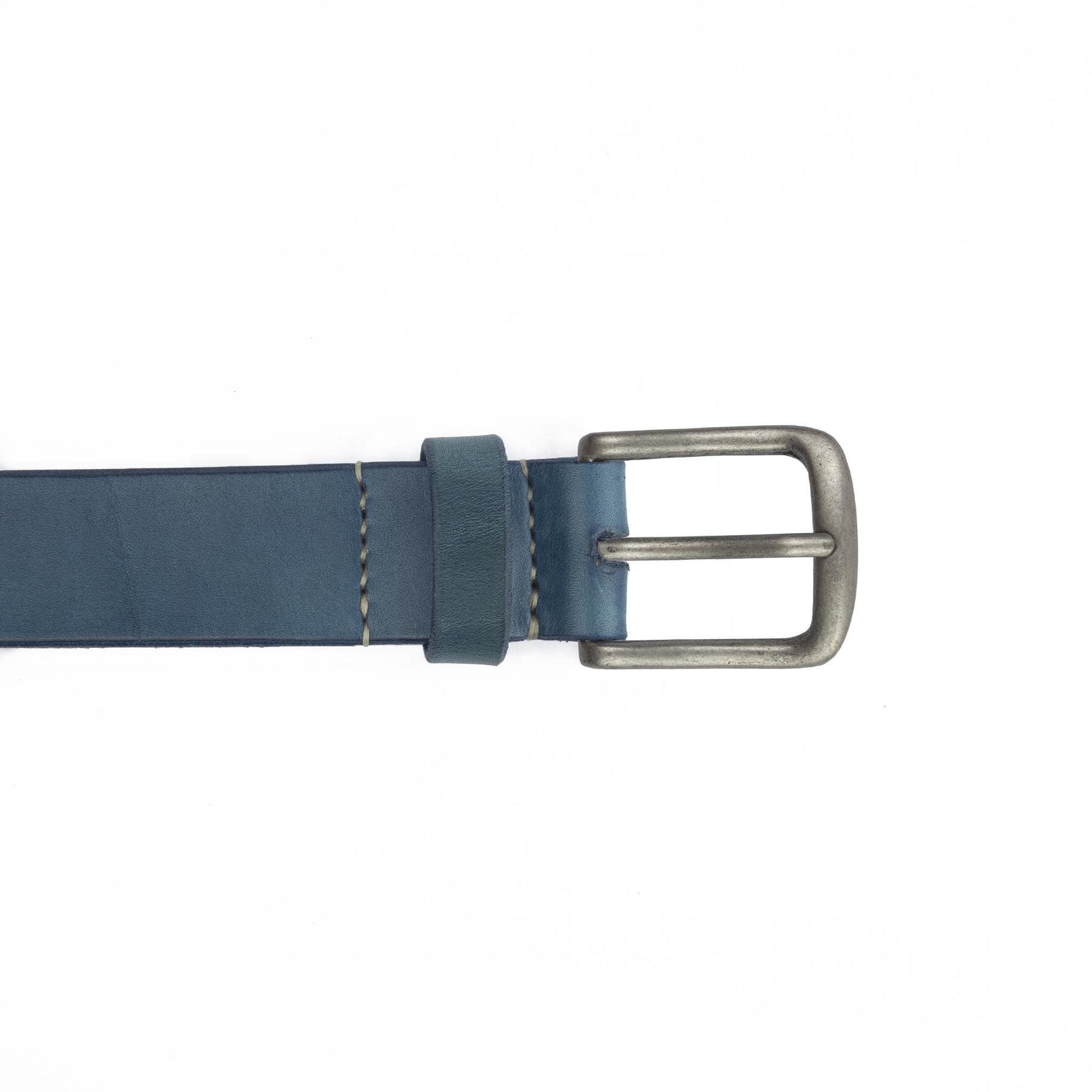
The "Titos" is a men’s leather belt made by hand with a 4 cm zamak buckle. This full-grain bull leather is vegetable-tanned, an ancient and eco-friendly method that works with natural substances such as tannins.
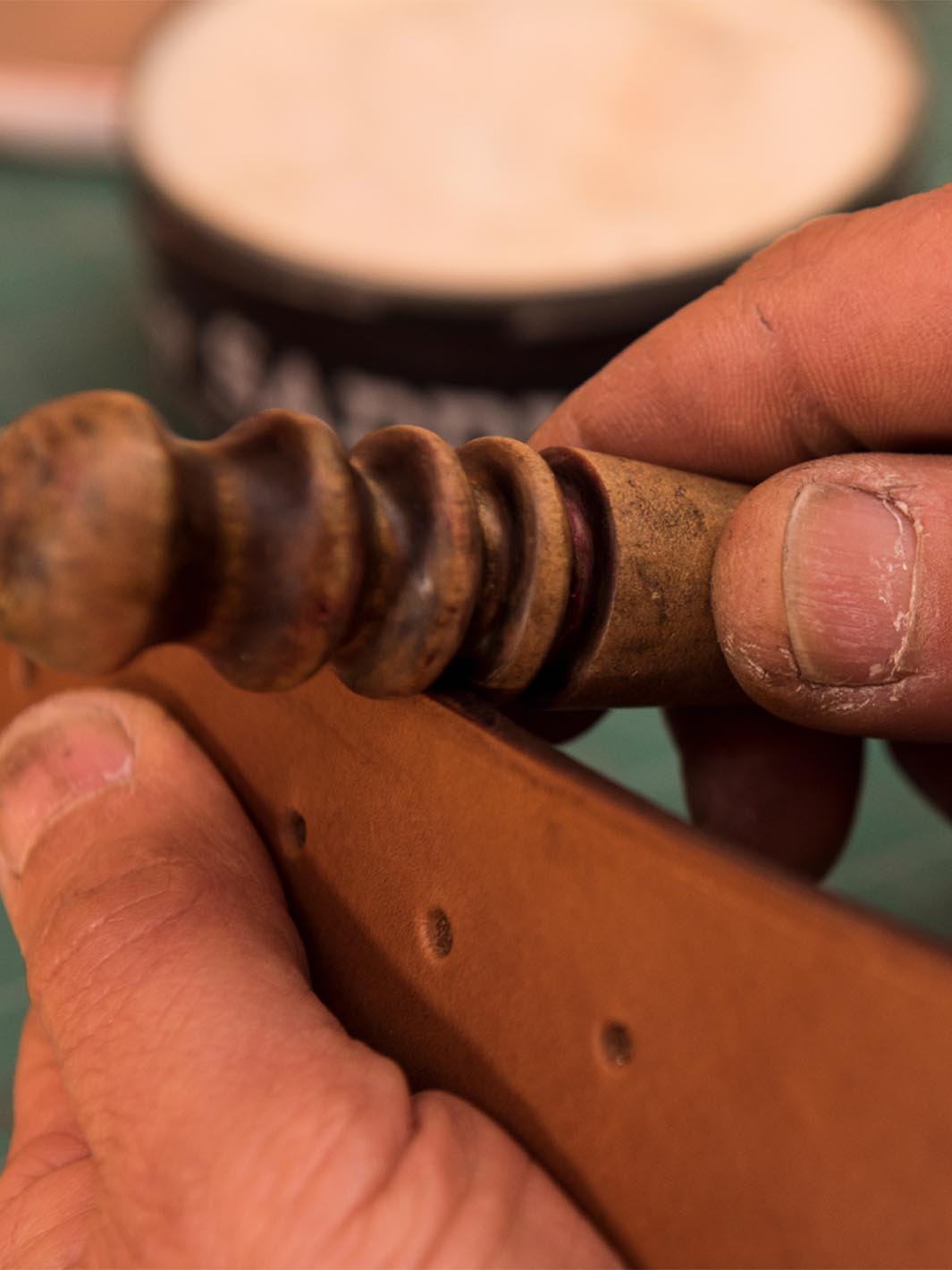
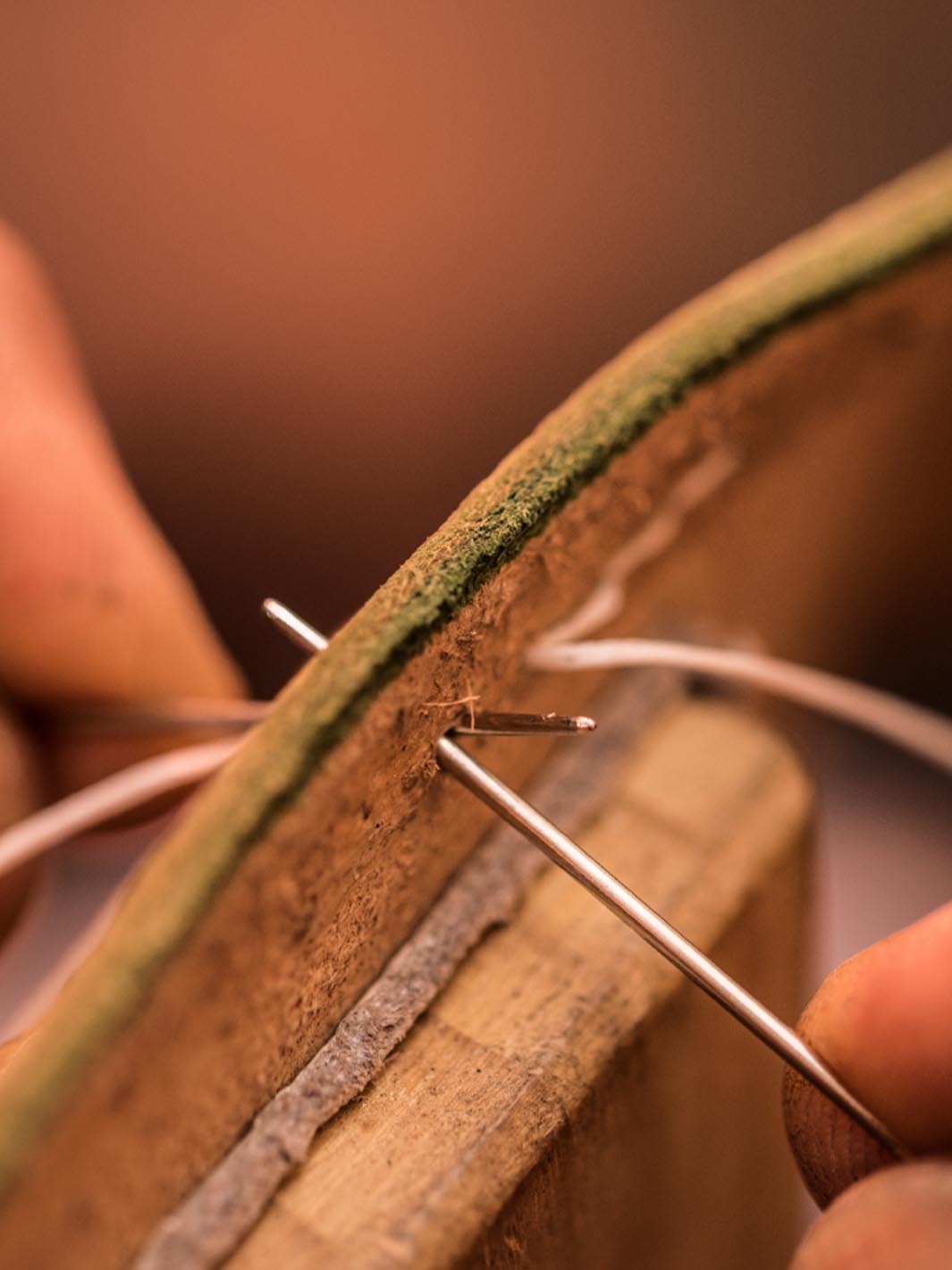
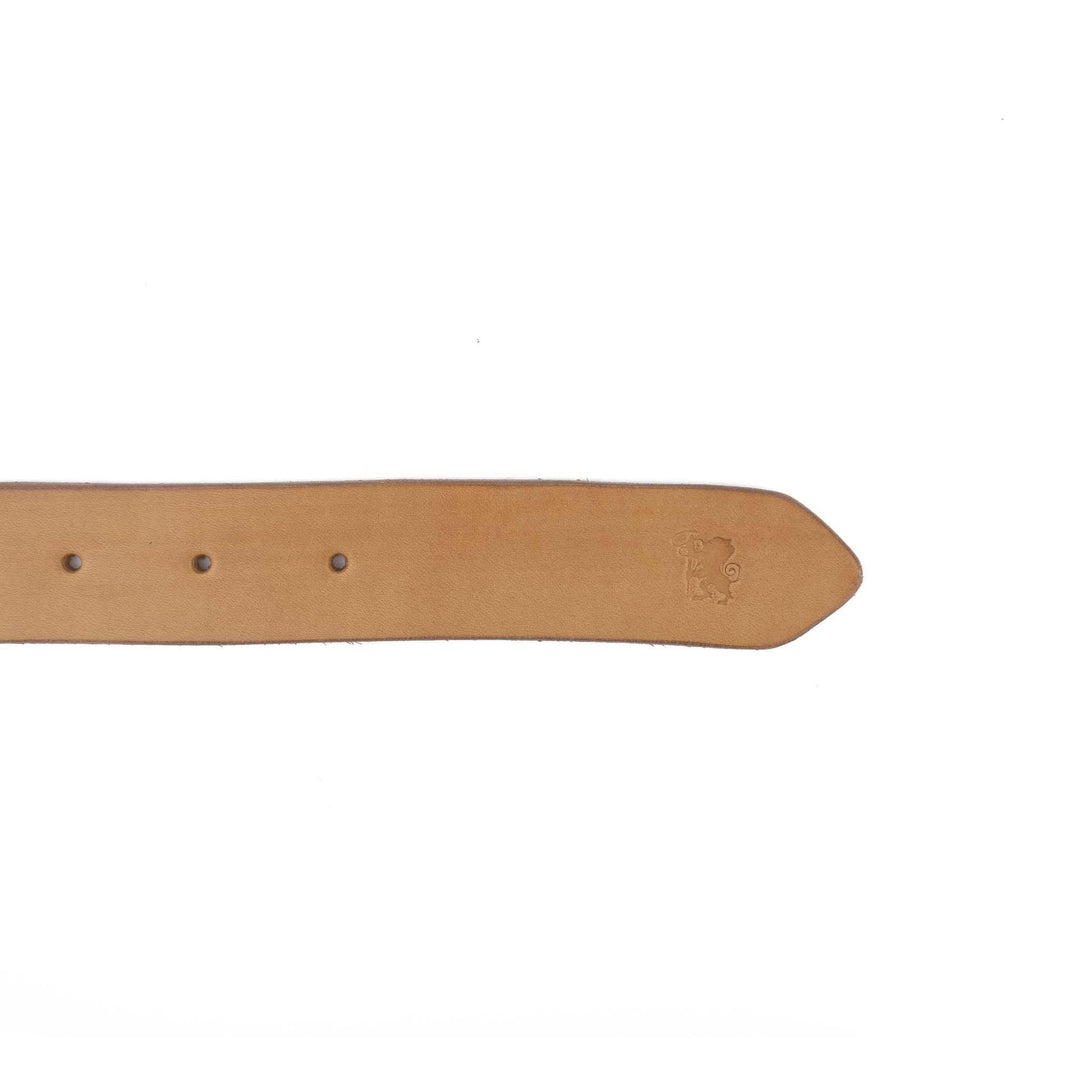
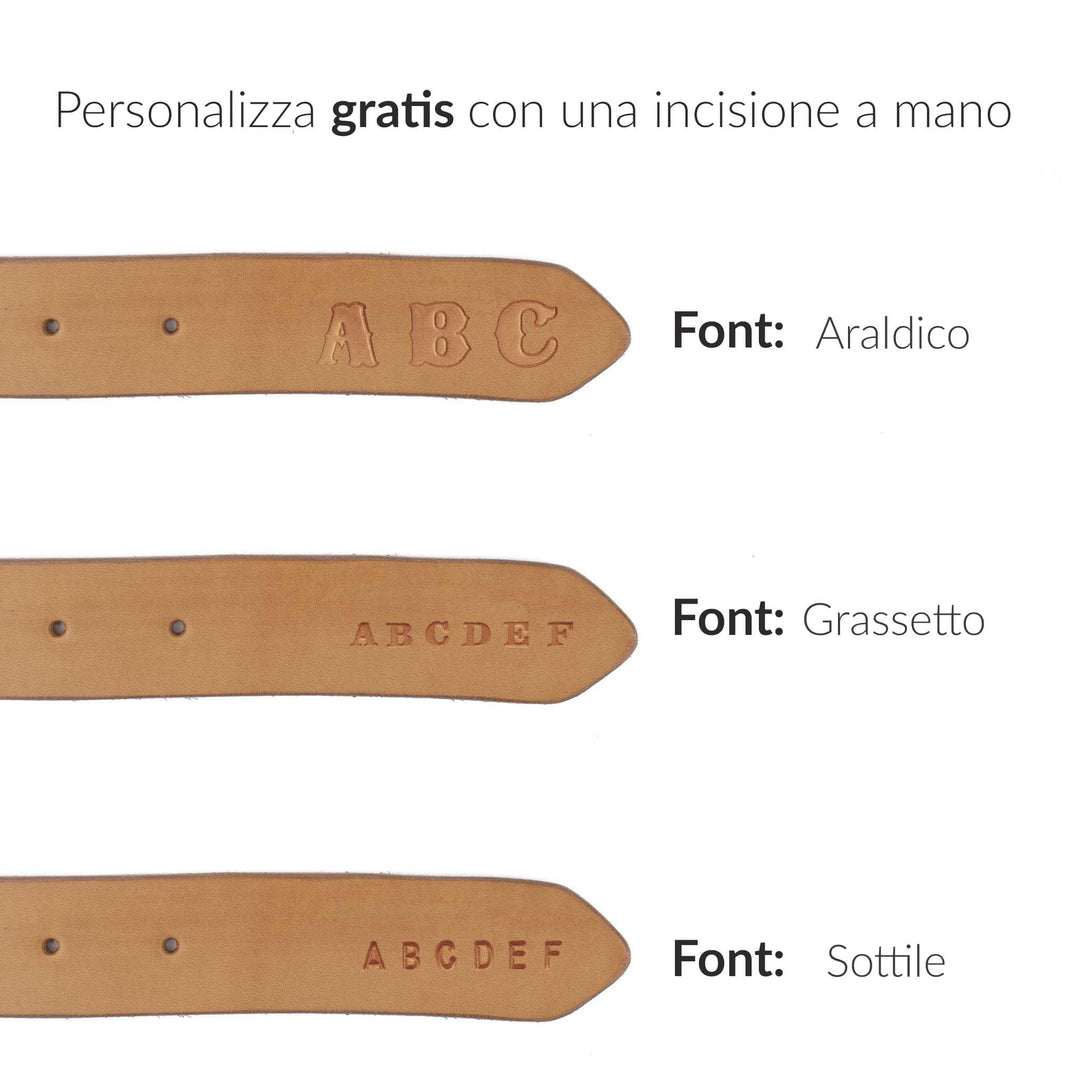
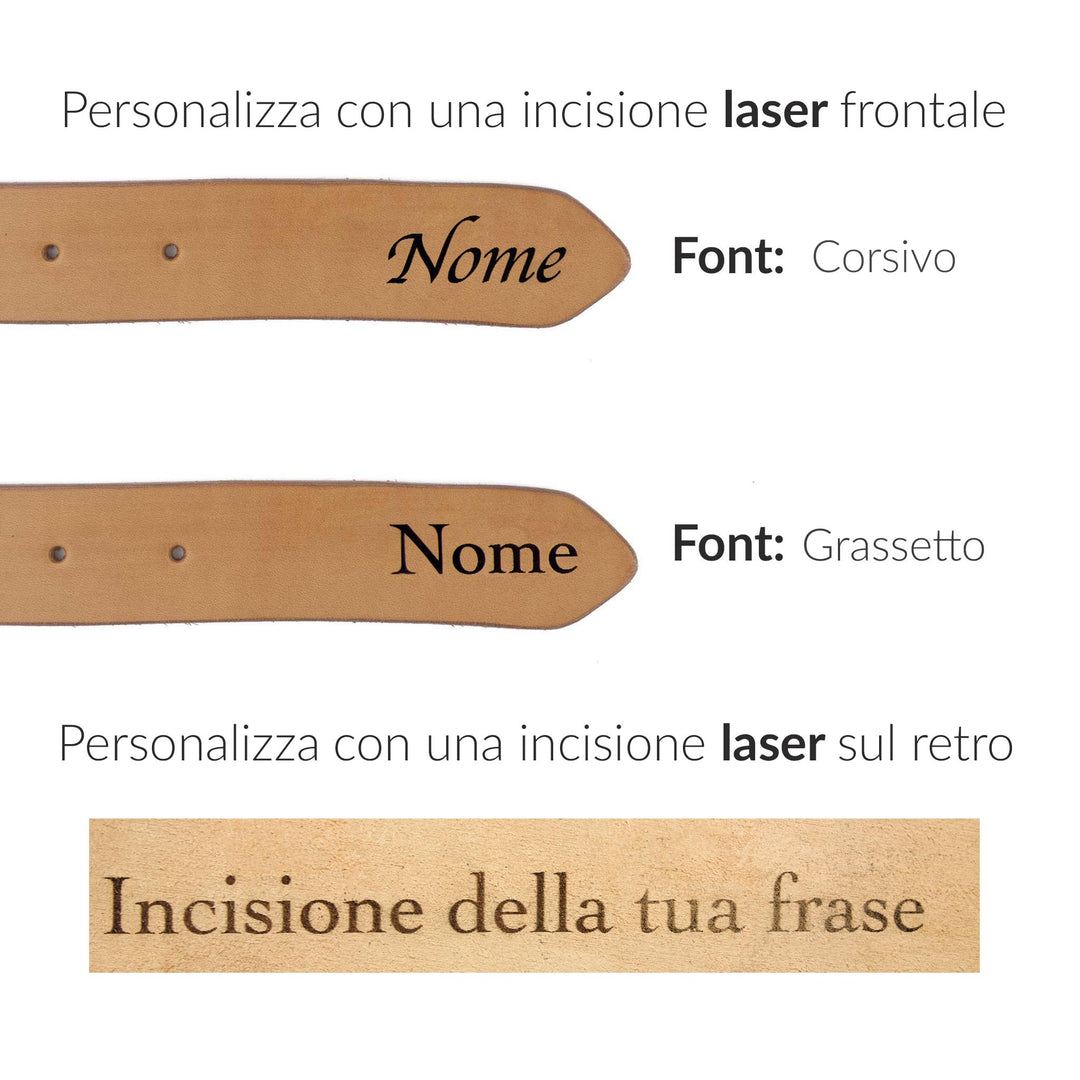
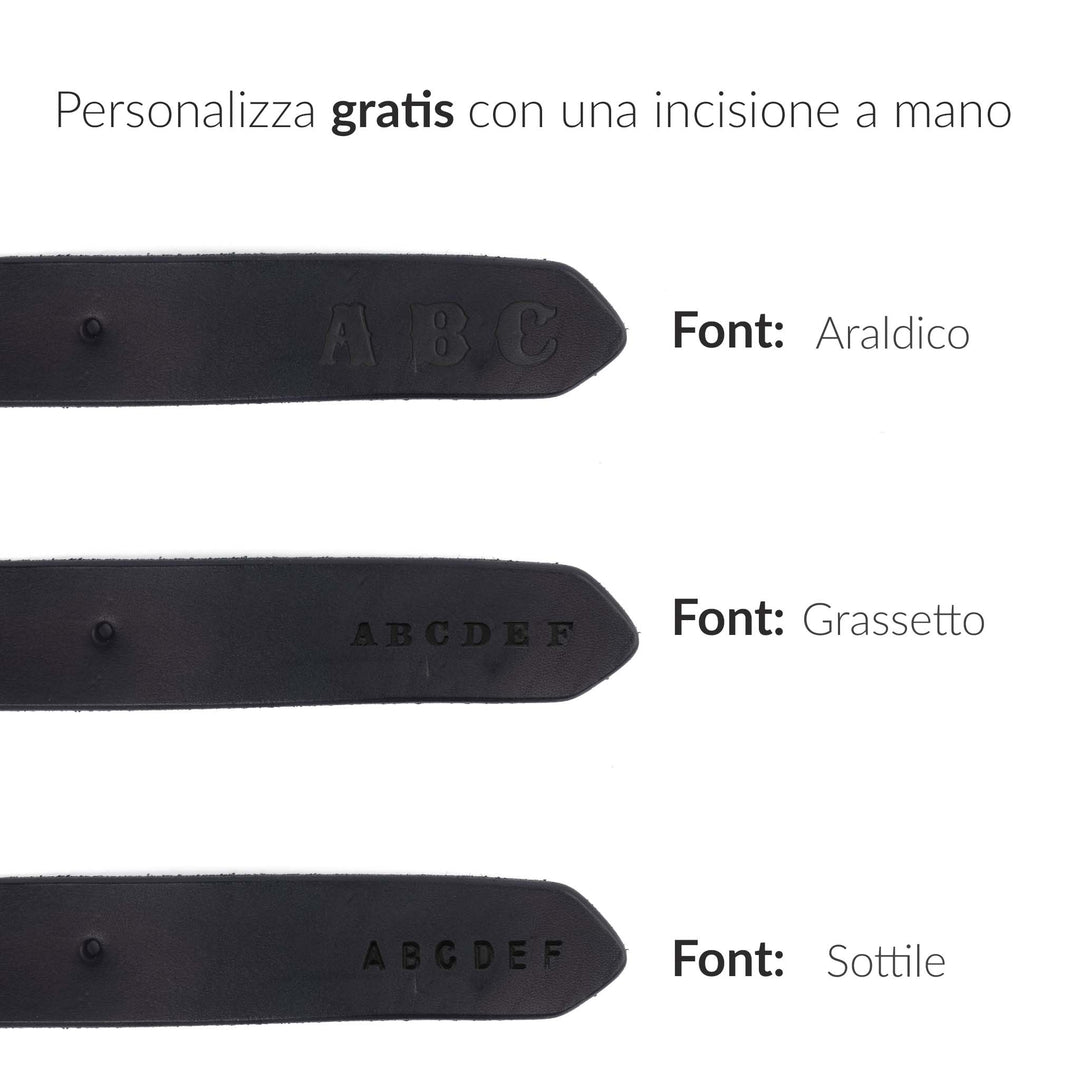
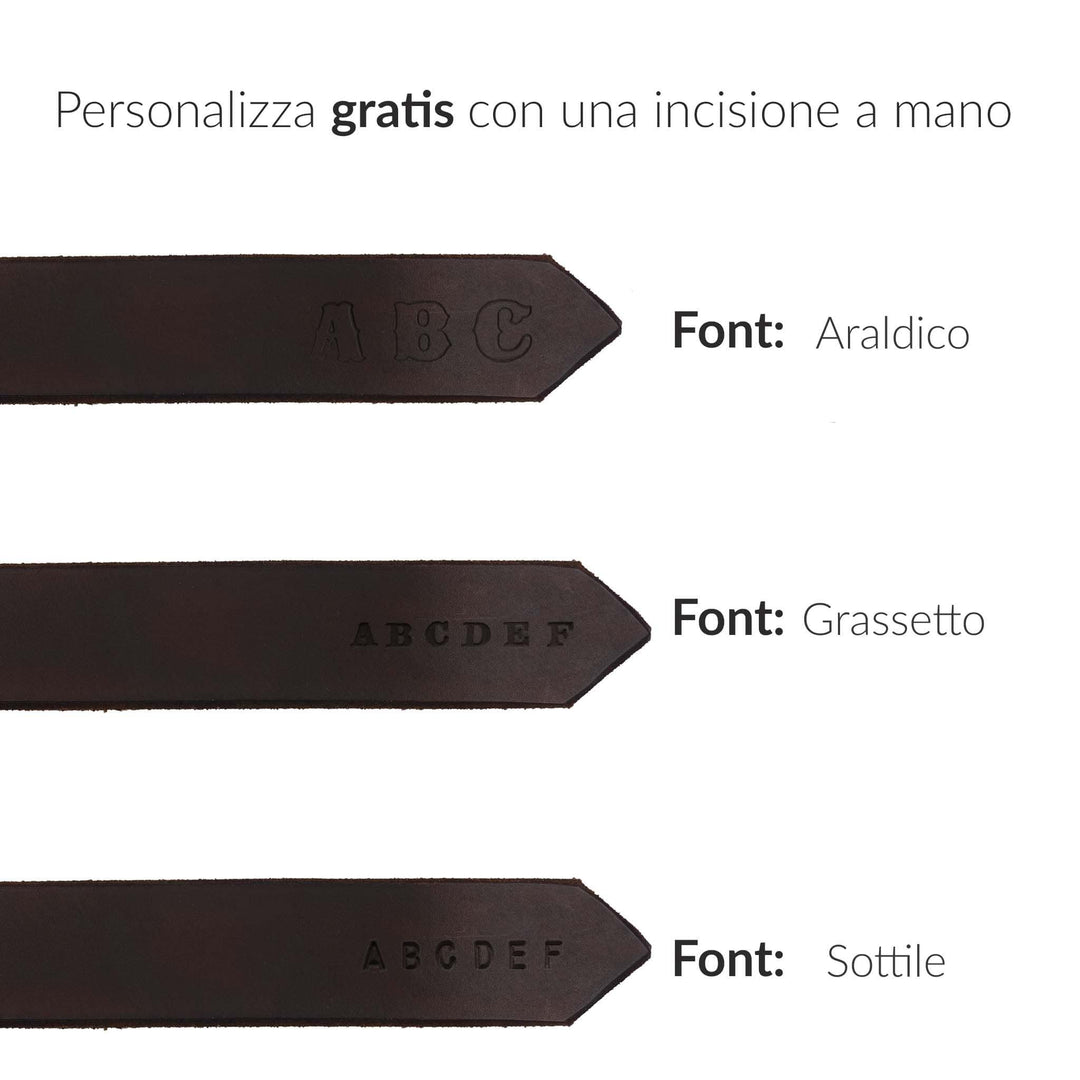
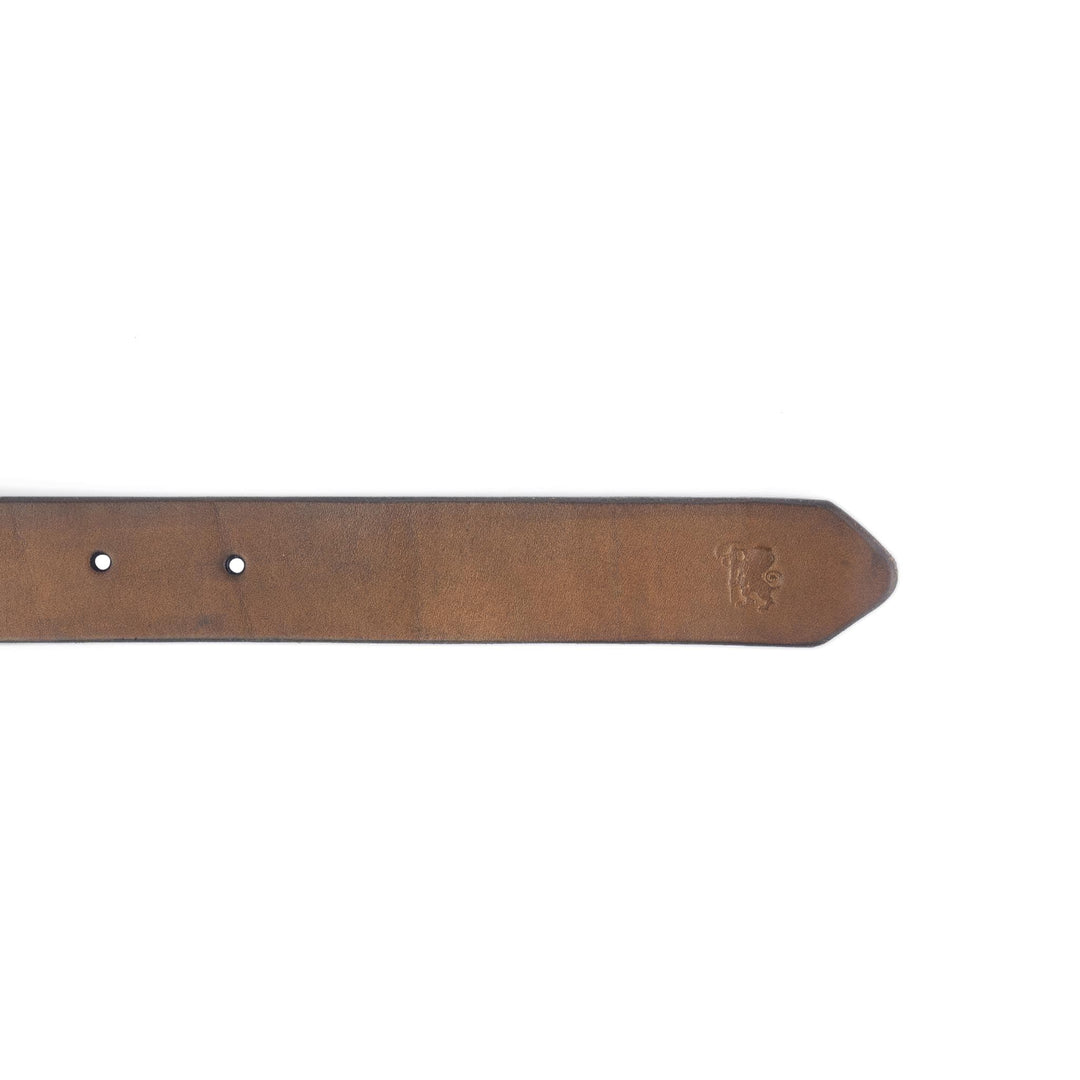
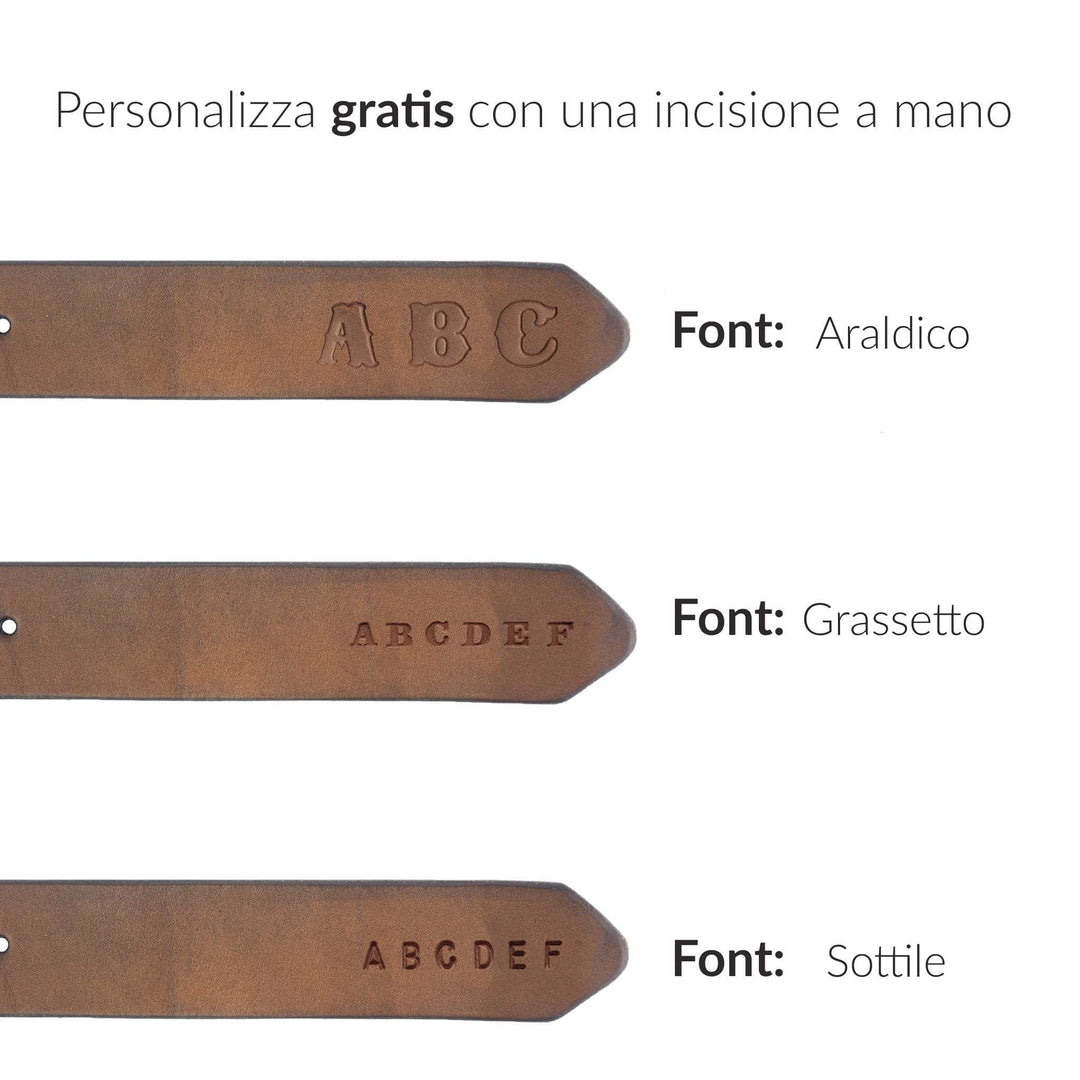
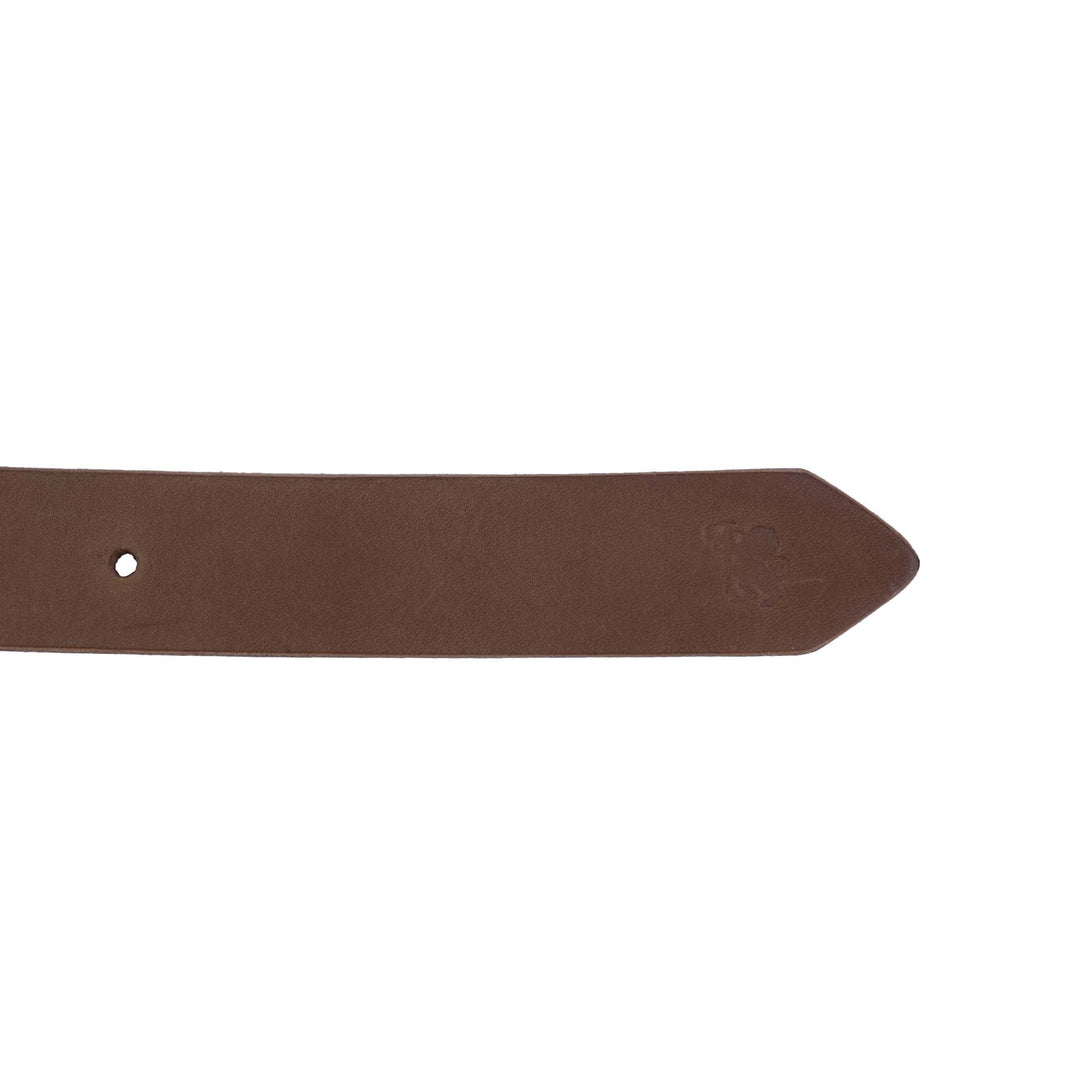
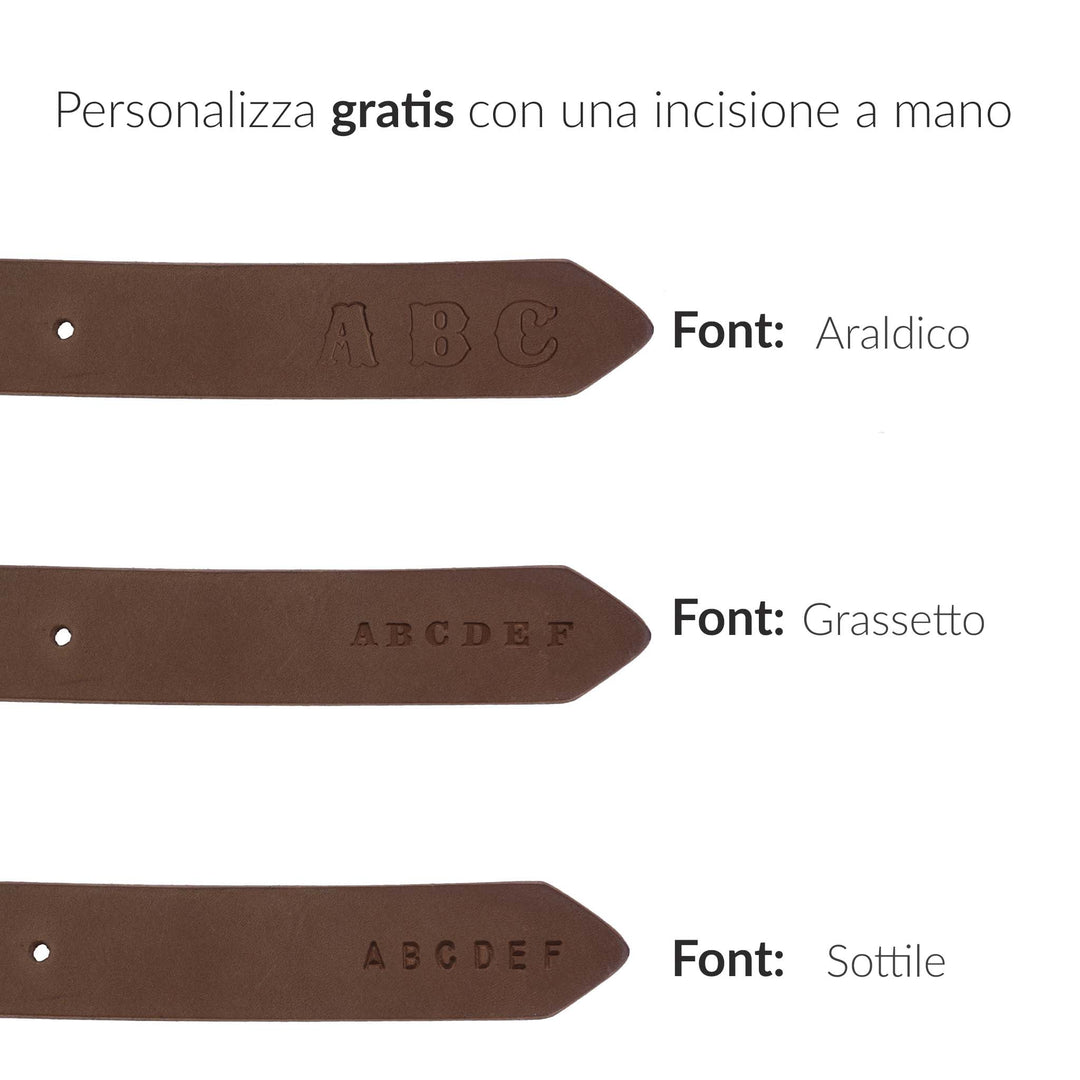
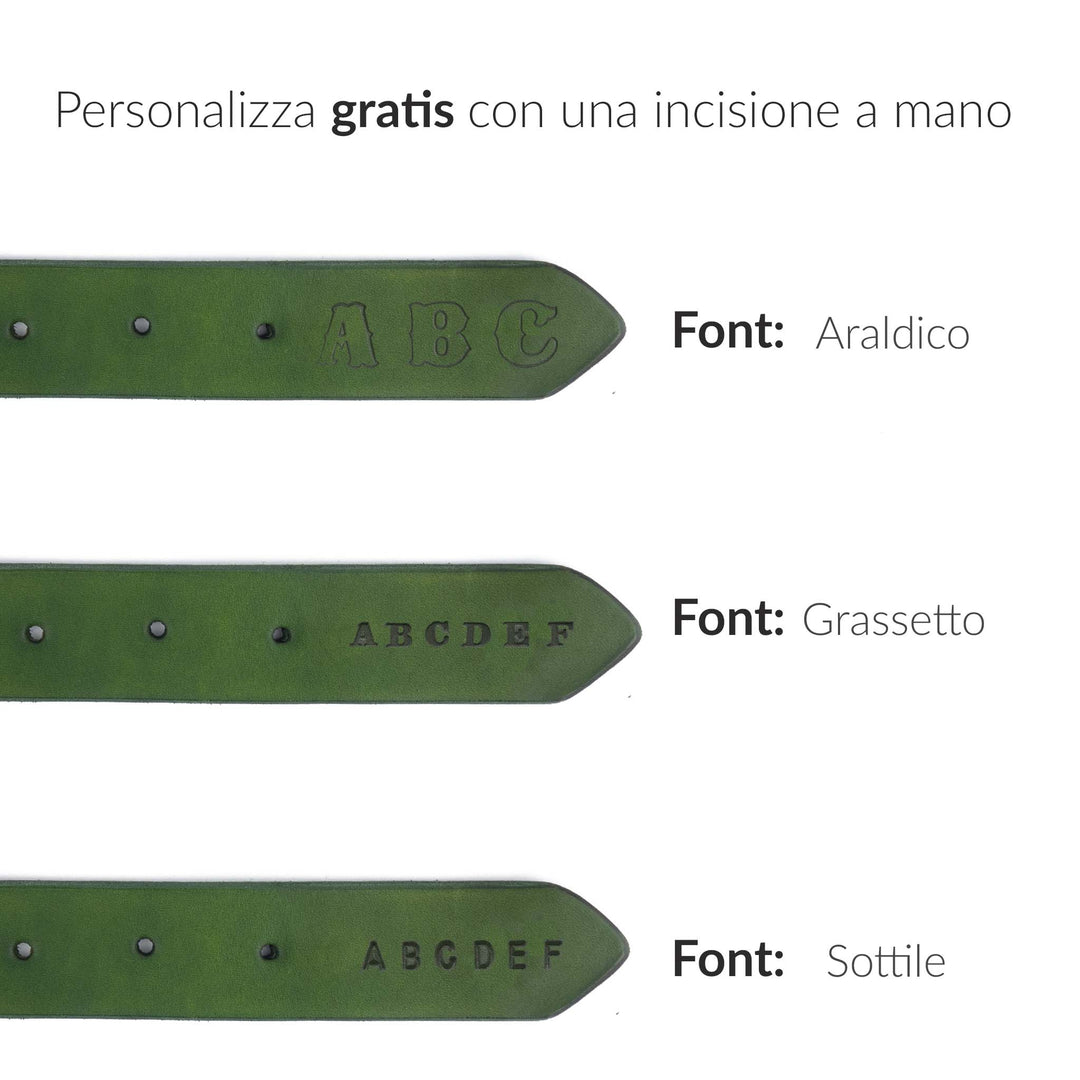
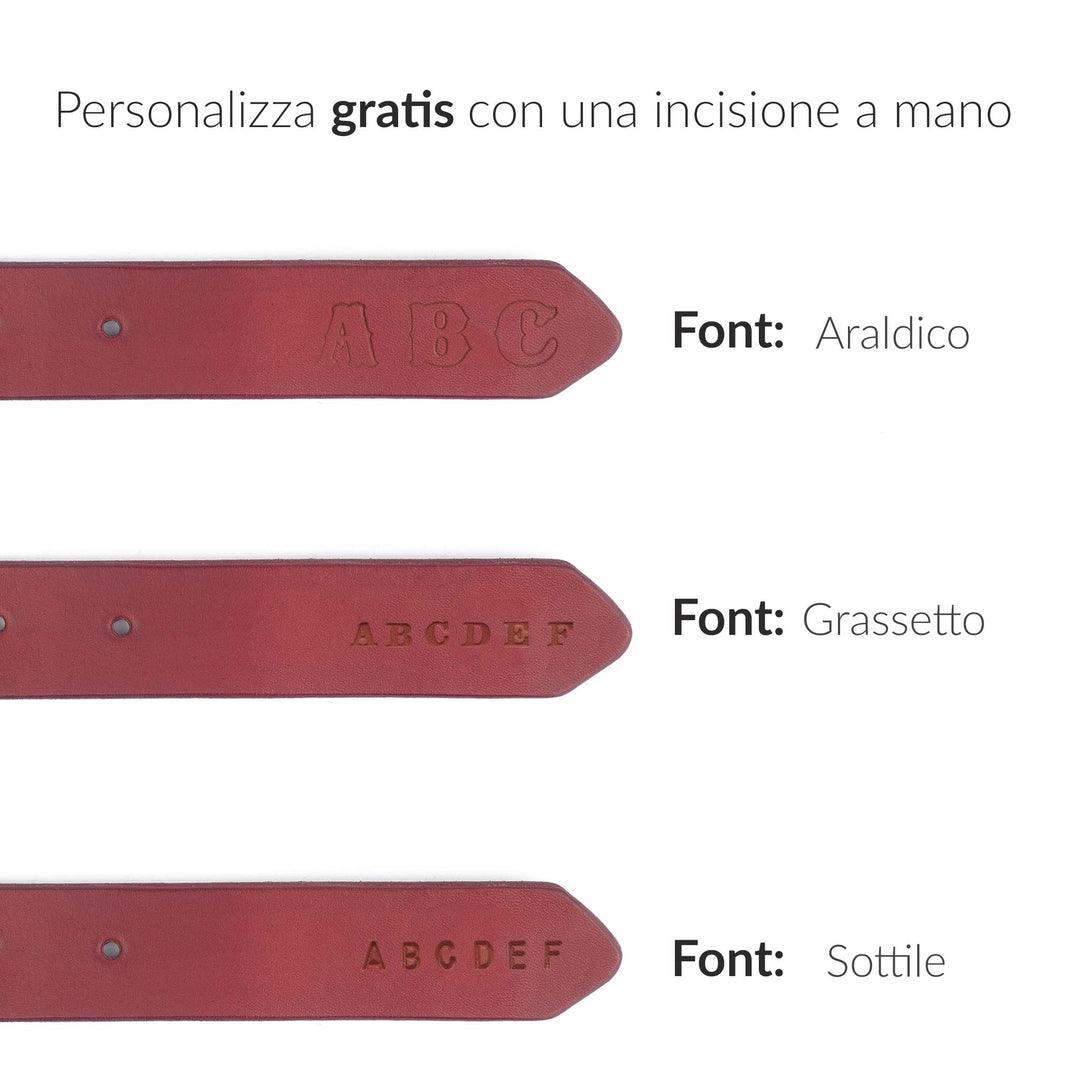
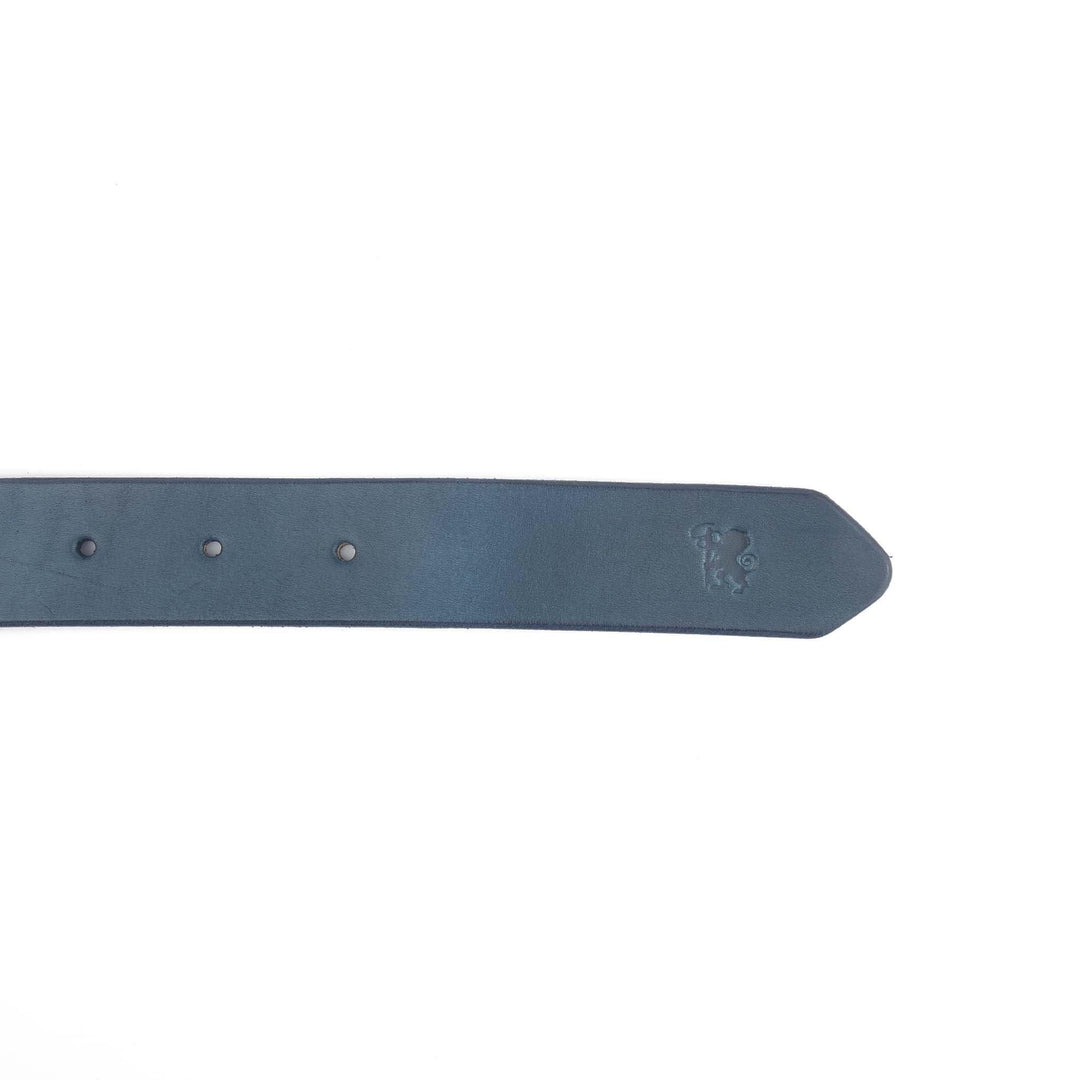
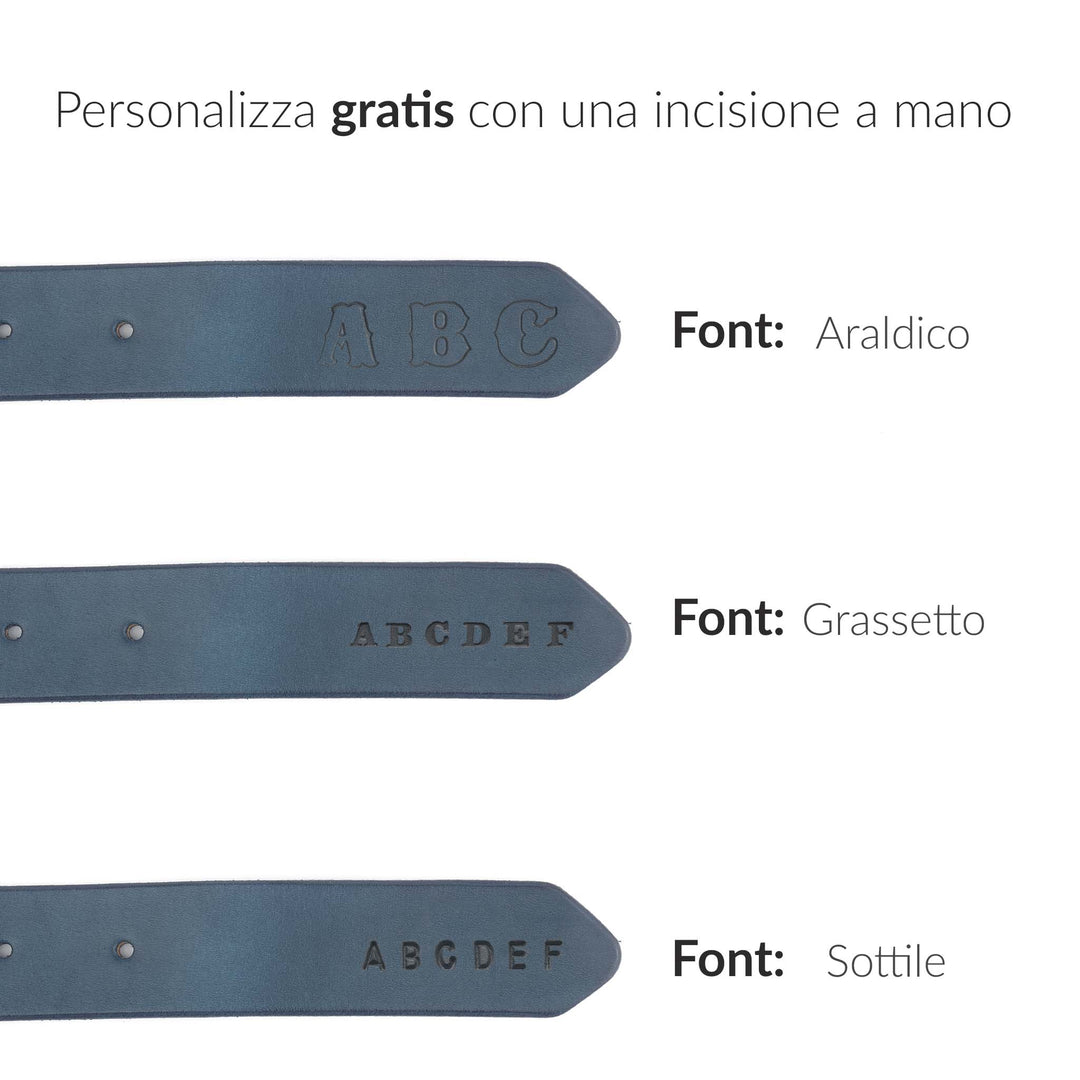
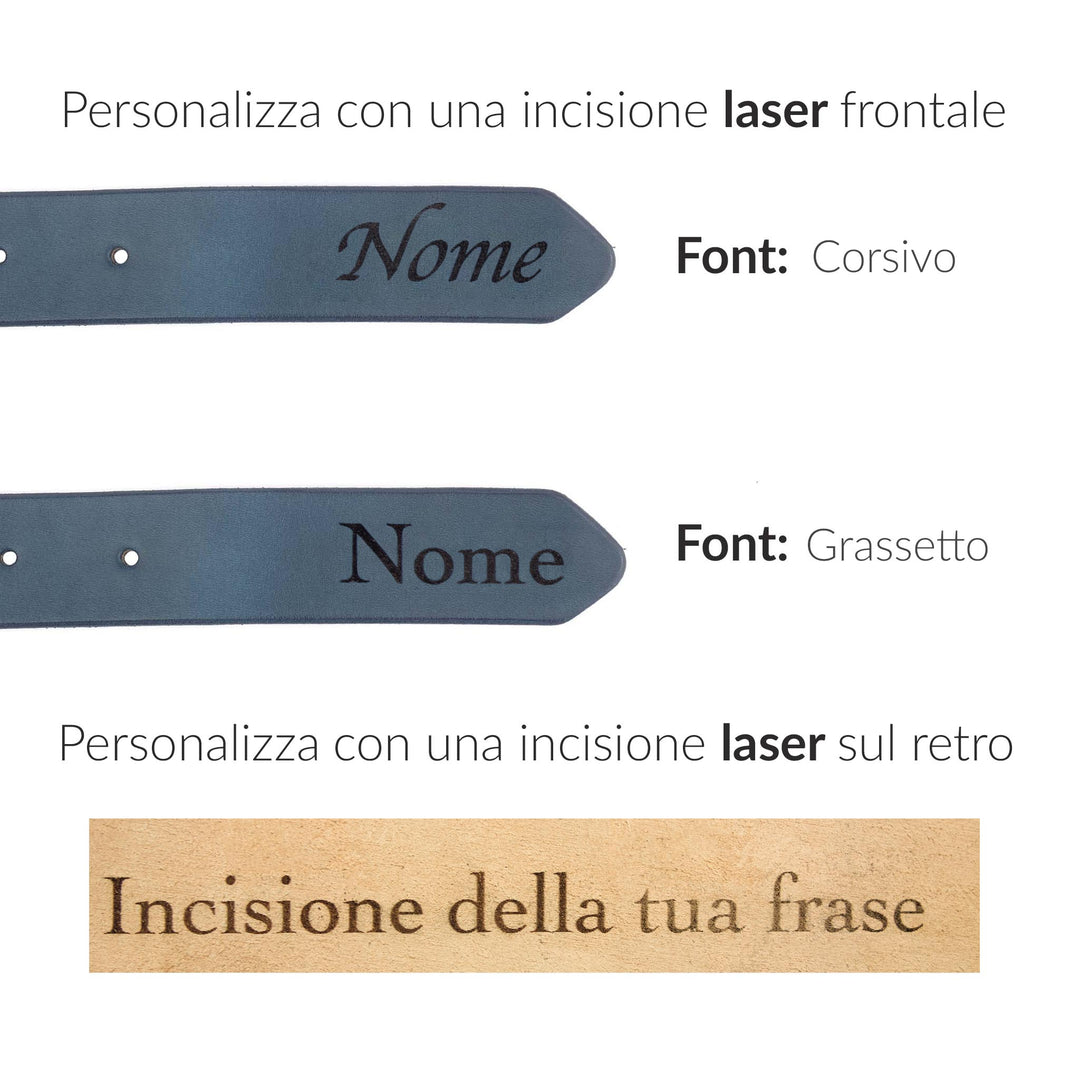
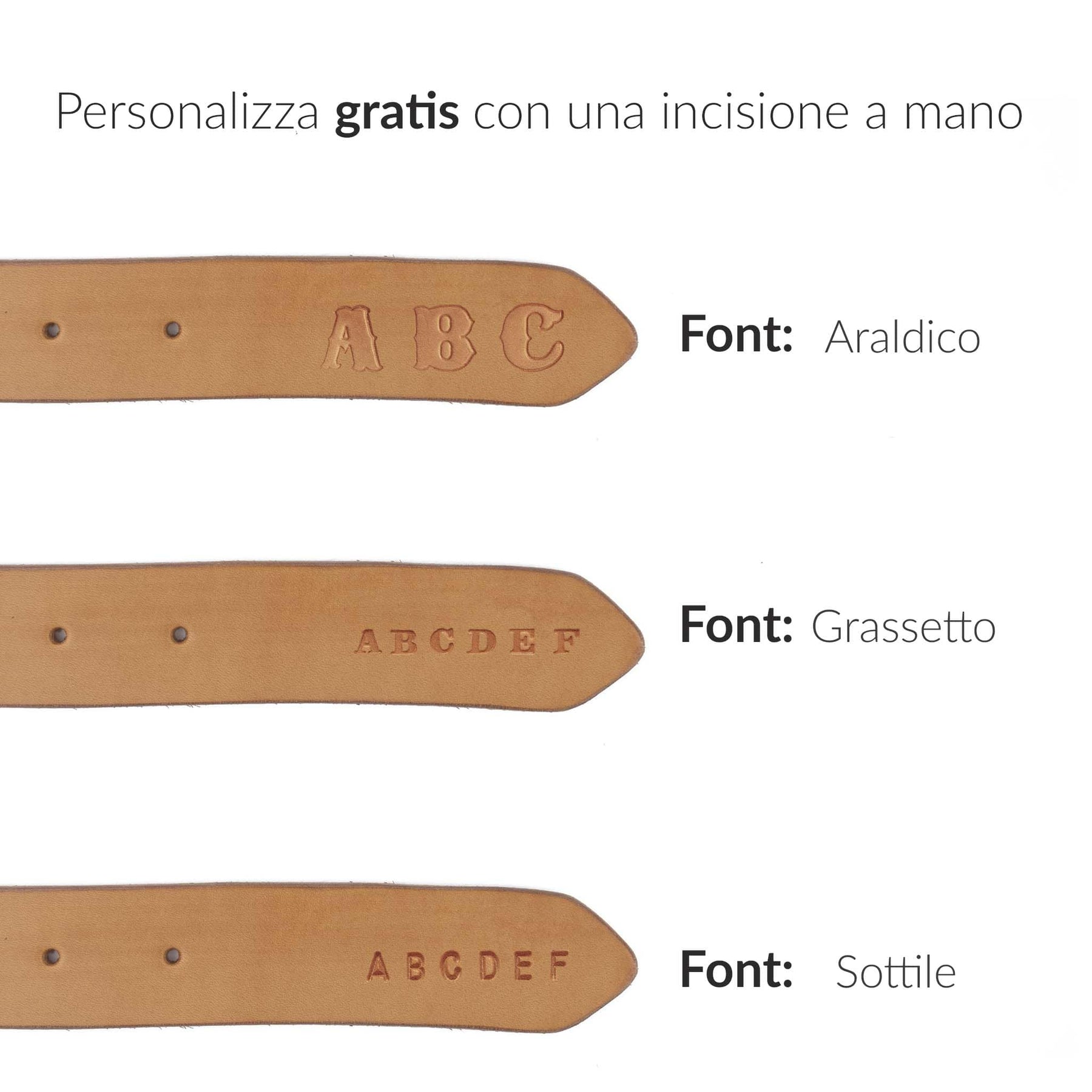
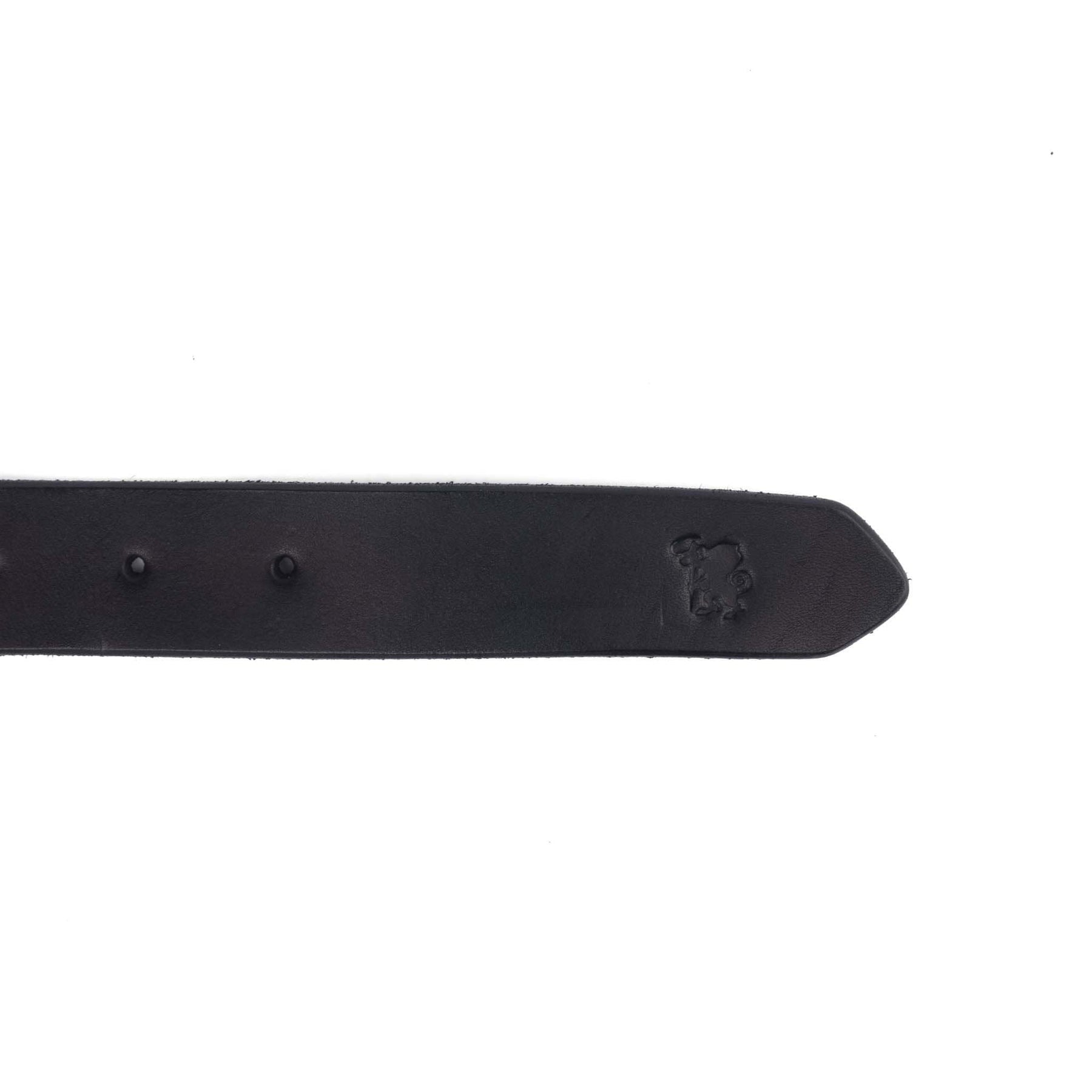
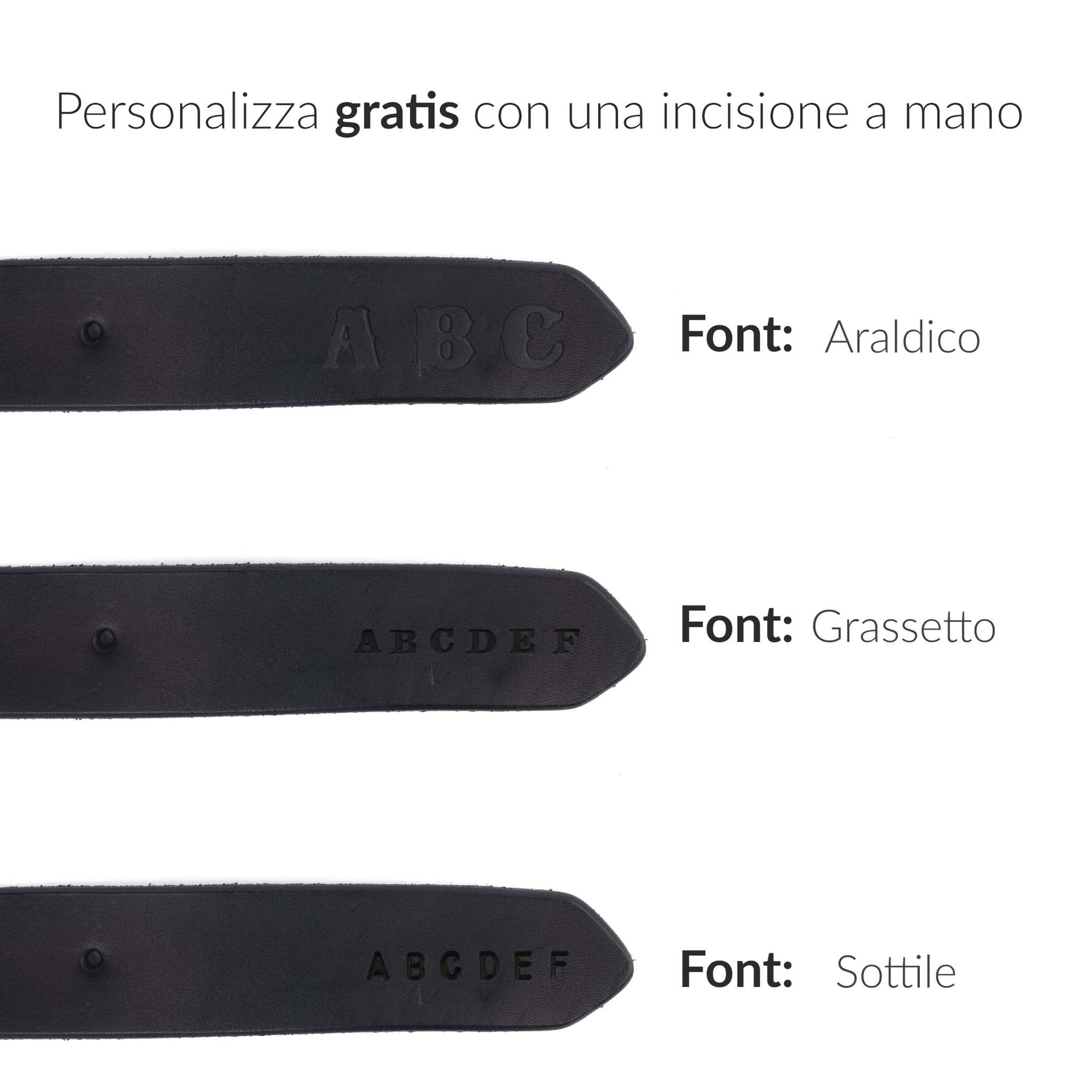
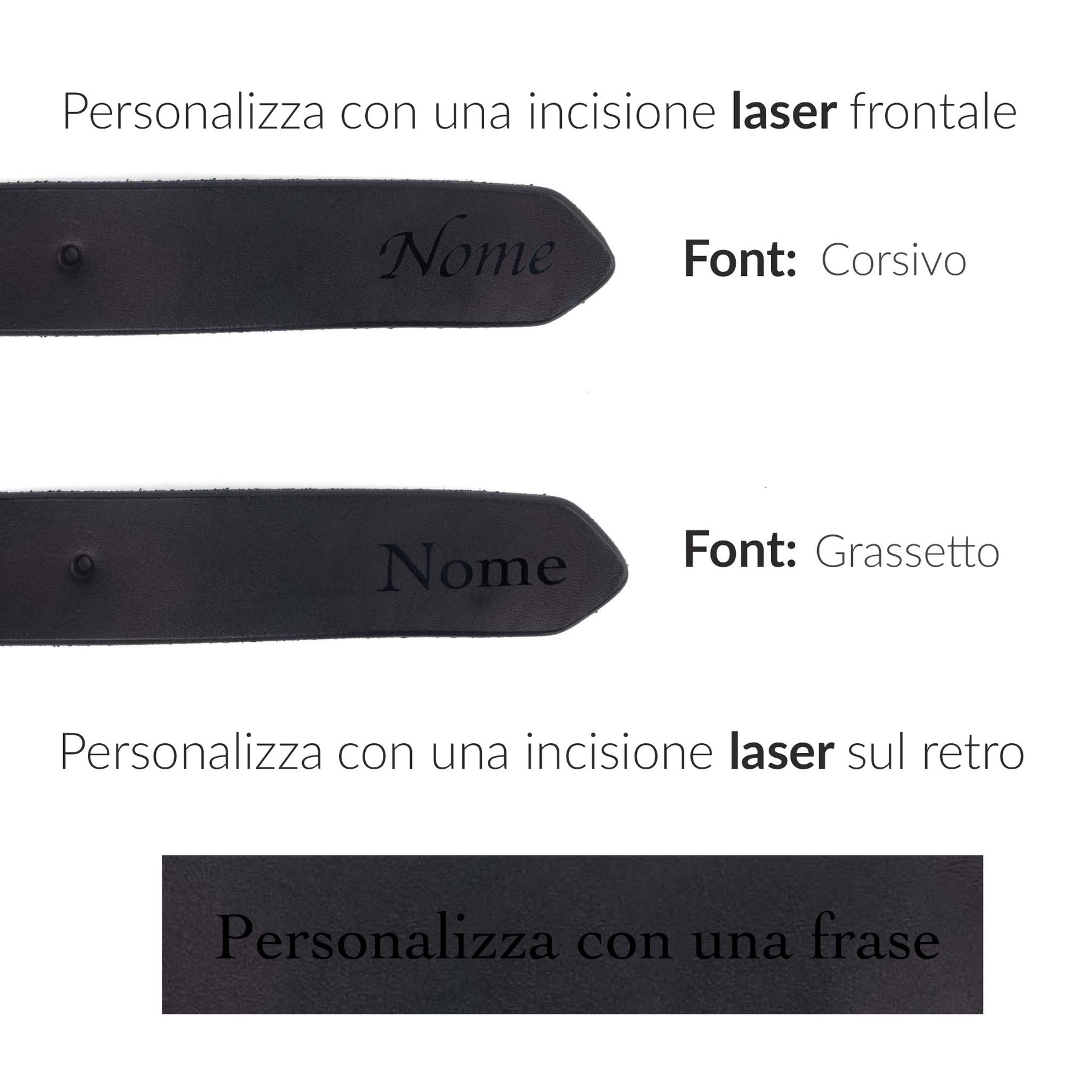
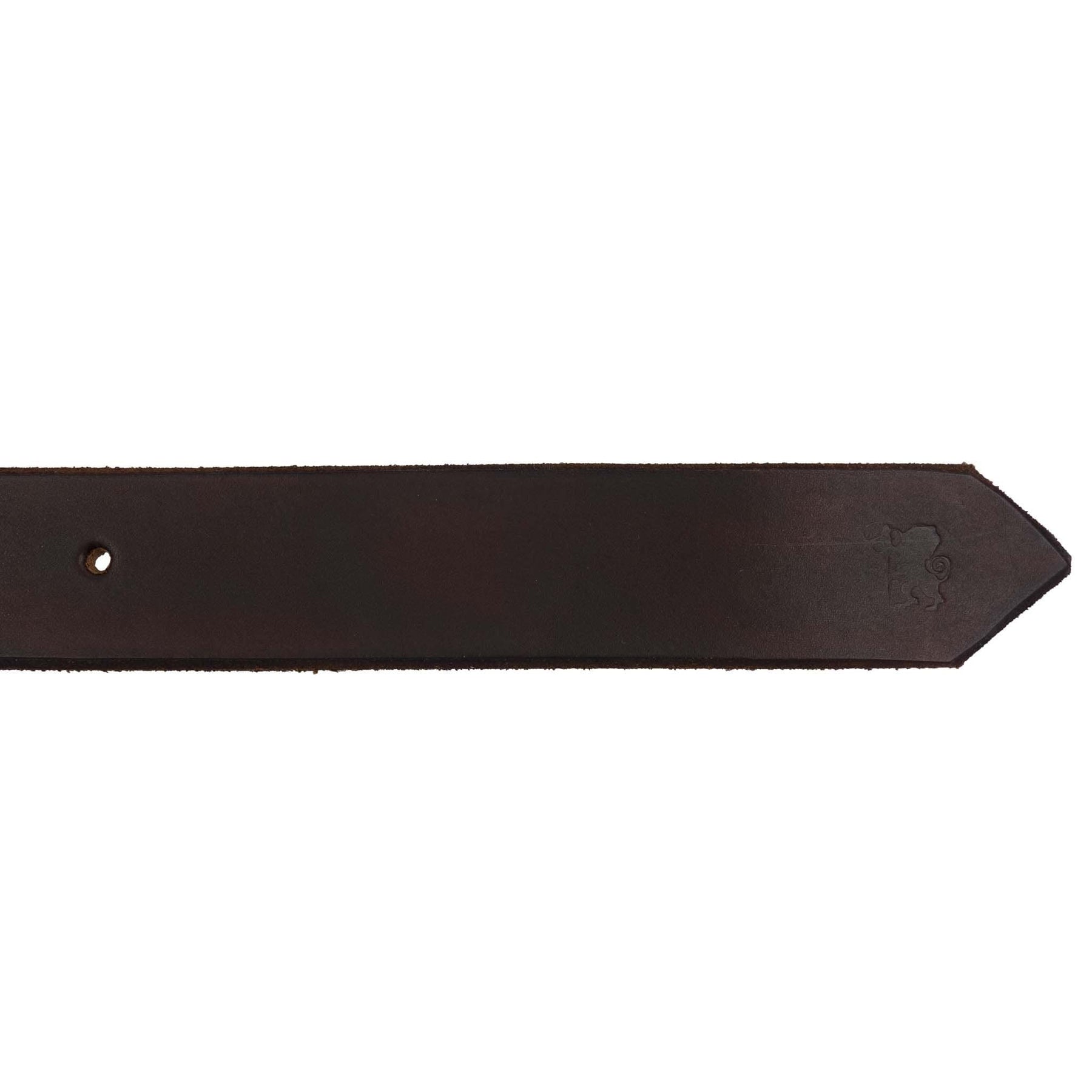
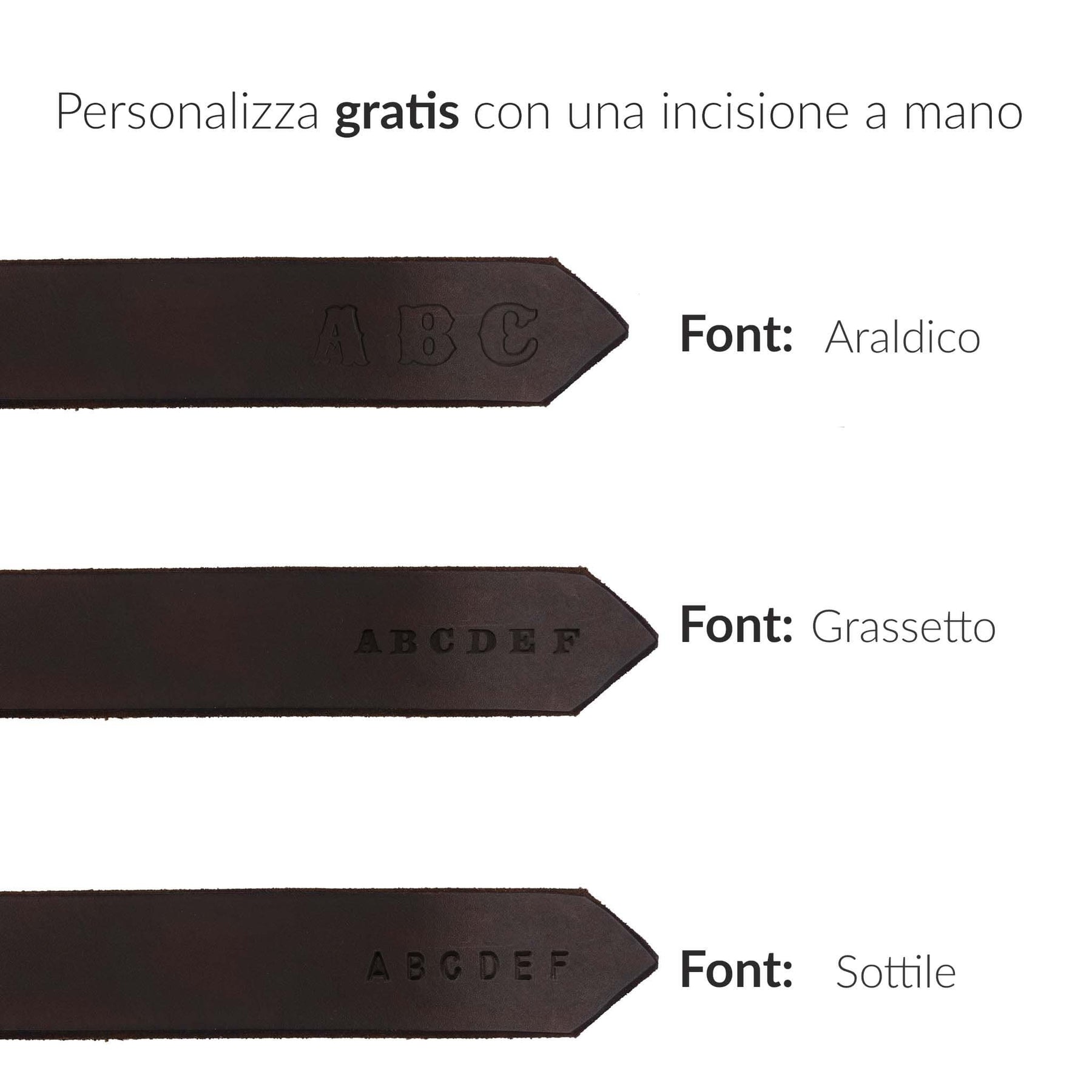
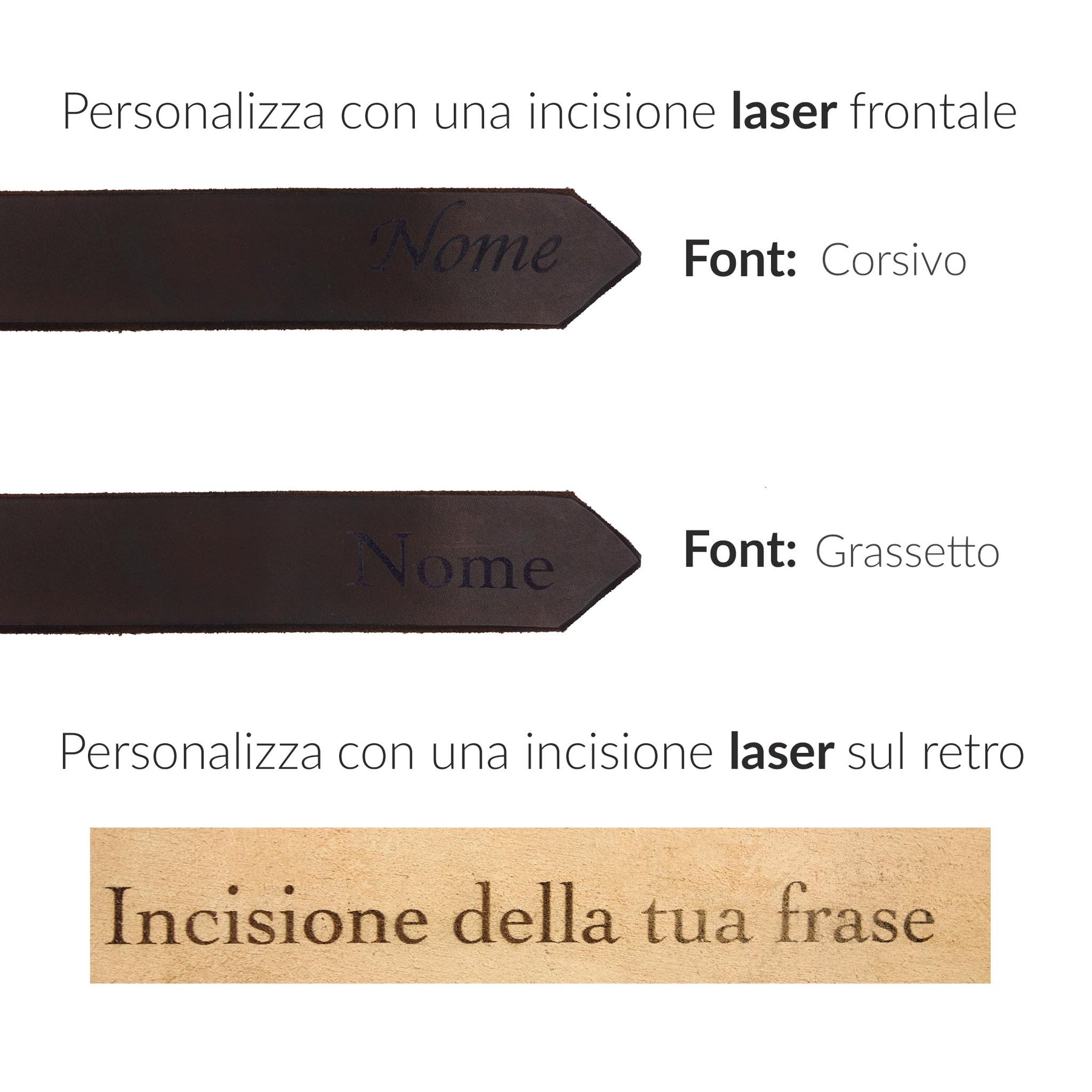
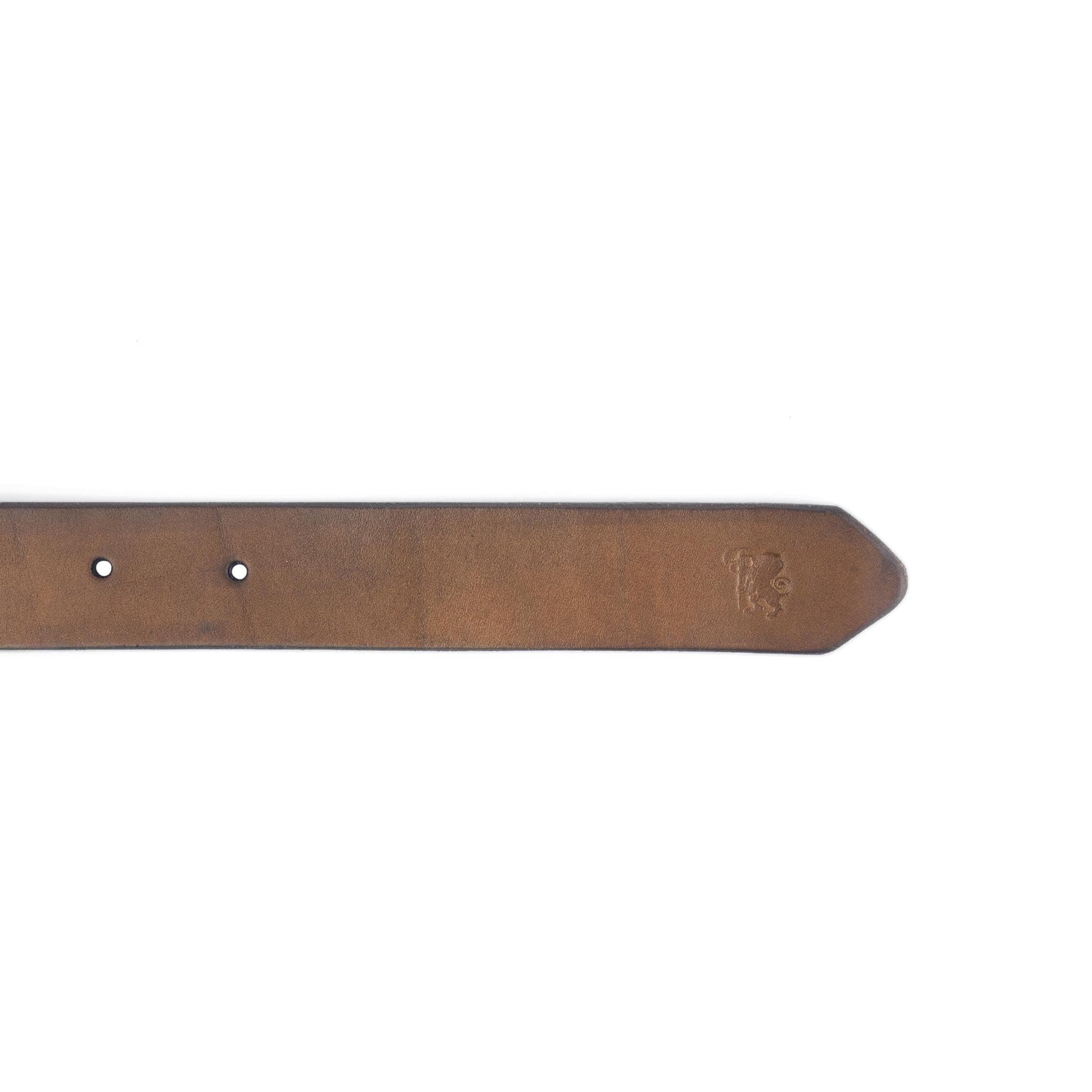
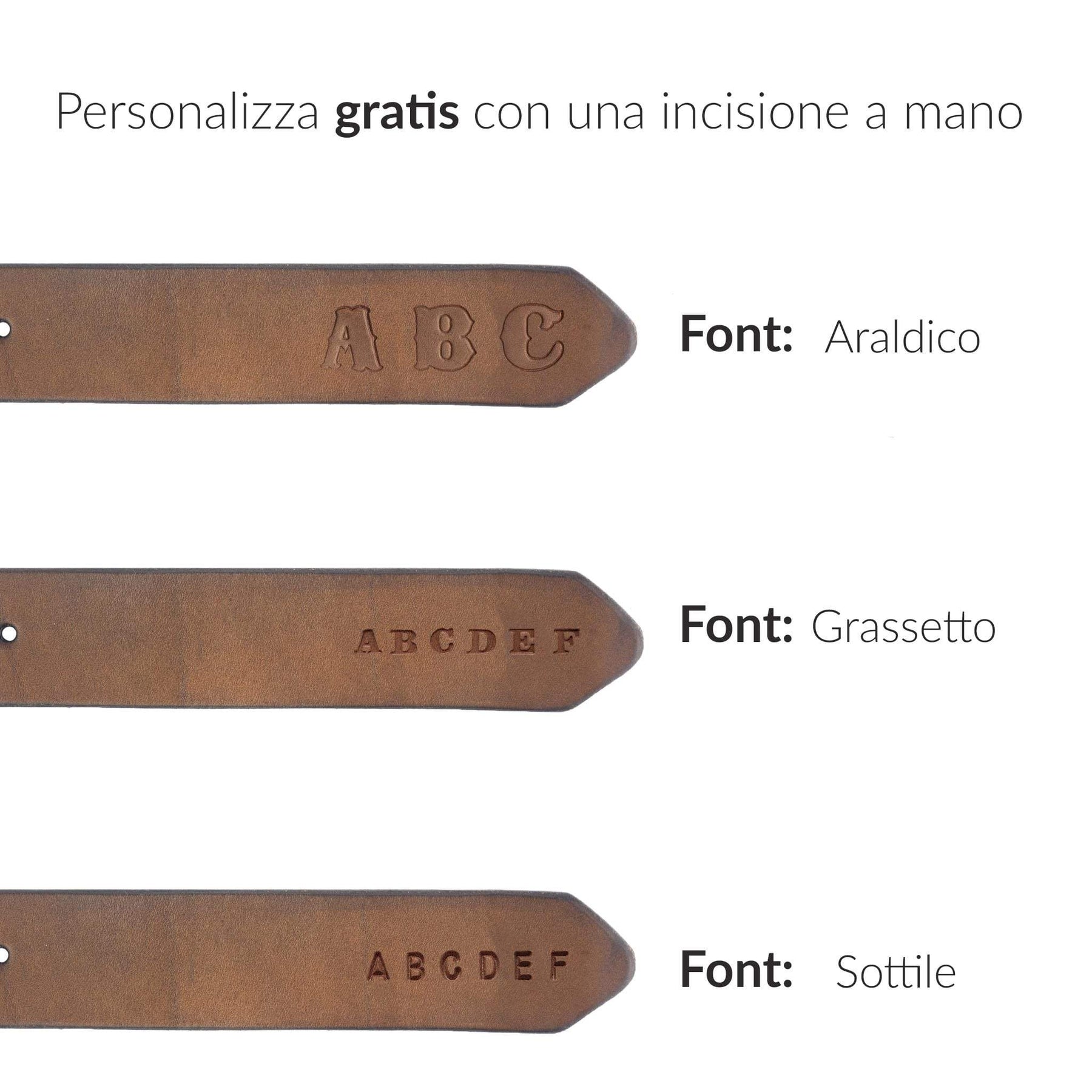
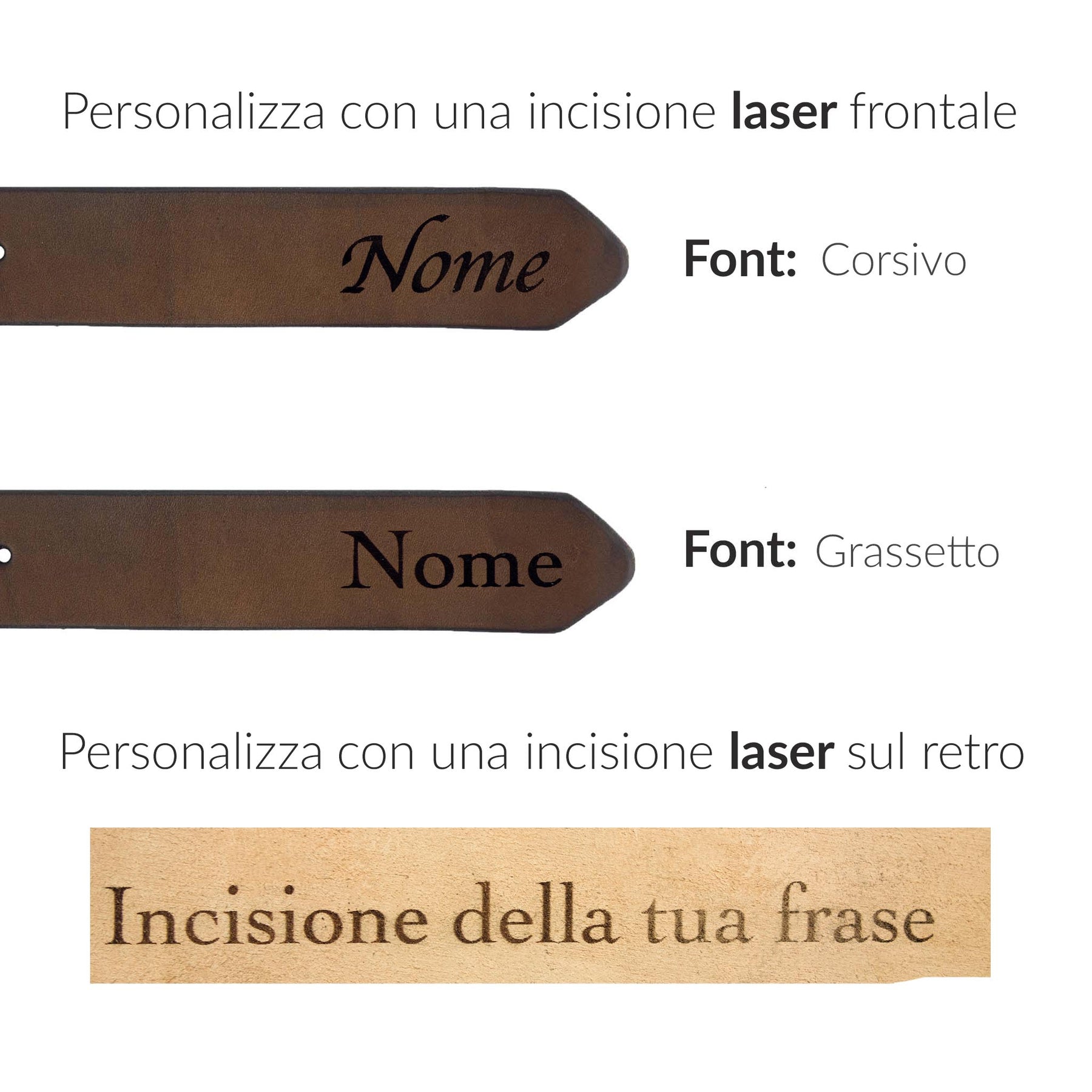
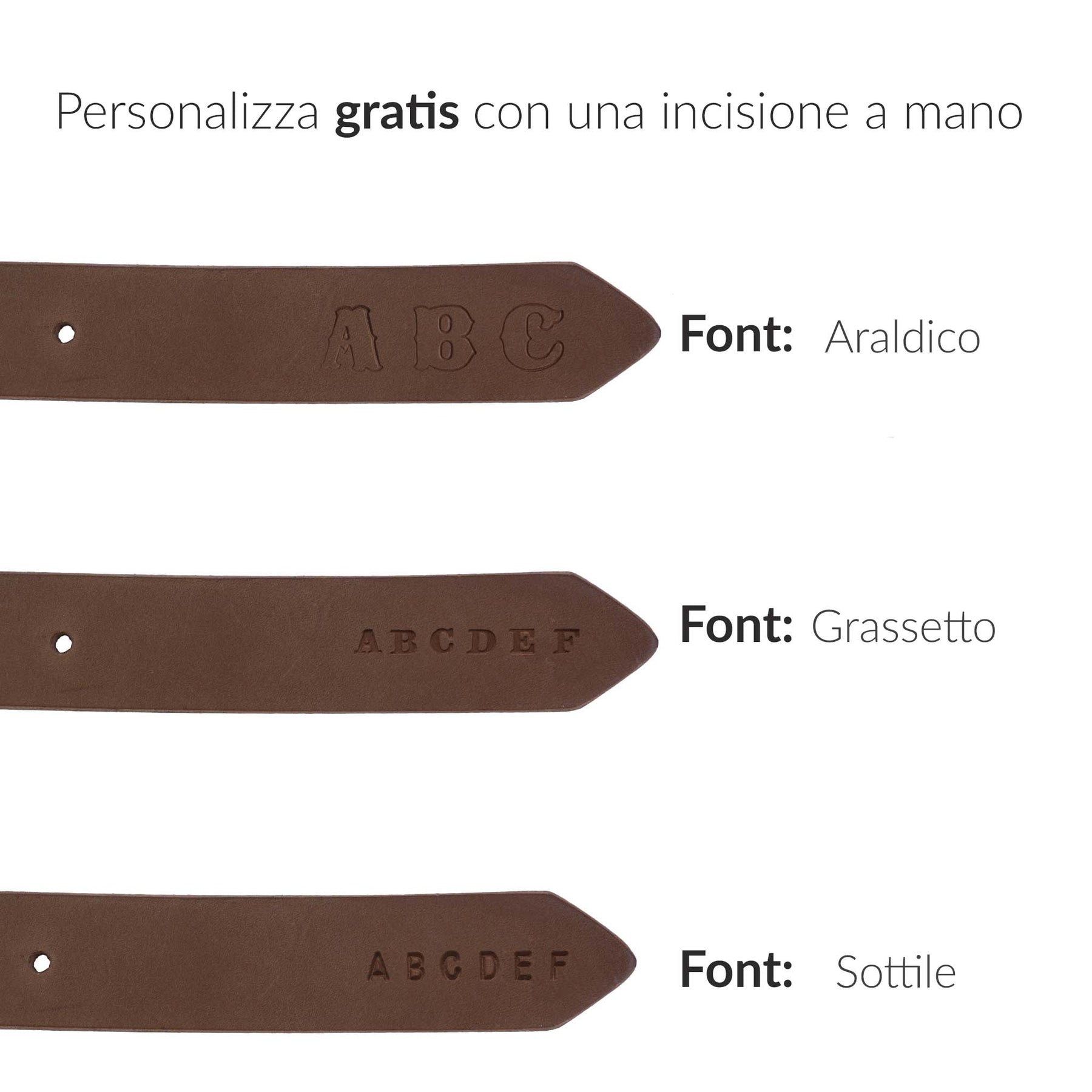
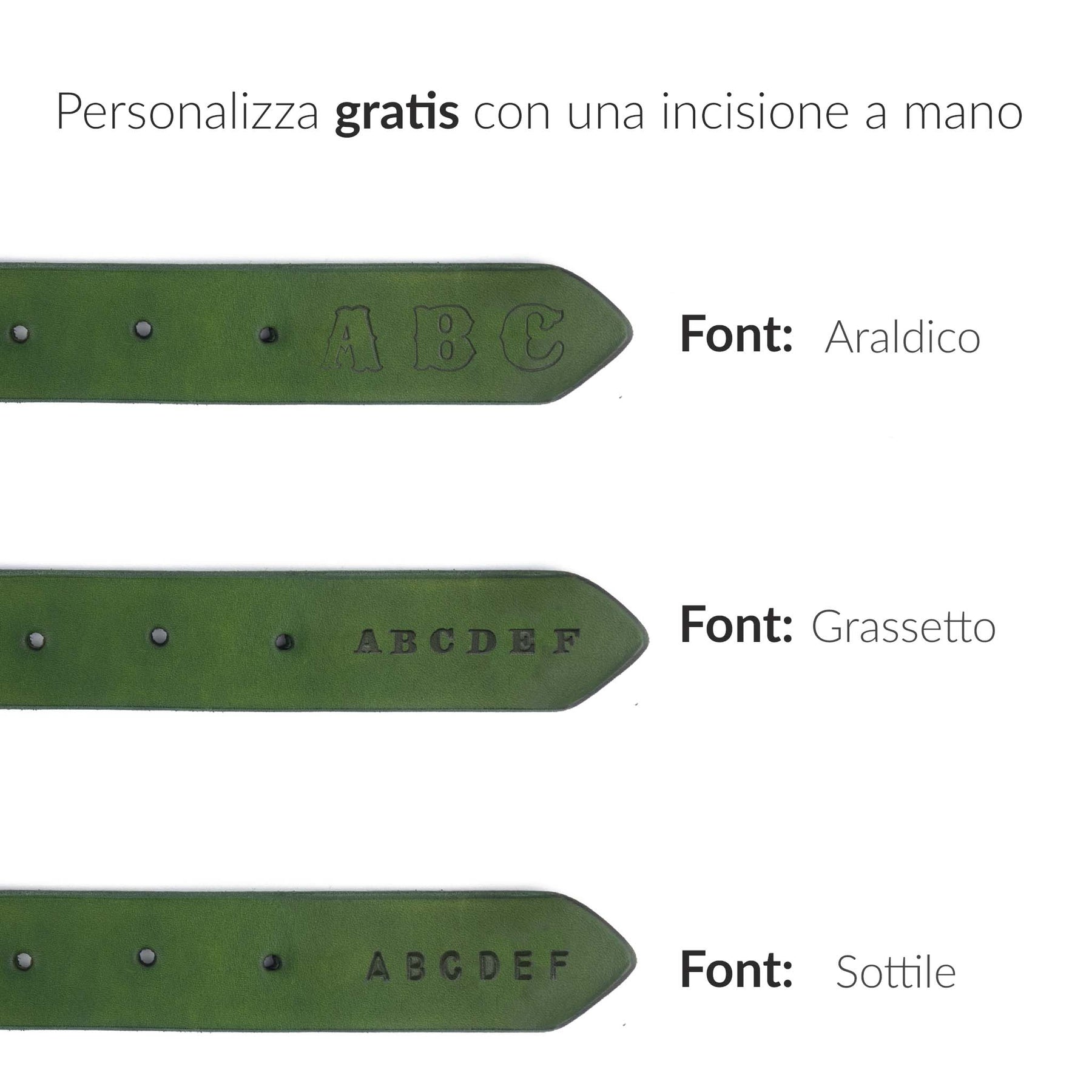
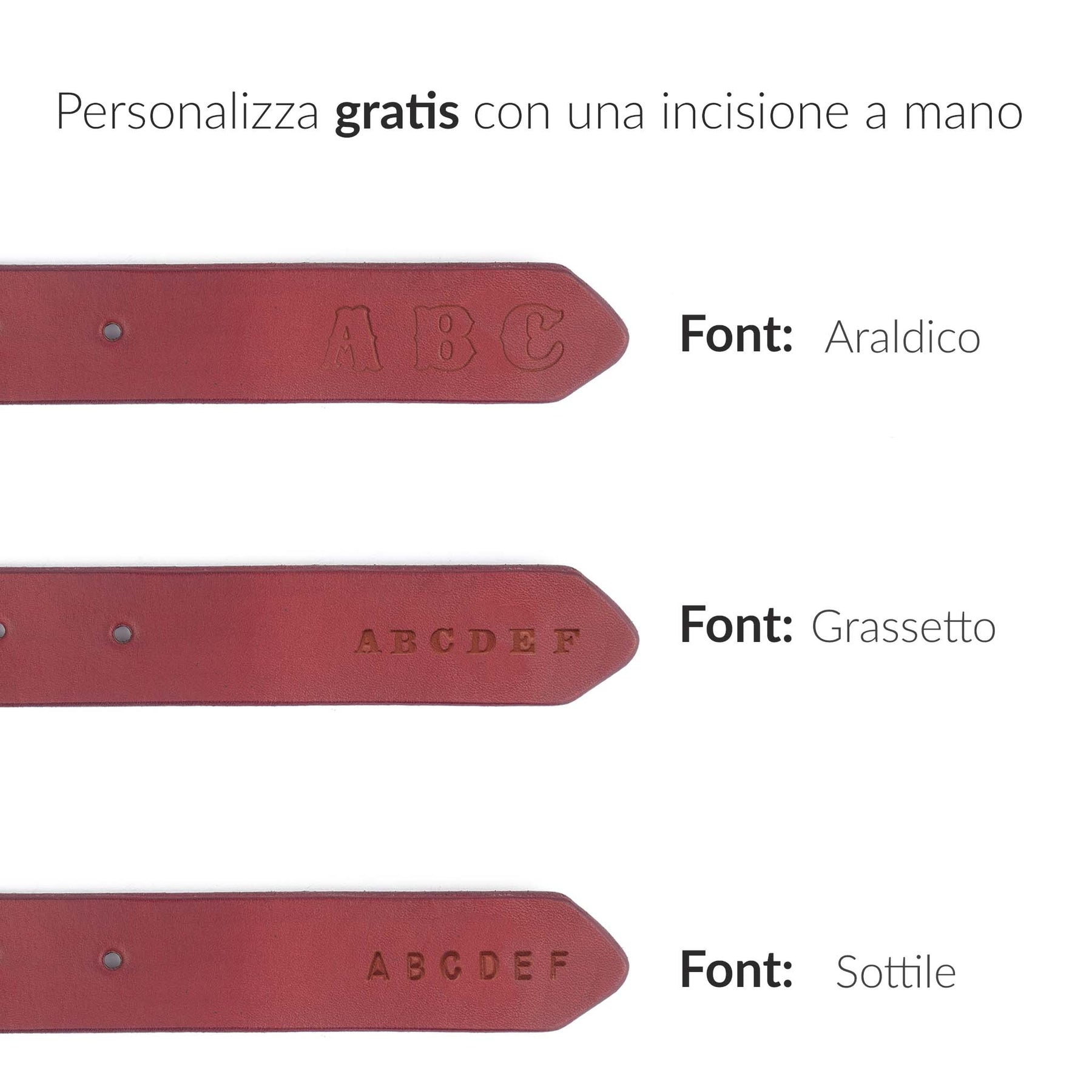
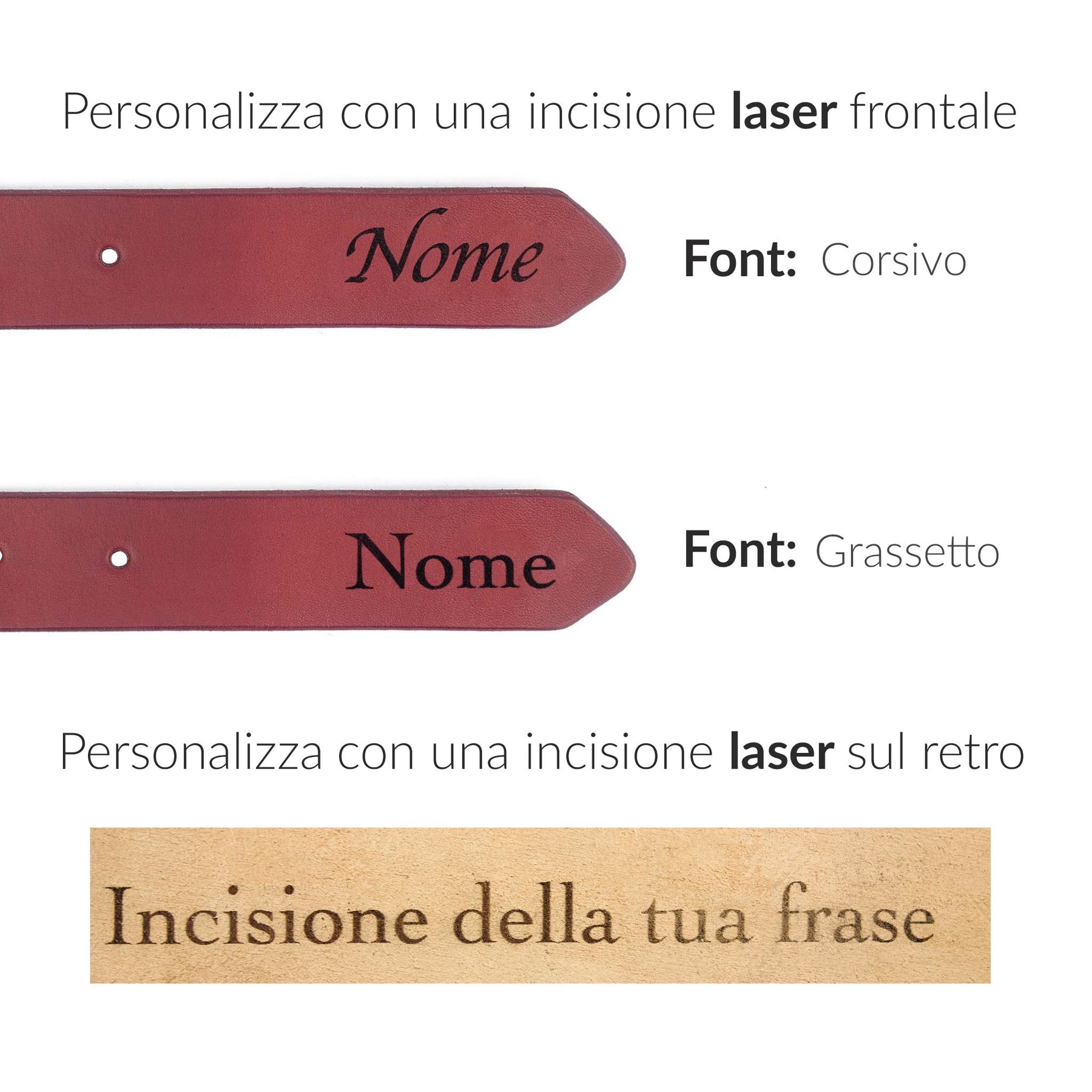
The seams are sewn by hand, stitch by stitch, with waxed thread and no machinery, which adds strength and gives your belt a character of its own. You can personalize it with a free engraving of a name or initials.
Need to know exactly which belt length to choose?
Our first tip is to measure an old belt: starting from the buckle, find the total length of the belt, keeping it pulled taut.
Please note: the measurements shown on our site include the belt buckle.
Otherwise, you can use your waist measurement and follow these three steps:
- take a tailor’s measuring tape;
- measure your waist, or the point where you usually wear your belt;
- then find the matching size in the table.
Please note: the measurements of our men’s leather belts shown on the site include the buckle.
| Size | Waist | Belt length |
| 40/42 | 85 cm | 105 cm |
| 44/46 | 90 cm | 110 cm |
| 48/50 | 95 cm | 115 cm |
| 50/52 | 100 cm | 120 cm |
| 52/54 | 105 cm | 125 cm |
| 54/56 | 110 cm | 130 cm |
| 56/58 | 115 cm | 135 cm |
| 58/60 | 120 cm | 140 cm |
| 60/62 | 125 cm | 145 cm |
| 62/64 | 130 cm | 150 cm |
| 64/66 | 135 cm | 155 cm |
Shipping methods in Italy: within 24 business hours from order fulfillment with express courier (3 business days).
Shipping costs in Italy: €6.9.
Order fulfillment times: maximum 3 business days. Personalized products may require more time.
Returns: free
International shipping methods: express courier.
International delivery times: variable depending on the destination.
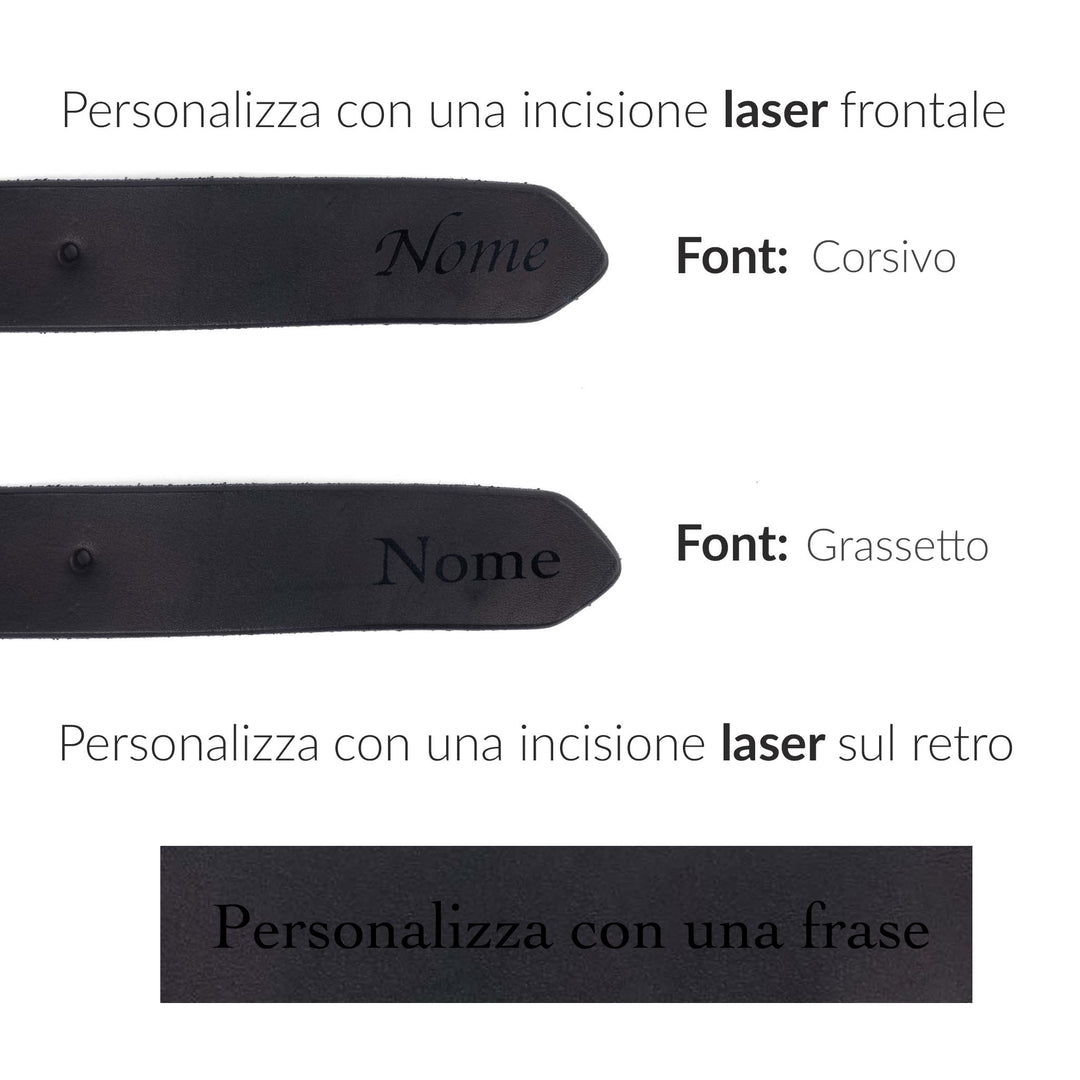
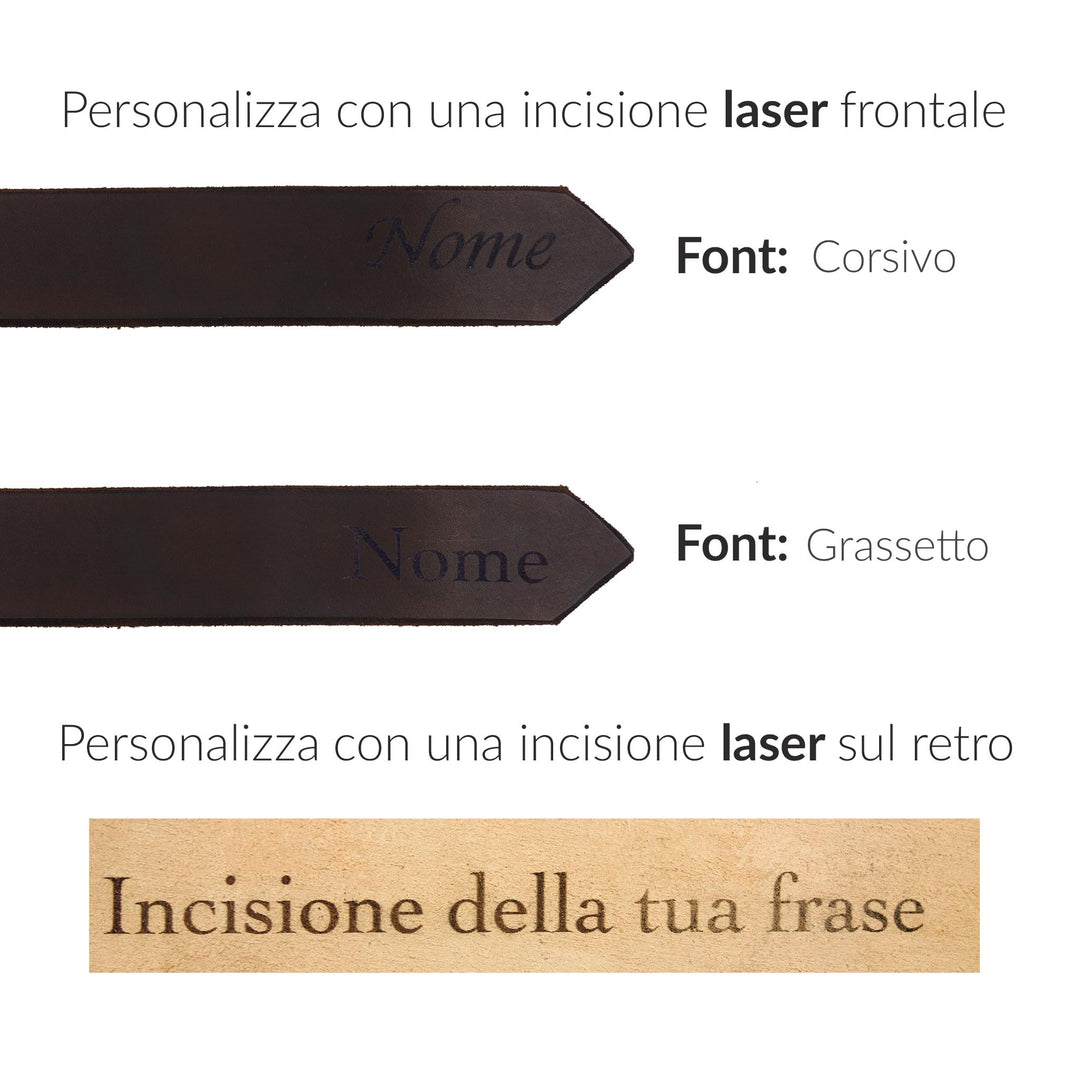
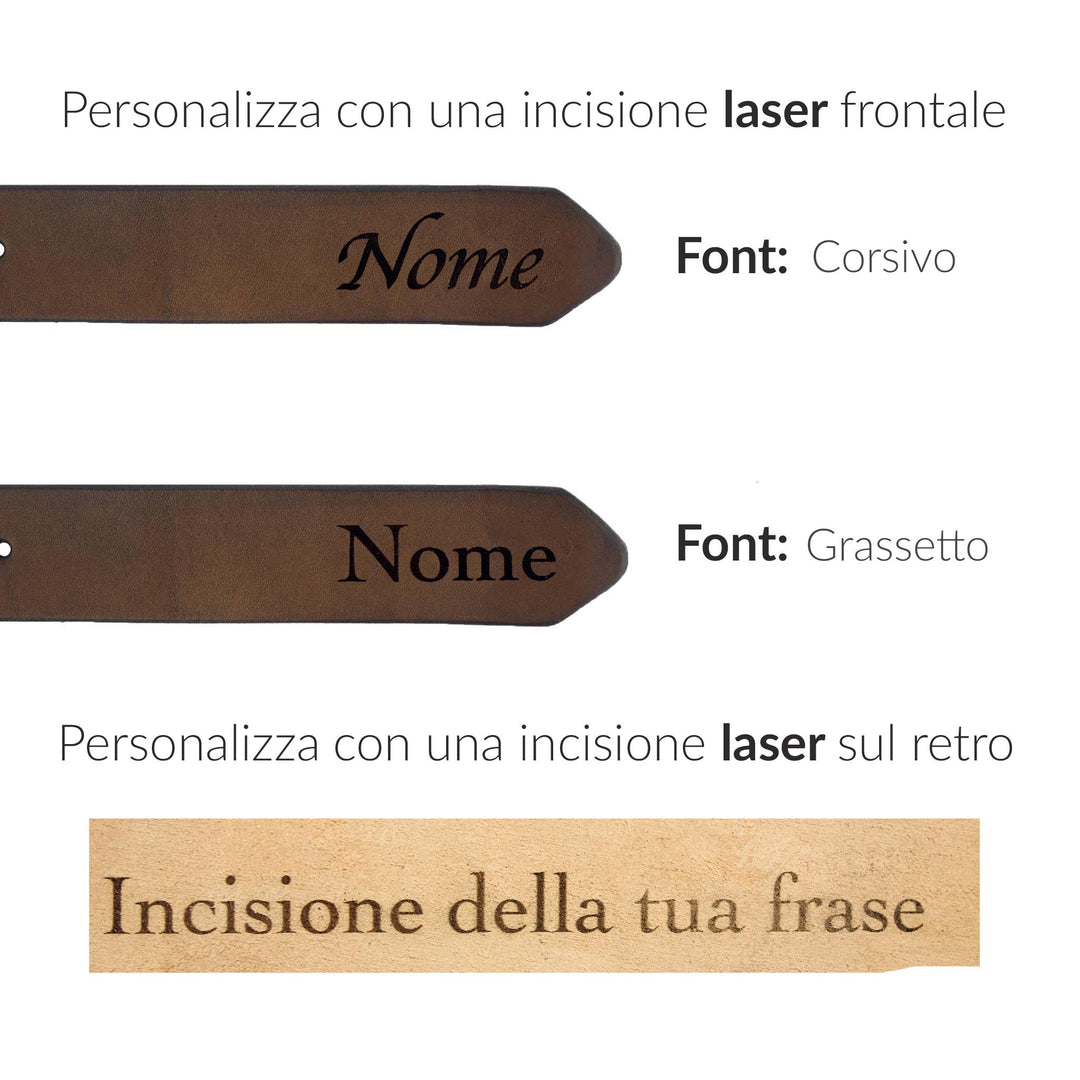
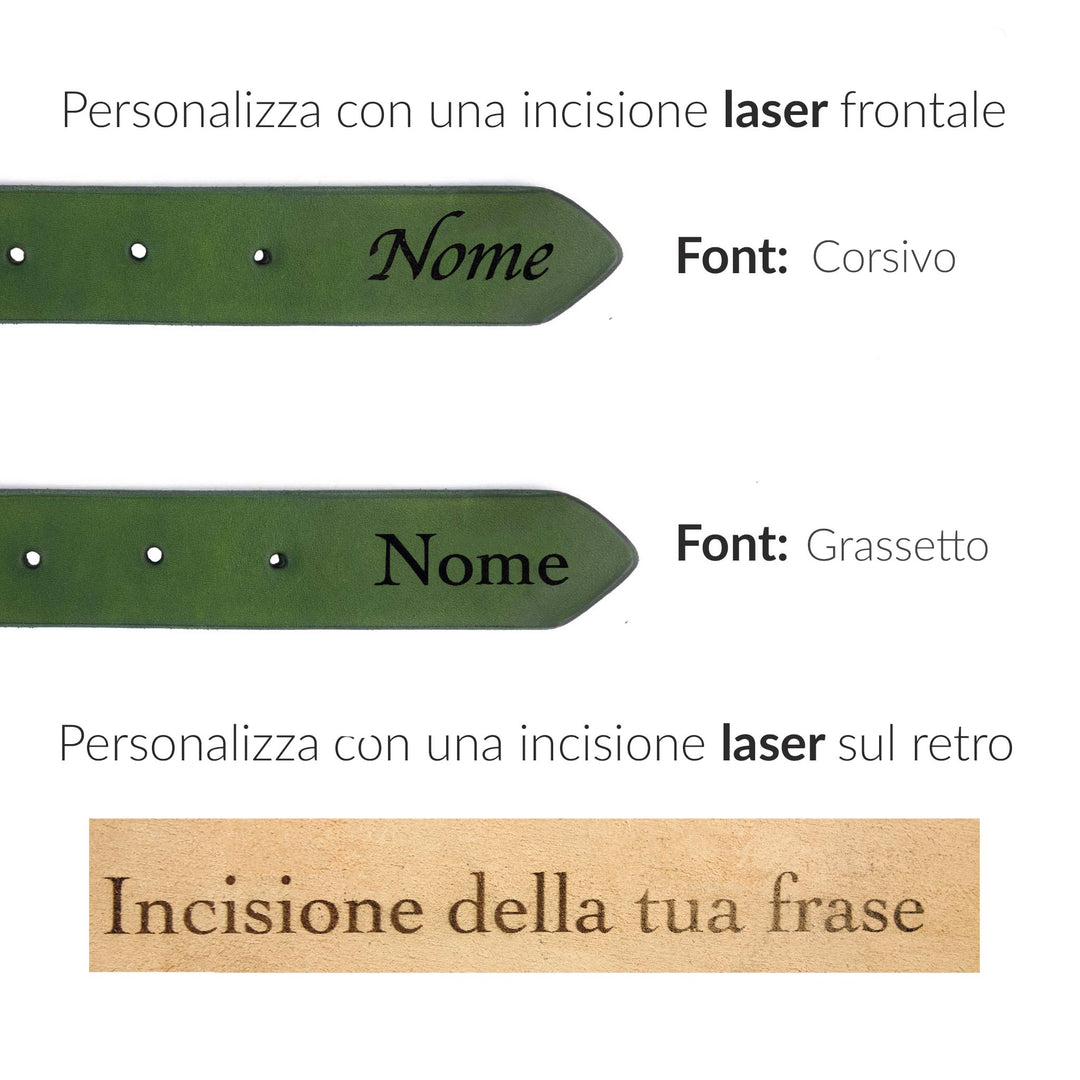
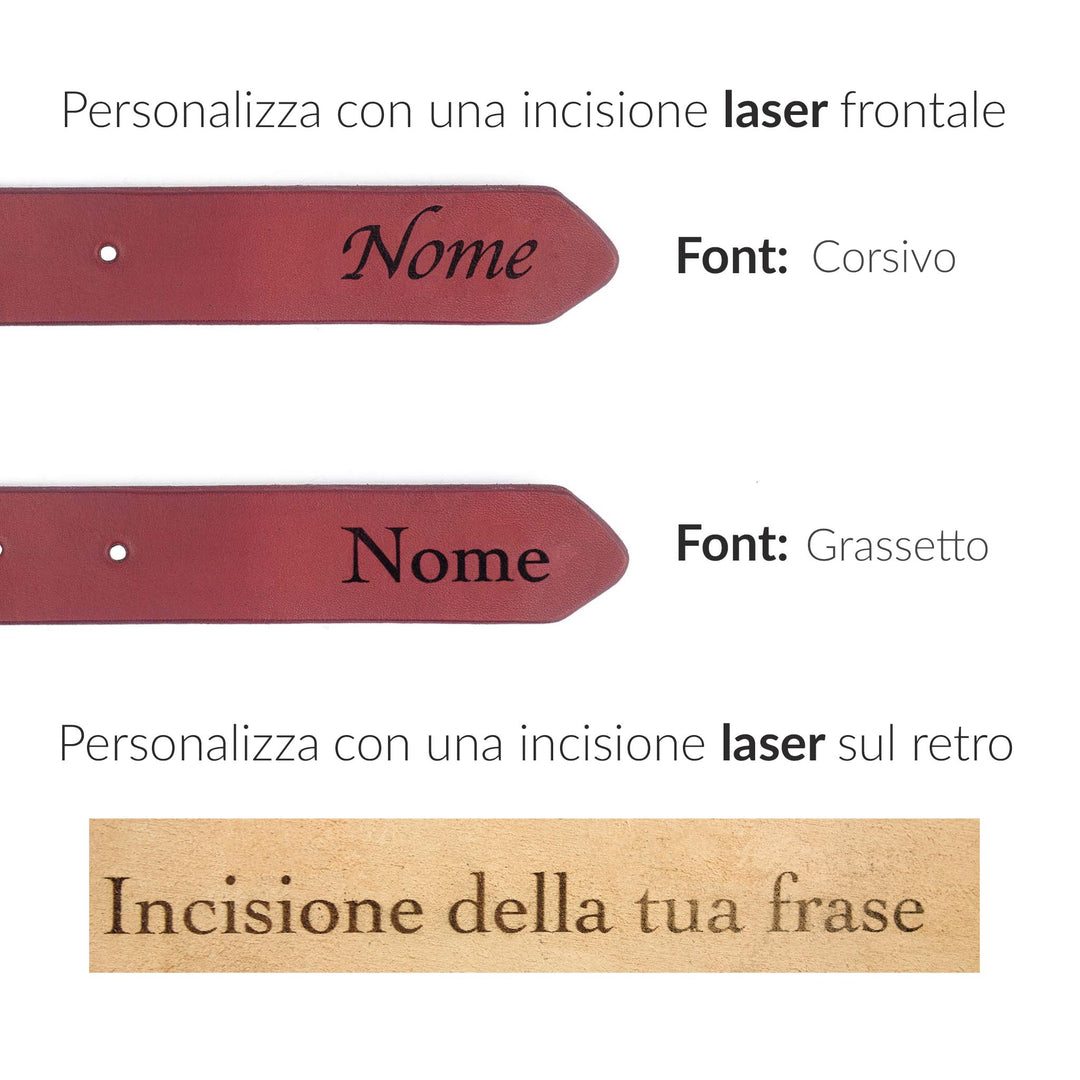
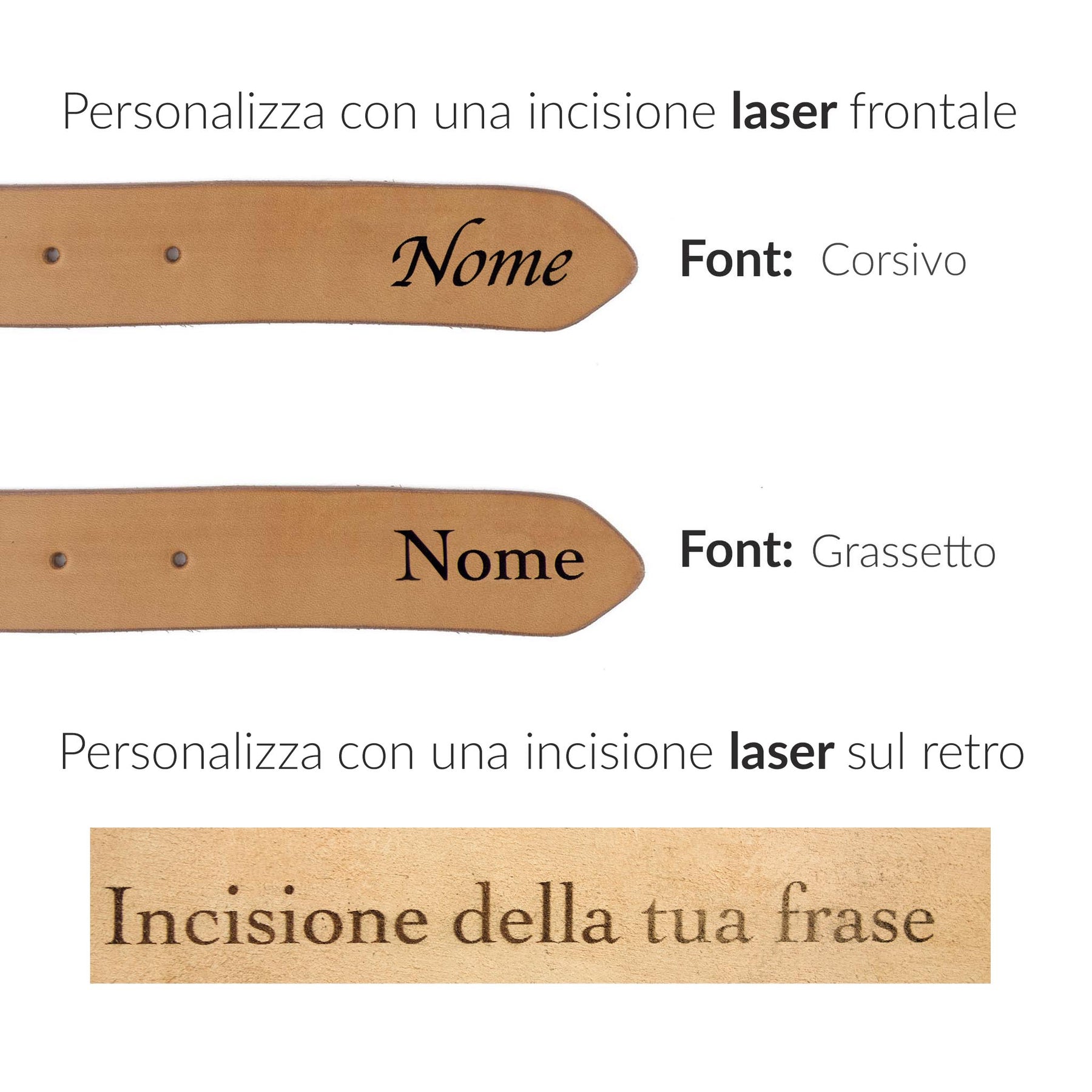
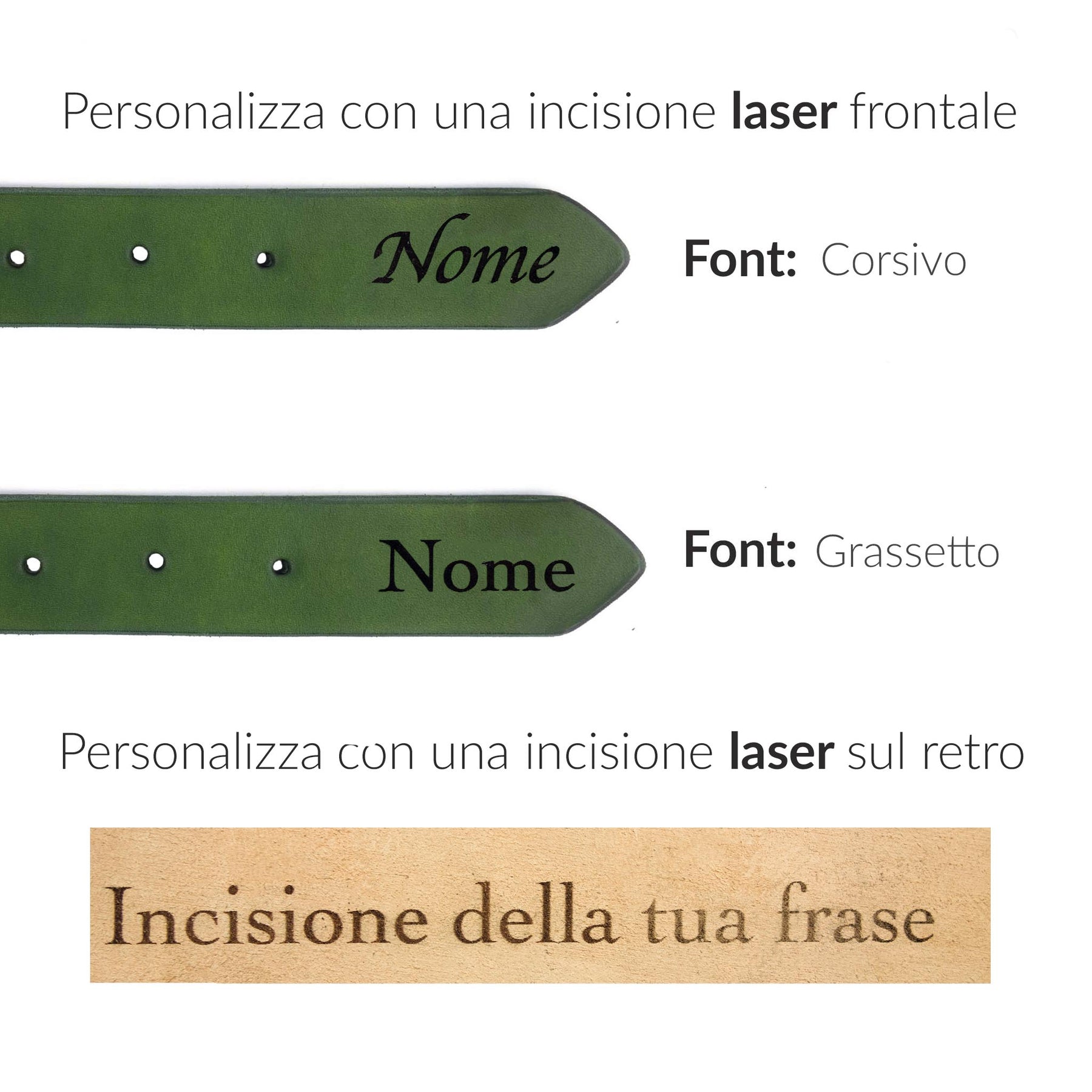
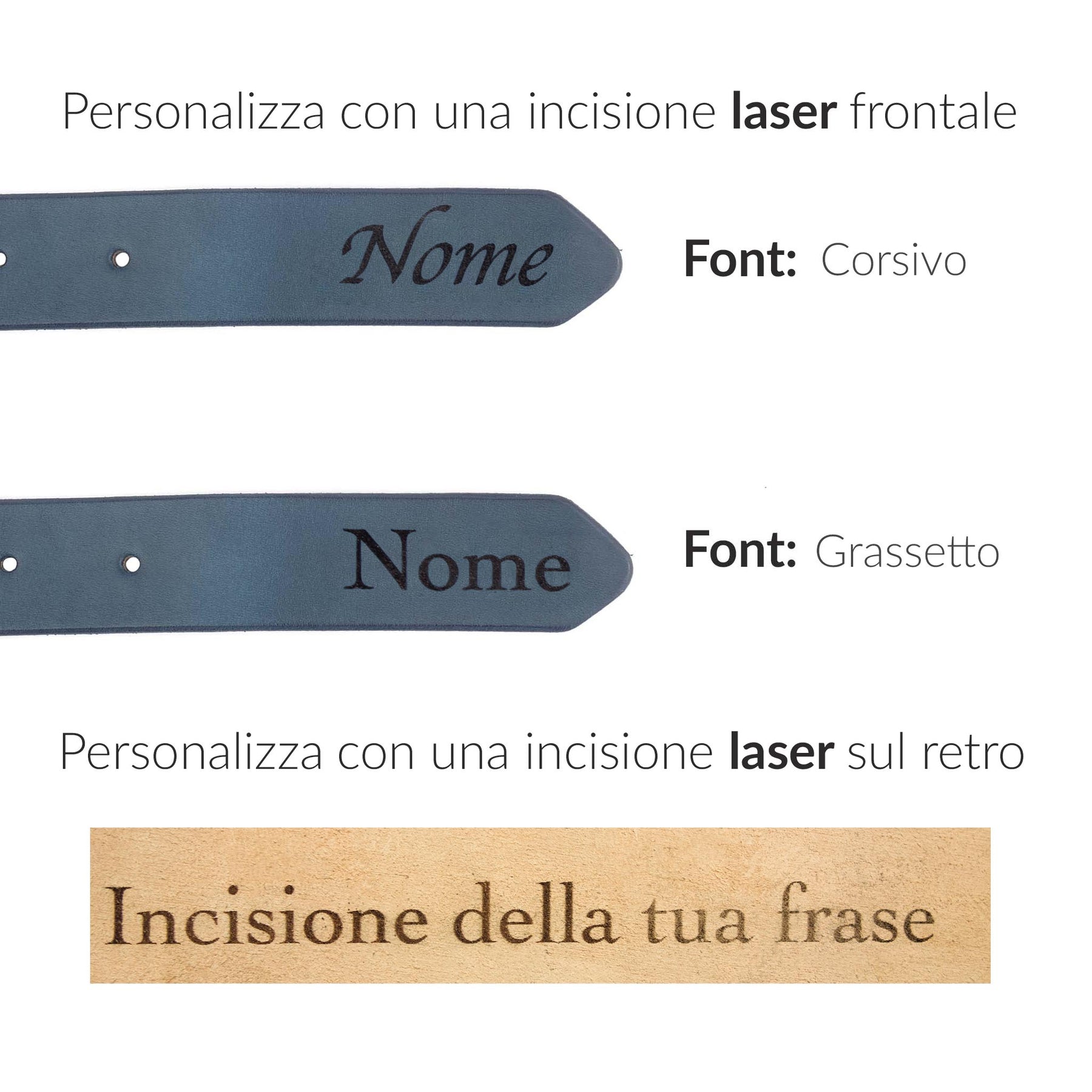
We can also customize the leather belt with laser engravings. For any information or request, you can contact us by email or through our social media pages.